1. Why "Who's Cheapest" Is the Wrong Question
GOFO, SwiftX, UniUni, and SpeedX services offered through EasyShippingX: Delivery to APO/FPO/DPO military or diplomatic addresses and PO Box addresses is not supported, even when the destination ZIP is within the coverage area.
Three traps catch almost everyone who tries to compare USPS against a regional carrier.
Trap 1: comparing counter prices. USPS retail counter pricing is a different product from the commercial rate that shows up on your invoice, and the gap is not a rounding error. It is the single most common reason a seller concludes USPS is expensive and a 3PL looking at the same lane concludes it is cheap: you are comparing two different products with the same logo.
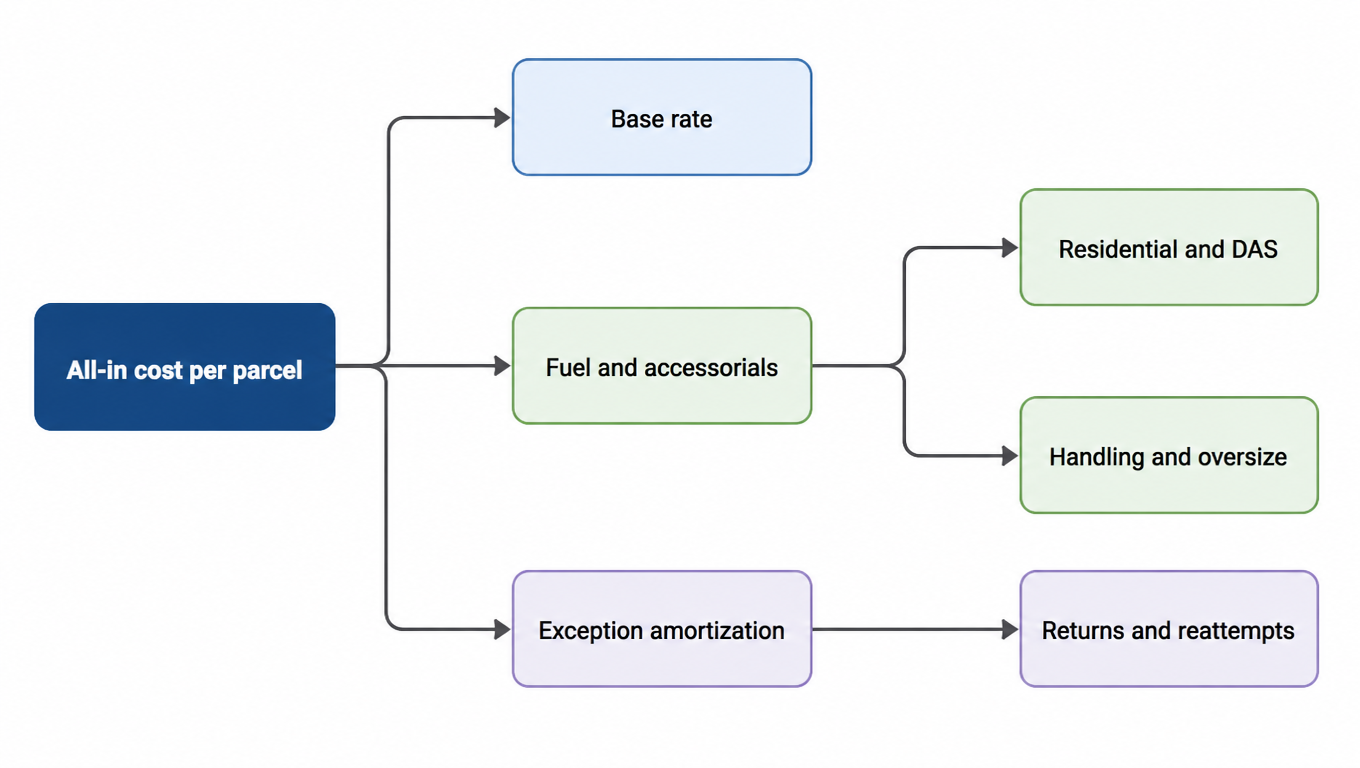
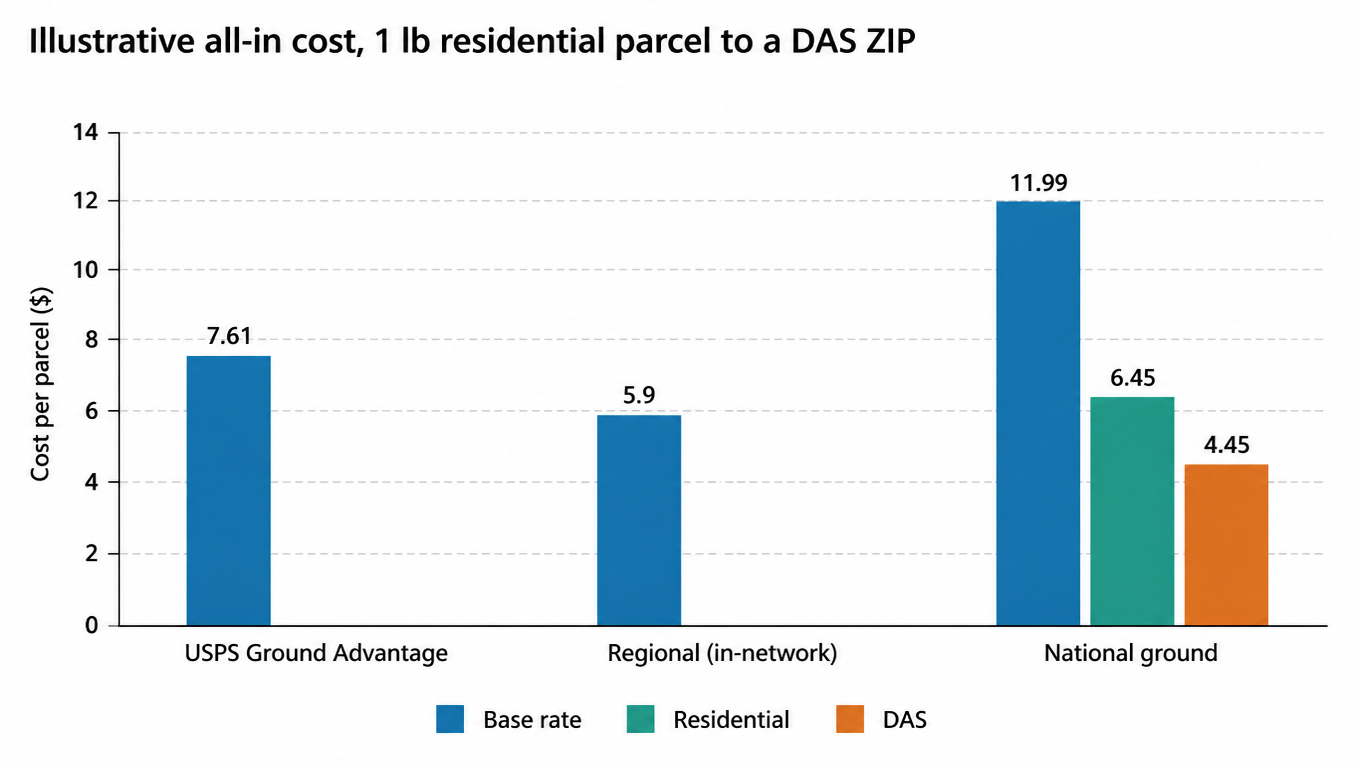
Trap 2: comparing nominal rates. The number on the rate card is not the number you pay. Once fuel, residential delivery, delivery area surcharge, additional handling, and oversize land, the spread between two carriers can move by more than the base rate itself. A carrier with the lower base rate and a bigger surcharge stack loses more often than the pitch deck admits.
Trap 3: comparing one parcel. A single 2 lb box to zone 4 tells you almost nothing about a lane that ships 400 parcels a month to the same region. Rates are not linear in weight, they are stepped in bands, and the bands that matter are the ones where your volume actually sits.
There is a fourth problem that is not a trap so much as a structural fact: regional carriers do not publish usable list rates. Their real price is a contract number that nobody posts, which is why every published comparison between USPS and a regional carrier is either an estimate or an advertisement.
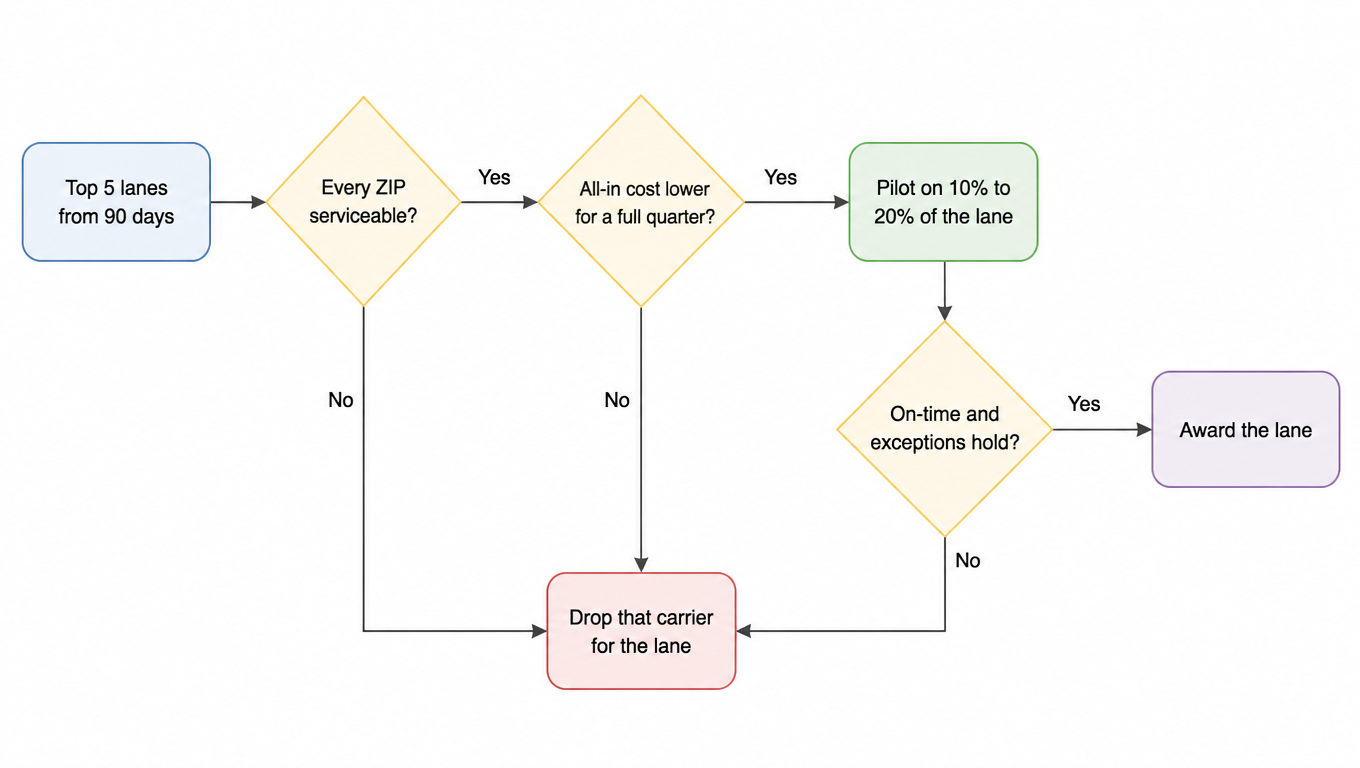
A fair comparison therefore needs five things held constant: same parcel, same lane, same service level, same measurement window, and the same port of entry. Get one of those wrong and you have measured something other than price. The comparison unit used throughout this article is all-in cost per parcel, computed by SKU group, by lane, by weight band, over a 90-day window. That unit is blunt enough to compare a carrier that itemizes everything against one that bundles everything, which is the entire point.
The categories themselves already have a fuller treatment elsewhere. If you still need to decide which category fits your operation, start with our practical USPS versus regional carrier guide for 3PLs; if you only want the trigger conditions under which a regional carrier actually pays off, read when a regional carrier saves money. This article does the one thing neither of them does: it prices the same parcel on the same lane, side by side.