What each network actually solves
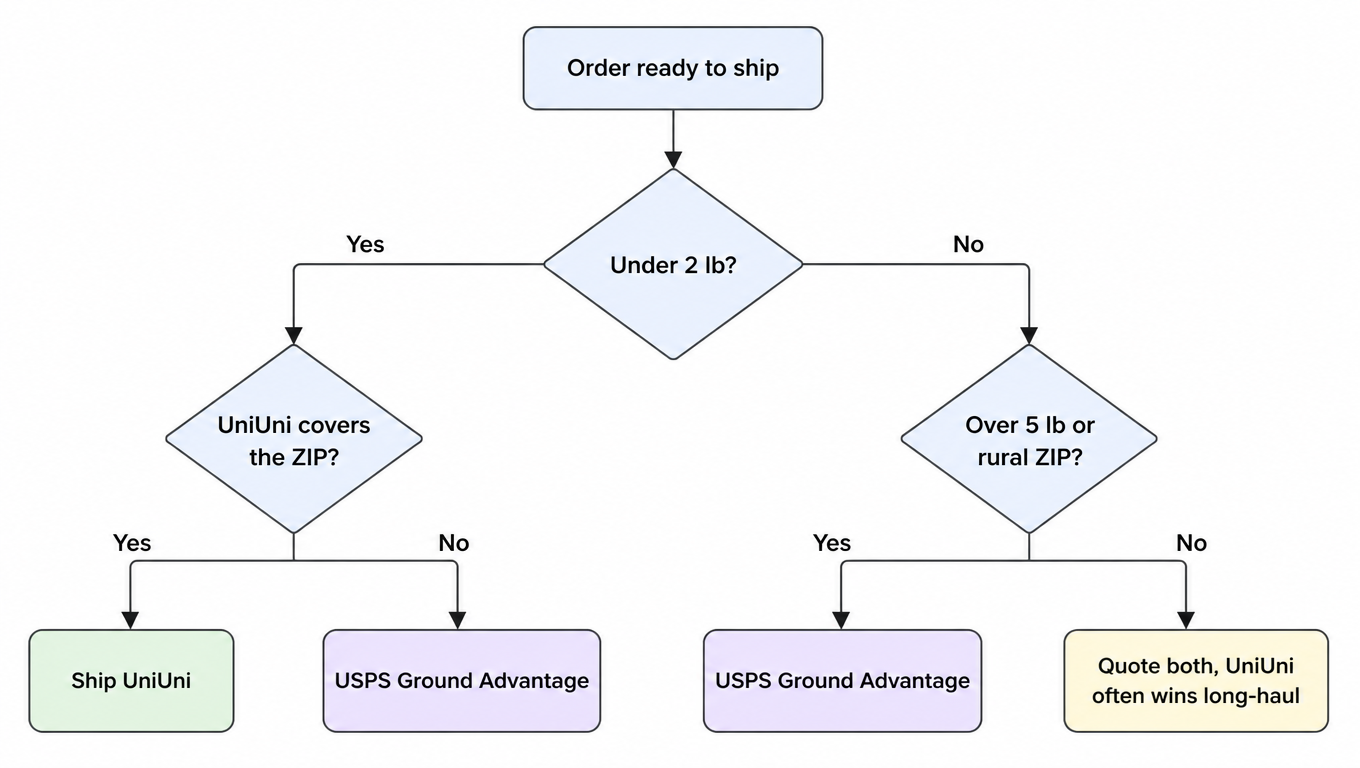
What UniUni solves is final-mile delivery in dense areas. Its public integration documentation describes rating inputs such as weight, dimensions, destination, and origin handoff location, with an estimated delivery date in the response. The same parcel from the same warehouse can therefore return a different result and transit window depending on product coverage and route density. A regional coverage figure describes a market, not a single shipment.
What USPS solves is deliverability to any address. As a national postal network, its eligibility and rating rules come from published product pages and the effective price list, and its price varies with zone and billable weight. It does not decline a parcel because a route lacks density, which is why it is the most commonly cited alternative for destinations a regional product does not cover.
So this is not a cheap versus expensive comparison. It is low cost inside dense areas with narrower eligibility, against universal availability with distance-based pricing. Declaring a winner from a city name or a coverage map skips the step that actually decides cost: whether this shipment qualifies for a specific product at all.
To evaluate UniUni, share the warehouse ZIP, destination mix, weight, dimensions, and contents. EasyShippingX can screen orders against product coverage and charges, then use a pilot to review the first scan, tracking, available delivery photos, and final billing. Explore UniUni services · See UniUni coverage and tender details.
When comparing USPS options, enter the origin, destination, address type, weight, dimensions, packaging, and contents. EasyShippingX uses those details to show available services and compare costs. After label creation, keep the physical handoff time and first USPS scan in the shipment record. Explore USPS services · See USPS shipping options.