3PL 指南3PL Guide

3PL 如何在不成为承运人的情况下给客户更好的运费How 3PLs Can Offer Clients Better Shipping Rates Without Becoming a Carrier

2025 年初,Summit Fulfillment 正处在很多中型 3PL 的位置上。这家公司位于芝加哥郊区,每月为 30 多个电商品牌发出 4 万到 6 万件包裹。它的承诺很简单:快速准确的履约,加上小品牌付得起的尾程派送价格。In early 2025, Summit Fulfillment was exactly where a lot of mid-sized 3PLs find themselves. The company, based outside Chicago, shipped 40,000 to 60,000 ecommerce parcels a month for more than 30 online brands. Its promise was simple: fast, accurate fulfillment plus last-mile delivery at a price small brands could afford.

然后,压力从三个方向同时来了。和 Summit 一起成长起来的客户开始要求逐年降价。燃油附加费、旺季附加费、地址校正这类附加费,正悄悄吃掉每一张面单的利润。两个最大的客户,约占总量的三分之一,放出话来正在物色新的仓库。Then the pressure came from three directions at once. Clients who had grown with Summit started demanding year-over-year rate cuts. Accessorial charges, from fuel surcharges to peak fees to address corrections, were quietly eating the margin on every label. And the company's two largest accounts, roughly a third of total volume, let it be known they were shopping for a new warehouse.

会议室里有人抛出了那个看似顺理成章的想法:为什么不干脆自己当承运人?自己买卡车、自己跑网络、把中间商砍掉。听起来很激进。这也是 Summit 能说出的最贵的一句话。In the boardroom, someone floated the obvious idea: why not become our own carrier? Own the trucks, run our own network, cut out the middleman. It sounded bold. It was also the most expensive sentence Summit could have uttered.

这篇文章讲的是 Summit 实际上做了什么:一套任何 3PL 都能用、且不需要拥有一辆车的运价杠杆打法。没有一个杠杆是花哨的。聚合货量、严格的附加费管理、更聪明的全国与区域派送伙伴组合,让 Summit 的单件平均物流成本在 12 个月内从 4.85 美元降到 3.93 美元,长距离线路时效提升整整一天,还把最危险的客户变成了最大的支持者。This article walks through what Summit actually did instead, a playbook of rate levers that any 3PL can pull without owning a single vehicle. None of the levers are exotic. Aggregated volume, disciplined accessorial management, and a smarter mix of national and regional delivery partners took Summit's average per-piece shipping cost from $4.85 to $3.93 in 12 months, improved transit by a full day on long-haul lanes, and turned its most at-risk accounts into its biggest advocates.

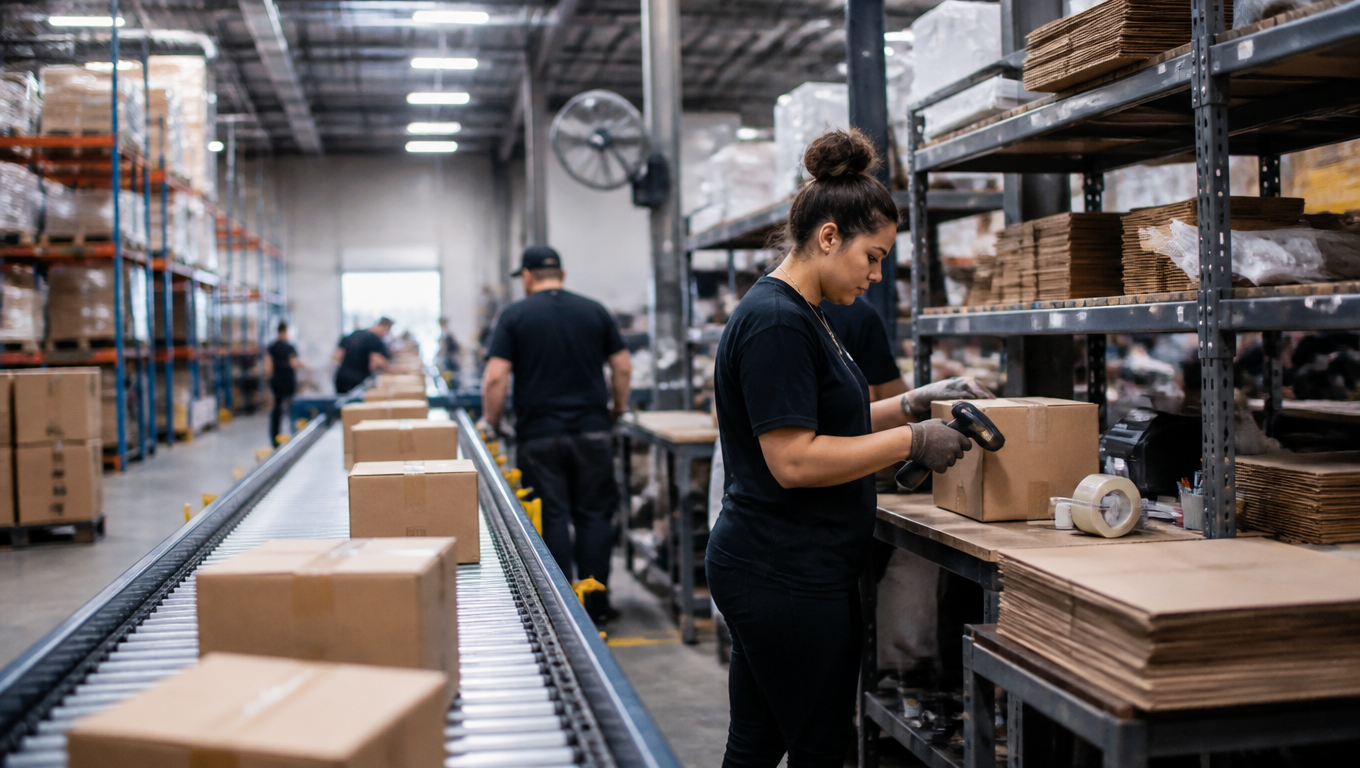
A mid-sized ecommerce fulfillment warehouse in North America with packing stations, outbound parcels moving on a conveyor, and staff scanning boxes
更好的运价不一定来自买车,而是来自更聪明地使用承运商市场Better rates come from using the carrier market smarter, not from owning trucks

一、为什么「自己当承运人」通常是错棋1. Why "Becoming a Carrier" Is Usually the Wrong Move

垂直整合的冲动可以理解。客户压价、承运商加收附加费,夹在中间的 3PL 觉得自己在替别人付利润。但经营承运人是完全不同的生意,大多数 3PL 并不适合。The instinct to vertically integrate is understandable. When clients push on price and carriers push on accessorials, the 3PL in the middle feels like it is paying for someone else's margin. But running a carrier is a different business entirely, and most 3PLs are not built for it.

资金是第一堵墙。一个包裹网络需要车辆、分拣枢纽、派送软件和保险,固定成本在第一个包裹发出之前就出现了。合规是第二堵。货运经纪与承运人牌照、责任限额、驾驶时长规定、各州登记,每一项都有自己的成本和风险。第三堵墙最让经营者意外:网络密度。全国性承运商能送到每一个邮编,因为它每条线路都有足够的货量。自己养车的 3PL 通常没有这种密度,所以自有线路的单件成本反而比付给承运商更高,而不是更低。Capital is the first wall. A parcel network needs vehicles, sortation hubs, delivery software, and insurance, and the fixed costs arrive before the first parcel moves. Compliance is the second. Freight broker and carrier licensing, liability limits, hours-of-service rules, and state registrations each carry their own cost and risk. The third wall is the one that surprises operators most: network density. A national carrier delivers to every zip code because it has enough volume per route. A 3PL that keeps its own trucks usually lacks that density, so the per-piece cost on its own routes is higher, not lower, than what it pays a carrier.

真正的成本是机会成本。3PL 的价值在客户服务、仓库执行和系统。花在车队管理上的每个小时,都是没有花在客户真正付费的事情上的一个小时。Summit 的 CFO 用一句话点破:我们不是做用卡车运包裹的生意,我们做的是让客户的包裹更便宜、更可靠的生意,这是两份不同的工作。The real cost is opportunity cost. A 3PL's value lives in client service, warehouse execution, and systems. Every hour spent on fleet management is an hour not spent on the thing clients actually pay for. Summit's CFO made this point in one line: we are not in the business of moving parcels in trucks, we are in the business of making our clients' parcels cheaper and more reliable, and those are different jobs.

二、杠杆一:聚合货量,像大玩家一样谈判2. Lever 1: Aggregate Volume and Negotiate Like the Big Players

Summit 手里最大的运价杠杆一直就在自己仓库里。几十个品牌从一个仓库发货,但每个承运商合约都是按单个客户的货量谈的。把客户货量加总,Summit 的总量已经大到能拿到全国客户级别的运价,只是它没有这样去谈。The single biggest rate lever Summit had was already sitting in its own building. Dozens of brands shipped through one warehouse, but each carrier contract was negotiated on each client's volume. Summed across clients, Summit's total volume was large enough to command national-account rates. It just was not negotiating that way.

修复分两步。第一,Summit 把全部客户的货量聚合进与两个核心承运商各自的单一合约,由一个人负责谈判。第二,加一层比价路由:一个小型路由引擎按区域、按重量档逐项比较各承运商的合约运价,把每个包裹分配给最便宜的合格选项。没有哪个承运商能赢下全部货量,这让他们保持饥饿。The fix had two parts. First, Summit pooled volume across all clients into a single contract with each of its two core carriers, with one person doing the negotiating. Second, it added a rate-shopping layer: a small routing engine that compared negotiated rates across carriers, zone by zone and weight tier by weight tier, and assigned each parcel to the cheapest qualified option. No carrier won everything, which kept every carrier hungry.

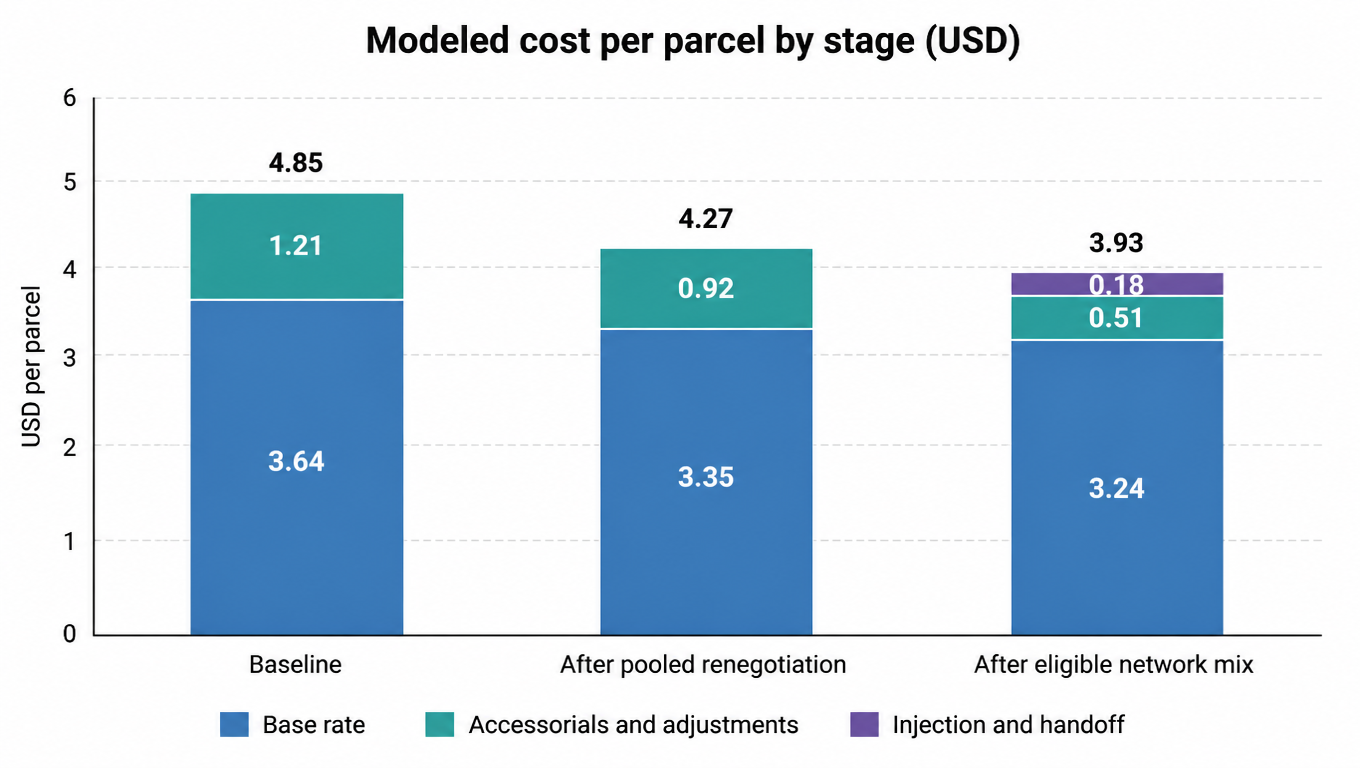
仅重谈合约一项,就让 Summit 的单件综合成本降了 12%,从 4.85 美元降到 4.27 美元。比价路由再在上面加几个百分点。下图展示第一步。The renegotiation alone cut Summit's blended per-piece cost by 12%, from $4.85 to $4.27. Rate shopping added a few more points on top. The chart below shows the first step.

柱状图:Summit Fulfillment 重谈合约后单件综合物流成本从 4.85 美元降至 4.27 美元(美元/件)Bar chart: Summit Fulfillment blended per-piece shipping cost drops from $4.85 to $4.27 after pooled renegotiation (USD per parcel)
聚合货量重谈合约,单件成本立竿见影Pooled-volume renegotiation moved the needle immediately

三、杠杆二:附加费逐项管理3. Lever 2: Manage Accessorials Line by Line

每磅运价只是账单的一半。对 Summit 来说,燃油附加费、住宅派送费、地址校正、超大件和超重件、旺季附加费这类附加费,通常占每月承运商账单的 25%,行业区间大约在 15% 到 30%。多数 3PL 把这些当成固定成本,它们不是。The rate per pound is only half the bill. For Summit, accessorials, fuel surcharges, residential delivery fees, address corrections, oversized and overweight charges, and peak surcharges, typically made up 25% of the monthly carrier invoice. Across the industry the range is roughly 15% to 30%. Most 3PLs treat these as fixed costs. They are not.

第一步是账单审计。Summit 拉出 90 天的发票,逐行列出每一笔附加费,然后对明显的错误提出异议:重复收取的住宅派送费、承运商录入错误导致的地址校正费、按错误基数计算的燃油附加费。光是这一步就收回了真金白银。第二步是谈豁免和上限:燃油附加费比例封顶、用地址校验的客户免除地址校正费、旺季附加费在过渡周给货量留出减免。The first move was a bill audit. Summit pulled 90 days of invoices and line-itemed every accessorial, then disputed the obvious errors: duplicate residential fees, address corrections caused by carrier data entry, fuel surcharges computed on the wrong base. That alone recovered real money. The second move was negotiating exemptions and caps: a cap on the fuel surcharge percentage, waived address-correction fees for accounts using address validation, and a peak surcharge carve-out for volume that moved during shoulder weeks.

第三步是结构性的。能改的,超大件箱子改成扁平信函式邮件;超重件拆分或改路由;住宅占比高的区域,转向住宅附加费更平缓的承运商。一年逐项管理下来,Summit 的附加费占比降到 13% 以下,差不多是起点的一半。The third move was structural. Oversized boxes were repackaged into flat-size mailers where possible, overweight shipments were split or re-routed, and residential-heavy zones were rebalanced toward carriers with flatter residential surcharges. After a year of line-by-line management, Summit's accessorial share sat under 13%, roughly half of where it started.

柱状图:逐项管理后附加费占运费账单比例从 25% 降至 12.5%Bar chart: accessorials fall from 25% to 12.5% of the shipping bill after line-by-line management
附加费从账单的 25% 压到 12.5%Accessorials from 25% of the bill to 12.5%

四、杠杆三:区域派送网络与 Zone Skipping4. Lever 3: Regional Delivery Networks and Zone Skipping

第三个杠杆改变了网络的形状。Summit 的大部分货量是长途运输,成本大头落在每件的尾程段,那是物流里最贵的一英里。Zone skipping 正是冲着这一英里去的。The third lever changed the shape of the network. Most of Summit's volume traveled long distances, so a big share of cost sat in the per-piece last-mile leg, which is the most expensive mile in shipping. Zone skipping attacks exactly that mile.

思路很简单。与其在出发地月台把每一件包裹都交给全国承运商,Summit 把发往同一区域的包裹聚合起来,用卡车干线运到离目的地更近的区域枢纽,再把最后一英里交给区域派送网络。干线段的成本每件只需几美分,昂贵的按件计费段被压缩成更短、更便宜的区域。下图是 Summit 为美西货量跑的流程。The idea is simple. Instead of handing every parcel to a national carrier at the origin dock, Summit aggregated parcels bound for the same region, truckloaded them to a regional hub closer to the destination, and handed them to a regional delivery network for the final mile. The truckload leg costs pennies per parcel; the expensive per-piece leg shrinks to a shorter, cheaper zone. The diagram shows the flow Summit runs for its West Coast volume.

流程图:3PL 打包订单、按目的地区域分拣、卡车干线至区域枢纽、交接区域派送网络、尾程派送Flowchart: 3PL packs order, sorts by destination region, truckloads to regional hub, hands off to regional network, last-mile delivery
Zone skipping 把最贵的一英里变短、变便宜Zone skipping shortens the most expensive mile

关键在于把区域网络当伙伴,而不是对手。美国境内的区域派送网络,比如 UniUni(美国和加拿大)、GOFO Express(美西)、燕文的美国本地派送,在各自区域用全国承运商难以匹敌的价格覆盖最后一英里,因为密度就是它们的全部生意。Summit 大约三分之一的货量走这些网络,全国承运商留在那些它们经济性更优的区域。The key was treating regional networks as partners, not rivals. US domestic regional networks such as UniUni (US and Canada), GOFO Express (West Coast), and Yanwen's US local delivery arm cover the final mile in their regions at prices national carriers struggle to match, because density is their whole business. Summit runs roughly a third of its volume through these networks, keeping the national carriers for the zones where their economics win.

结果是受影响线路时效提升一天,Summit 的单件综合成本再降 8%,从 4.27 美元降到 3.93 美元。The result was a transit improvement of one day on affected lanes and another 8% off Summit's blended per-piece cost, from $4.27 to $3.93.

五、打法组合:Summit 的 12 个月落地路径5. The Full Play: Summit's 12-Month Roadmap

这些都不是一个季度里发生的。Summit 分三个阶段落地,每个阶段有负责人和明确的交付物。None of this happened in a quarter. Summit ran the play in three deliberate phases, each with an owner and an explicit deliverable.

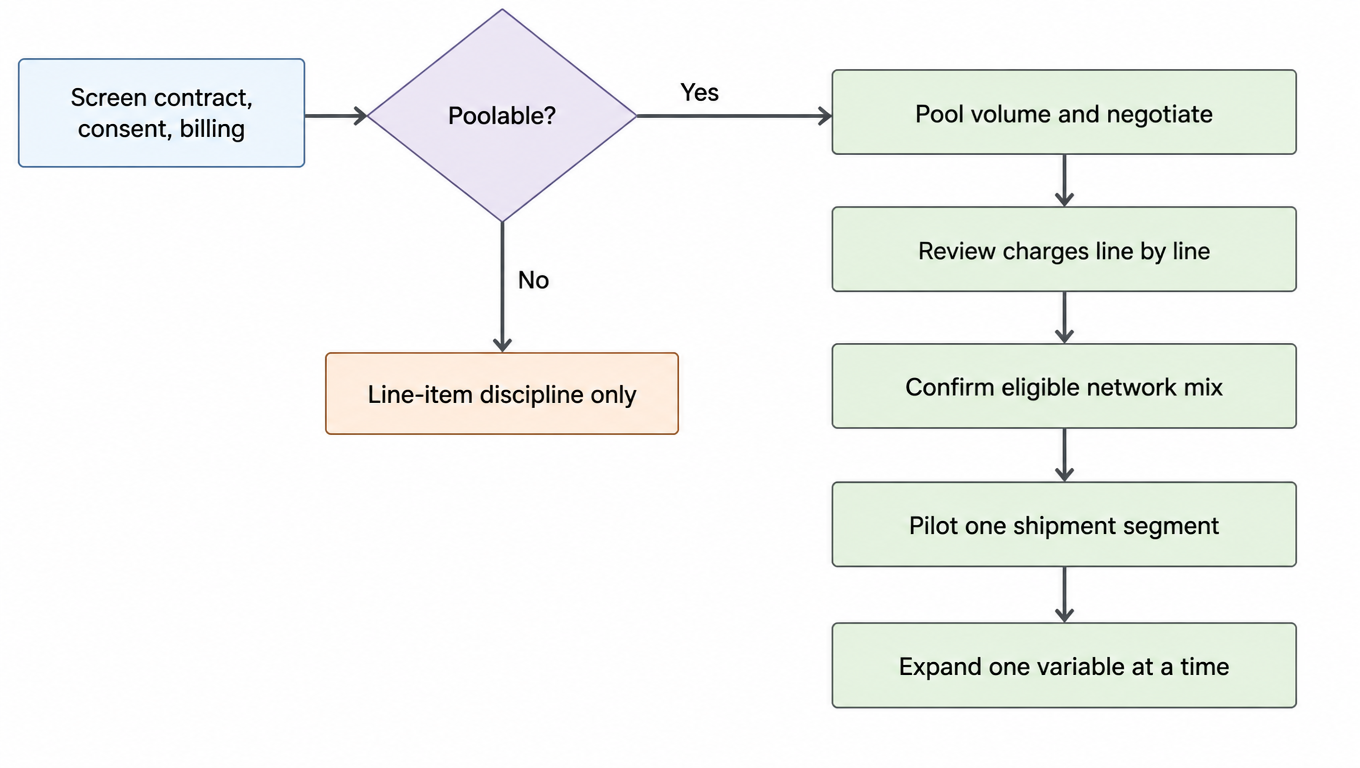
第一阶段是审计,第 1 到 3 个月,由运营经理负责。拉出每一张发票、逐行列出每一笔附加费、按区域画出每条线路的成本,建立一份每个包裹真实成本的干净数据集。第二阶段是谈判,第 4 到 6 个月,由 COO 负责。拿着审计后的数字,Summit 基于聚合货量重谈两个核心承运商合约、给附加费封顶、签下第一批区域网络协议。第三阶段是路由,第 7 到 12 个月,由工程负责人负责:先上线比价路由,再逐条线路铺开 zone skipping,从货量最大的走廊开始。Phase one was audit, months 1 to 3, owned by the operations manager. Pull every invoice, line-item every accessorial, map every lane's cost per zone, and build a clean dataset of what each parcel actually costs. Phase two was negotiation, months 4 to 6, owned by the COO. With the audited numbers in hand, Summit renegotiated its two core carrier contracts on pooled volume, capped accessorials, and signed its first regional network agreements. Phase three was routing, months 7 to 12, owned by the head of engineering: rolling out rate shopping, then zone skipping lane by lane, starting with the highest-volume corridors.

这条轨迹讲完了整个故事。第一个月的单件综合成本是 4.85 美元,重谈合约后是 4.27 美元,网络组合成熟后是 3.93 美元,比起点低约 19%。长距离线路时效提升一天,随着审计成为常规动作账单准确率上升,两个最危险的客户续签多年合约,还带来了三个明确冲着价格签约的新品牌。The trajectory tells the whole story. Month one blended per-piece cost was $4.85. After renegotiation it was $4.27. After the network mix matured it was $3.93, about 19% below where Summit started. Transit improved by a day on long-haul lanes, bill accuracy went up as audits became routine, and the two at-risk accounts renewed on multi-year terms, joined by three new brands that cited the pricing as the reason they signed.

折线图:单件综合成本从第 1 个月 4.85 美元,重谈合约后 4.27 美元,网络组合成熟后 3.93 美元Line chart: blended per-piece cost from $4.85 in month 1 to $4.27 after renegotiation to $3.93 after network mix
12 个月,单件成本从 4.85 美元降到 3.93 美元12 months, from $4.85 to $3.93 per piece

六、从哪开始:90 天行动清单6. Where You Start: A 90-Day Action Plan

Summit 的打法不是专利,你也不需要 12 个月才能开始。这是 90 天版本。Summit's playbook is not proprietary, and you do not need 12 months to start. Here is the 90-day version.

第 0 到 30 天:审计。拉出三个月的发票,分类每一笔附加费,按线路、按区域算出真实的单件综合成本,找出你亏钱最多的两三条线路。第 30 到 60 天:谈判。把客户货量聚合成单一合约,要求审计暴露出的具体豁免,至少在一个走廊试点签下一家区域网络。第 60 到 90 天:路由。在试点走廊上线比价路由,对照基线衡量时效和成本,建立每月运价复盘机制,让每个杠杆保持诚实。Days 0 to 30: audit. Pull three months of invoices, classify every accessorial line, compute your true blended per-piece cost by lane and by zone, and identify the two or three lanes where you lose the most money. Days 30 to 60: negotiate. Pool volume across clients into single contracts, ask for the specific exemptions the audit surfaced, and sign at least one regional network agreement on a single corridor as a pilot. Days 60 to 90: rout. Turn on rate shopping for the pilot corridor, measure transit and cost against the baseline, and build the monthly rate review that keeps every lever honest.

从第一天起跟踪四个数字:单件综合成本、发票准确率(通过审计的附加费占比)、准时送达率、客户留存率。三个杠杆每一个都至少推动其中一个,这就是你知道打法在起作用的办法。Track four numbers from day one: blended per-piece cost, invoice accuracy (the share of billed accessorials that survive audit), on-time delivery rate, and client retention. Each of the three levers moves at least one of them, which is how you know the play is working.

最后说句实话:确实有自己当承运人说得通的时刻。如果你只在一个高密度都市区运营,每条线路的货量已经足以跑赢承运商的经济账,或者某个客户关系大到值得养一支专属车队,垂直整合可以成立。Summit 的教训不是买卡车总是错的,而是大多数 3PL 伸手太早,更便宜、更快的路是先让承运商市场为你工作。And the honest closing note: there are moments when becoming a carrier genuinely makes sense. If you operate in one dense metro where you already move enough volume per route to beat carrier economics, or if a client relationship is large enough to justify a dedicated fleet, vertical integration can pay. Summit's lesson is not that owning trucks is always wrong. It is that most 3PLs reach for it too early, and the cheaper, faster path is to make the carrier market work for you first.

常见问题FAQ

能。绝大多数降本来自市场杠杆而不是资产:聚合货量按全国客户级别谈判、附加费逐项管理、全国承运商与区域派送网络混合路由。Summit 用这套组合在 12 个月内把单件成本降了约 19%,还提升了时效。只有当你在单一高密度区域有足够货量,或客户大到值得专属车队时,自建运力才划算。Yes. Most of the savings come from market levers, not assets: pooled volume negotiated at national-account level, line-by-line accessorial management, and a hybrid mix of national and regional delivery networks. Summit used this combination to cut per-piece cost about 19% in 12 months while improving transit. Owning capacity only pays when you have enough density in one metro, or an account big enough to justify a dedicated fleet.
能,从你能聚合的货量开始。多个客户加起来的货量通常已经大于任何一个客户单独的量,这本身就是谈判筹码。90 天清单从审计开始,不需要先有大客户。区域派送网络也接受中小货量的合作,关键是先在一个走廊试点。Yes, start with the volume you can pool. Multiple clients together usually move more than any single client alone, and that is already leverage. The 90-day plan starts with an audit, not with landing a big account. Regional networks work with mid-size volumes too; the key is piloting one corridor first.
两个场景:你只在一个高密度都市区运营,且每条线路的货量足以跑赢承运商的单件成本;或某个客户关系大到值得养一支专属车队。除此之外,自建运力的资金、合规和网络密度门槛,通常会让单件成本更高,而不是更低。先把承运商市场用尽,再谈买卡车。Two scenarios: you operate in a single dense metro with enough per-route volume to beat carrier economics, or one client relationship is large enough to justify a dedicated fleet. Otherwise the capital, compliance, and density hurdles usually make per-piece cost higher, not lower. Exhaust the carrier market before you buy trucks.

想让每个包裹都用最便宜的合格运价发出去?Ready to route every parcel at the cheapest qualified rate?

EasyShippingX 帮你把三个杠杆一次落地:聚合货量的统一谈判窗口、跨承运商实时比价路由、区域派送网络的混合派送。自有账号运价直通,USPS、UPS、FedEx 与区域承运商随时可用,附加费和路由规则集中管理。EasyShippingX helps you pull all three levers at once: a single window for pooled-volume negotiation, real-time rate shopping across carriers, and a hybrid mix that includes regional delivery networks. Your own-account rates pass through, USPS, UPS, FedEx, and regional carriers are ready to go, and accessorials and routing rules are managed in one place.

Get Rate Comparison
Get Rate Comparison