The Three Pricing Models at a Glance
There are three base models, and every real-world arrangement is a variation or a combination of them.
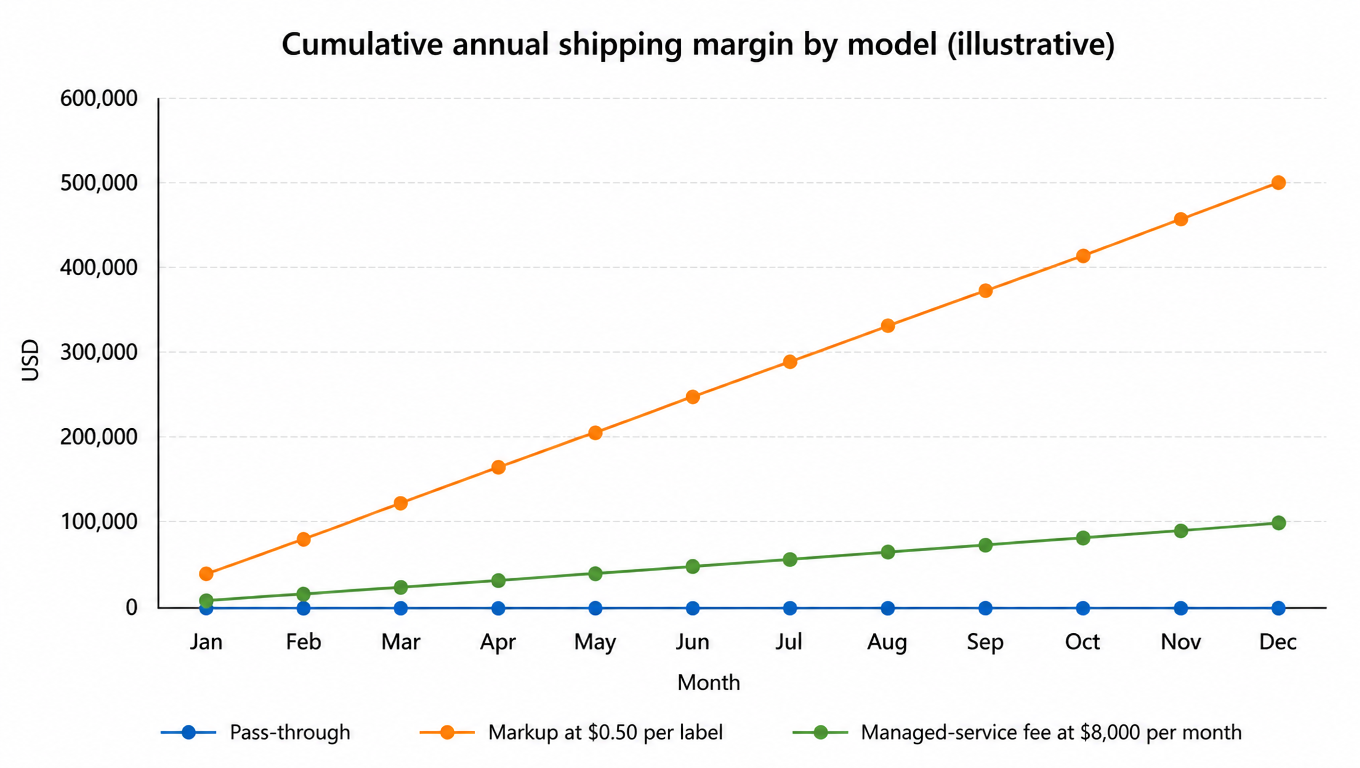
Pass-through. You charge the client exactly what the carrier charged you. Your negotiated discount is passed along in full, line by line. The 3PL earns nothing on the freight itself, so the shipping line is a cost center that exists to win and keep the storage and pick-pack business around it.
Markup. You charge the carrier cost plus something: a fixed number of cents per label, a percentage on top of the discounted rate, or a blended per-parcel rate built above what you actually pay. Some 3PLs do this openly and disclose the spread; others fold it into the rate and never name it. In every variant, shipping itself becomes a revenue line that scales with volume.
Managed-service fee. You charge pass-through rates and layer a separate monthly or per-shipment fee on top, and in return you take responsibility for the whole shipping operation: rate shopping, carrier contract negotiation, claims filing, surcharge audits, and quarterly reviews. The client buys an outcome rather than a rate, and your margin comes from the fee, not from the spread between two rates.
The three models look different on the client invoice too. Pass-through shows the carrier charge and nothing else. Markup shows the carrier charge plus a fee or a higher blended line. Managed service shows the carrier charge plus a recurring management fee, usually as its own line item so the client always knows what the service part costs.