Why "one label is cheaper than two" is the wrong frame
The intuitive version of the calculation counts labels and weight bands. It is wrong because it treats postage as the whole cost, when postage is only the line item that happens to be printed first. Three cost blocks move when you combine, and they do not all move in the same direction.
Place consolidation alongside the other cost levers in the shipping-cost optimization overview. Use the quote-to-final-charge guide to compare the consolidated parcel quote with the resulting shipment charges.
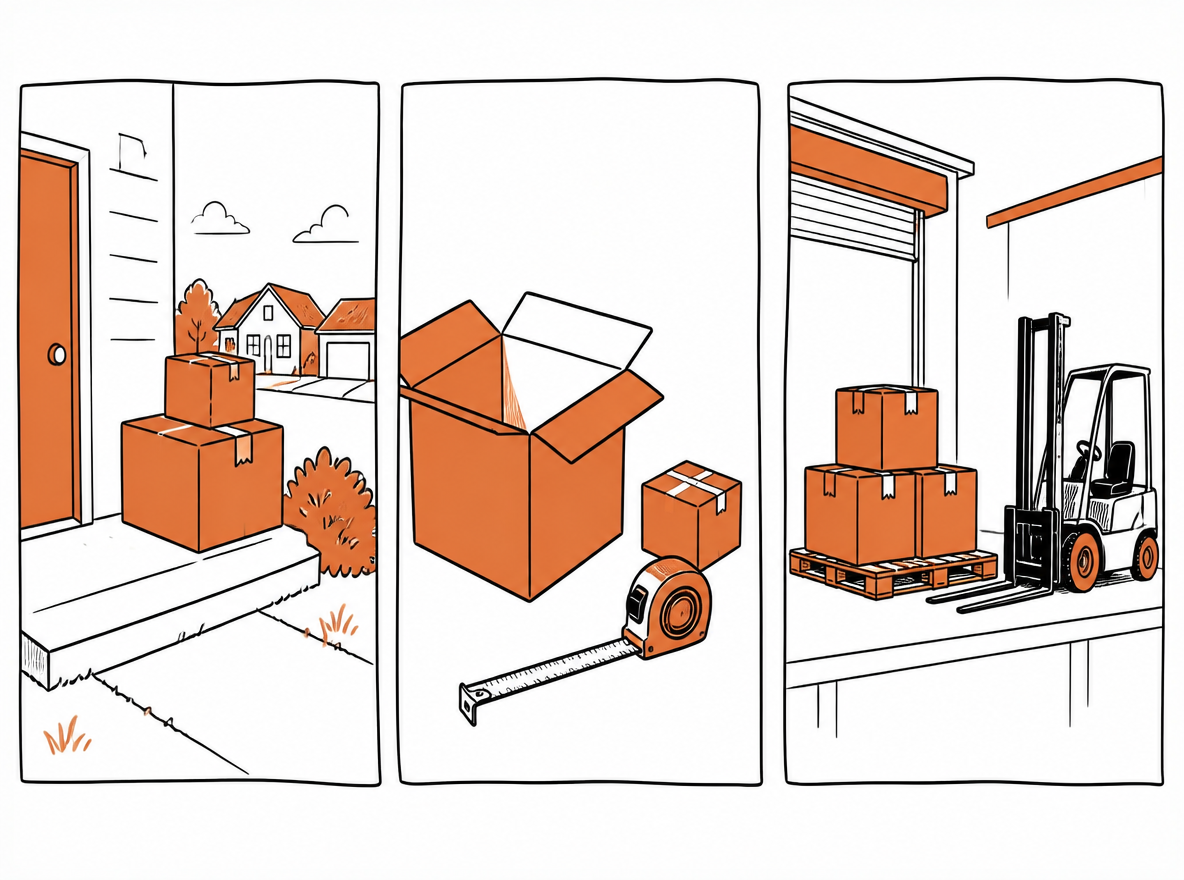
First, the carriage and surcharge structure. Fewer shipments usually means less postage, but the box changes. A larger carton can push billed weight past a threshold, and depending on the service used a second item may be charged separately, at a higher tier, or trigger an additional-handling or oversize fee that neither parcel carried on its own. Residential and signature-related charges are usually assessed per shipment, which works in your favor, while peak and demand surcharges scale with the parcel you actually hand over. Who pays: the brand, through the postage account.
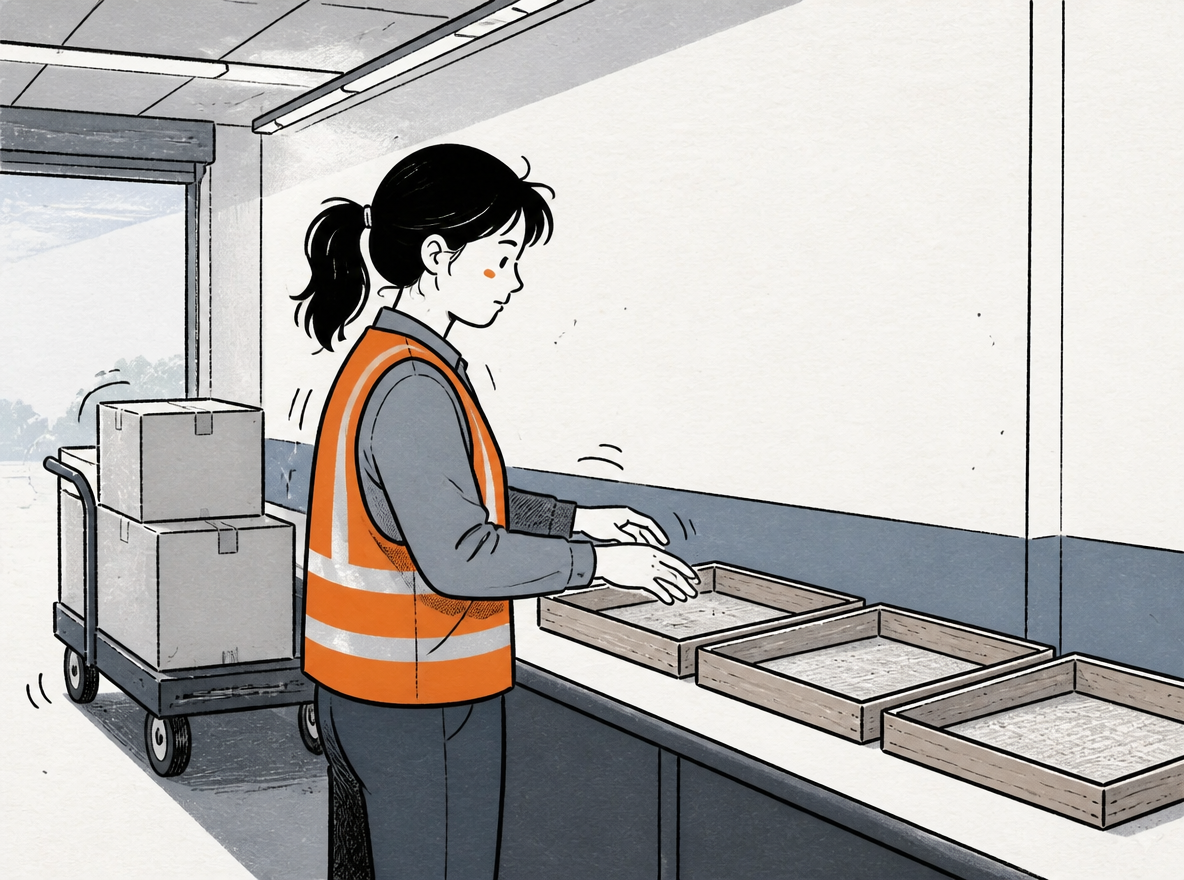
Second, fulfillment and time cost. Combining means holding. Someone has to stage the first parcel, check the window, reopen a sealed carton, repack into a bigger one, and hold a slot on the bench while the second order is still being picked. That labor is real even when it never appears on an invoice, and latency becomes a service cost the moment a delivery promise is missed. Who pays: the brand in labor minutes, and the buyer once the promise slips far enough to matter.
Third, buyer experience and after-sales. A combined shipment arrives as one event, which most buyers like until they need to return one item out of three. Partial returns against a merged parcel are messier to receive, and the buyer now sees one tracking number where they expected two. The order records also have to be adjusted, because each original order still needs its own shipment record and status. Who pays: customer service and the returns desk, with the brand absorbing both.
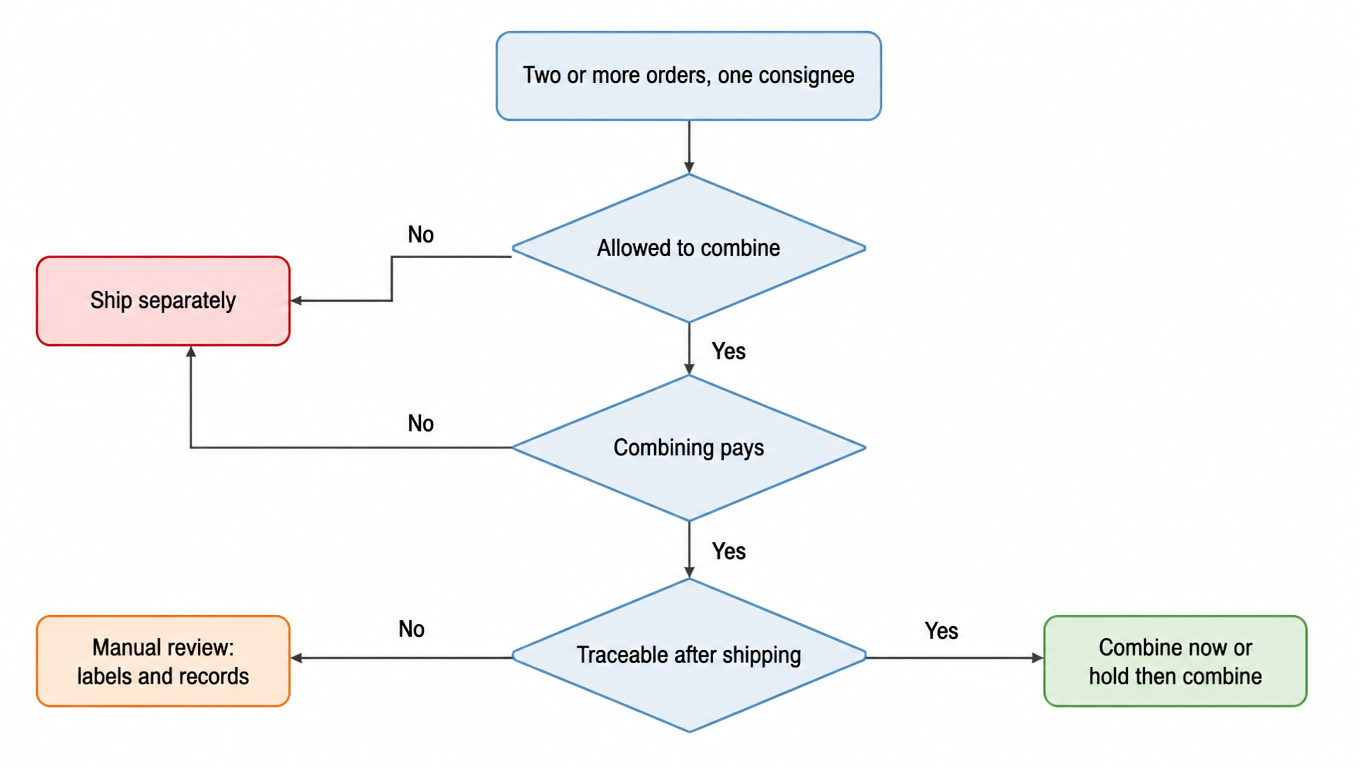
There is a fourth, quieter cost that shows up in the systems layer. Shippo's own help documentation notes that when you combine parcels, the packing slip and shipment notifications still follow the original orders rather than the merged box (Shippo general FAQs). That is exactly the handoff problem the floor creates the moment the physical box is sealed: the parcels merge, and the paperwork behind them does not merge on its own.
Put the numbers from the first worked example below into a single stack and the shape of the decision becomes clear.
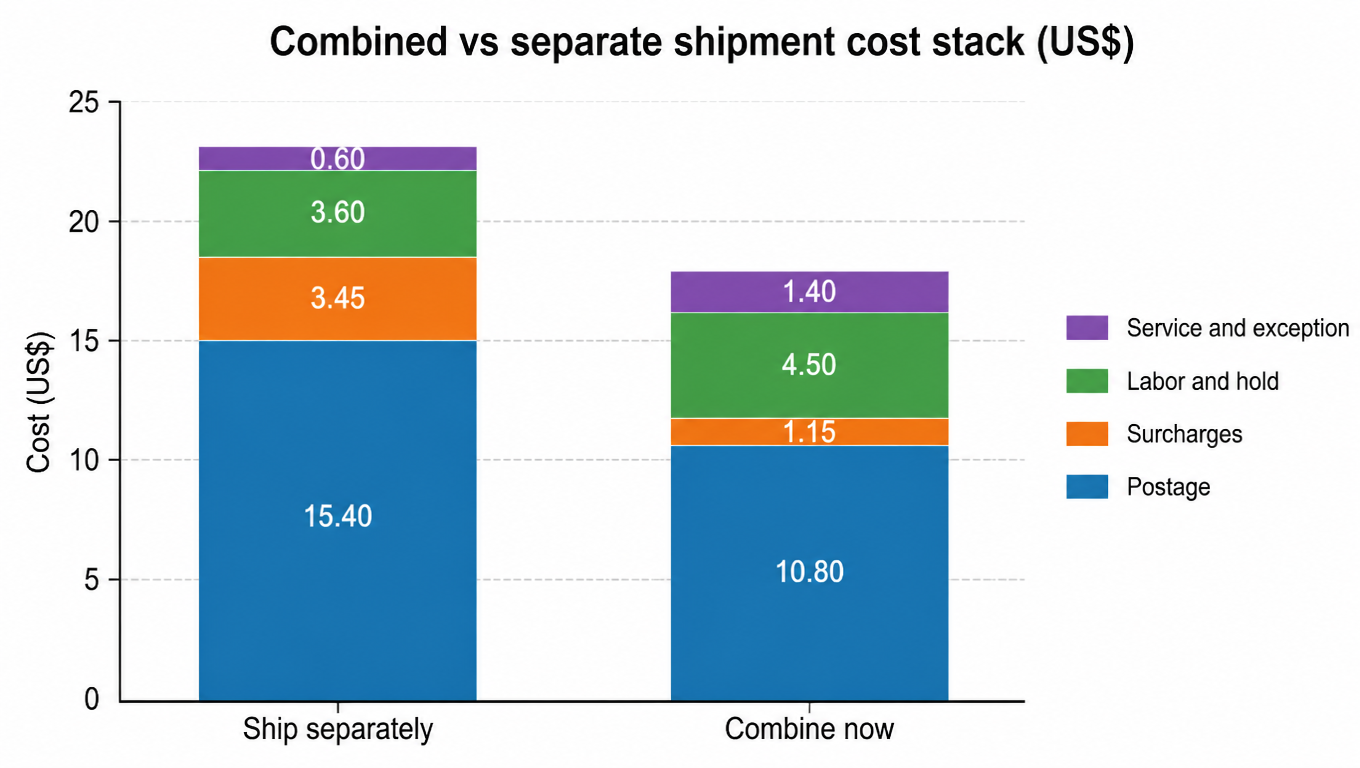
Postage falls by $4.60 and surcharges by $2.30. Labor rises by $0.90 and service by $0.80, and the net gain is $5.20. In this case combining wins. The point of the chart is that the win is smaller than the postage line suggests, and in the two examples that follow the same arithmetic runs the other way.