The Problem: One Order That No Single Node Can Fulfill Completely
Every split-shipment decision starts the same way: a multi-SKU order that no single inventory node can fulfill completely. "Node" means any place that can pick, pack, and hand a parcel to a carrier: your own warehouse, a 3PL, or a prep center. The order is stuck because at least one of these is true:
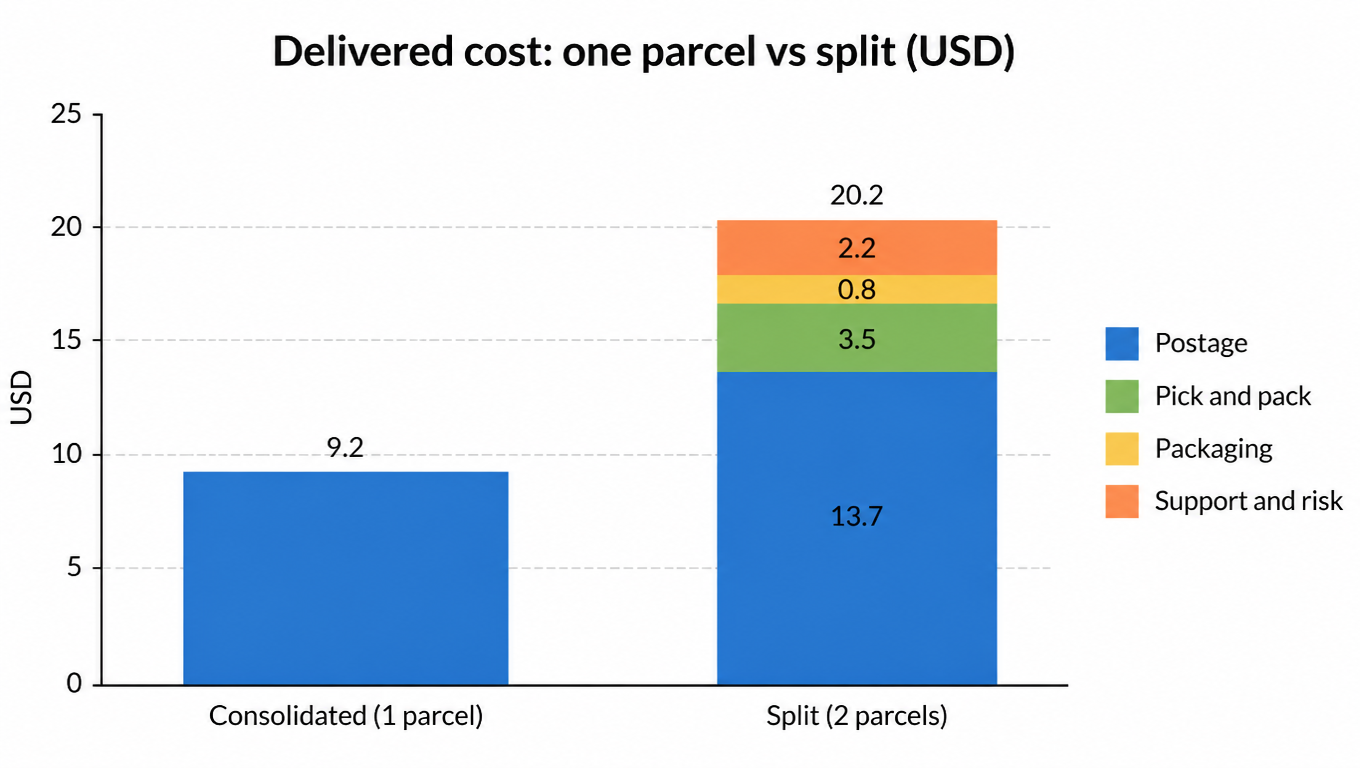
Place the split-order decision among the cost levers in the shipping-cost optimization overview. Use the cost-per-successful-delivery method to include the completion outcome when comparing executable fulfillment paths.
- A SKU is temporarily out of stock. The backorder ETA is tomorrow, next week, or unknown.
- Stock is spread across warehouses. SKU A sits in the Ohio 3PL, SKU B in your own facility in California, and neither can ship both today.
- The system says available, the shelf disagrees. Cycle count drift, a mispicked bin, or a return that never got put back.
- The warehouse missed the carrier cutoff. The order dropped after pickup, so the earliest it can leave is tomorrow even though everything is on the shelf.
- One parcel cannot satisfy the rules. The combined box exceeds a carrier's size limit, mixes a hazmat item with ordinary goods, or trips a service restriction that forces a slower or more expensive class.
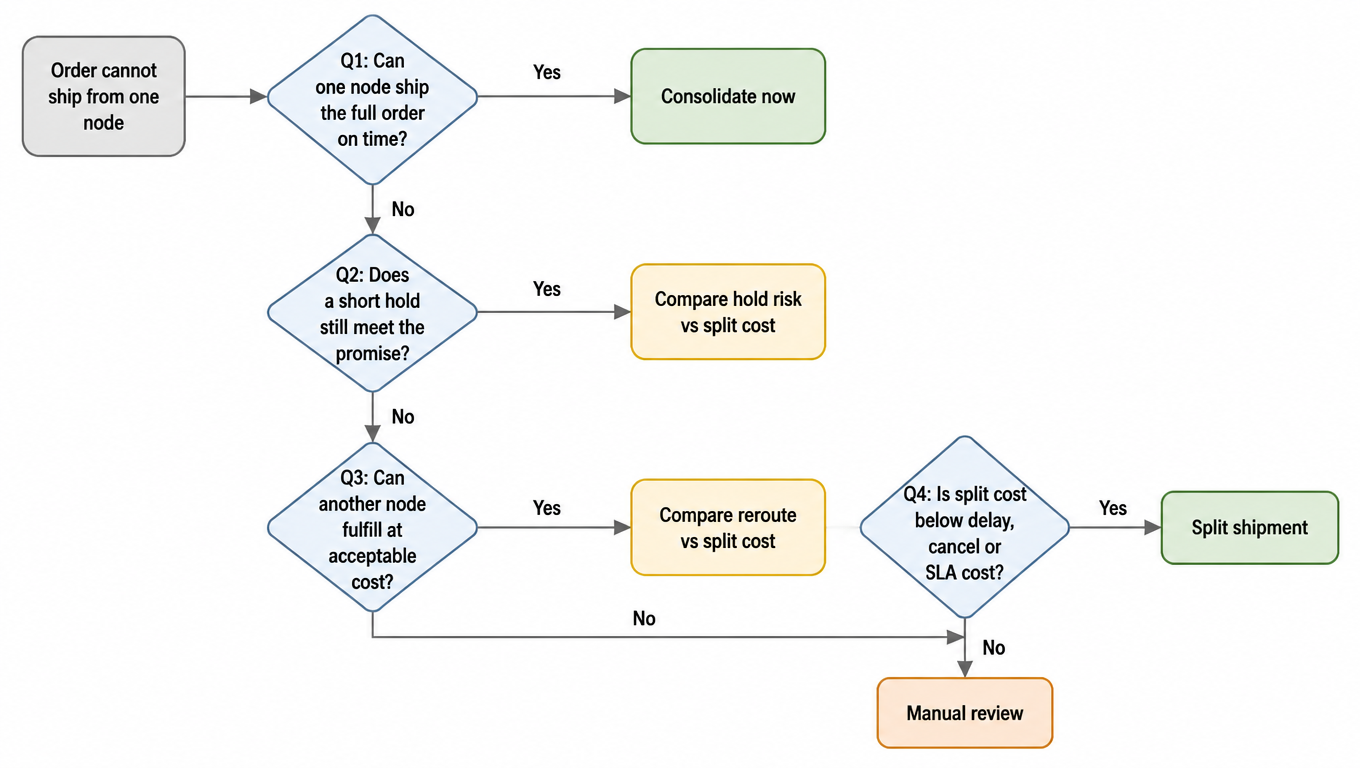
Any of these forces the same operational question: hold, reroute, split, or hand it to a person. The frustrating part is that the answer is almost never visible at a glance, because the right choice depends on inventory, timing, promises, and cost all at once. And every minute a human spends re-deriving it is margin leaving the order.