The Four Entities (and the Mix-Up That Costs You)
The message arrives on a Tuesday: "I sent the return back last week, where is my refund?" Underneath that one anxious sentence sit four completely different objects, and most support teams, spreadsheets, and returns apps quietly collapse them into one blob they call "the return." That collapse is where refunds leak, tickets loop, and CSAT dies.
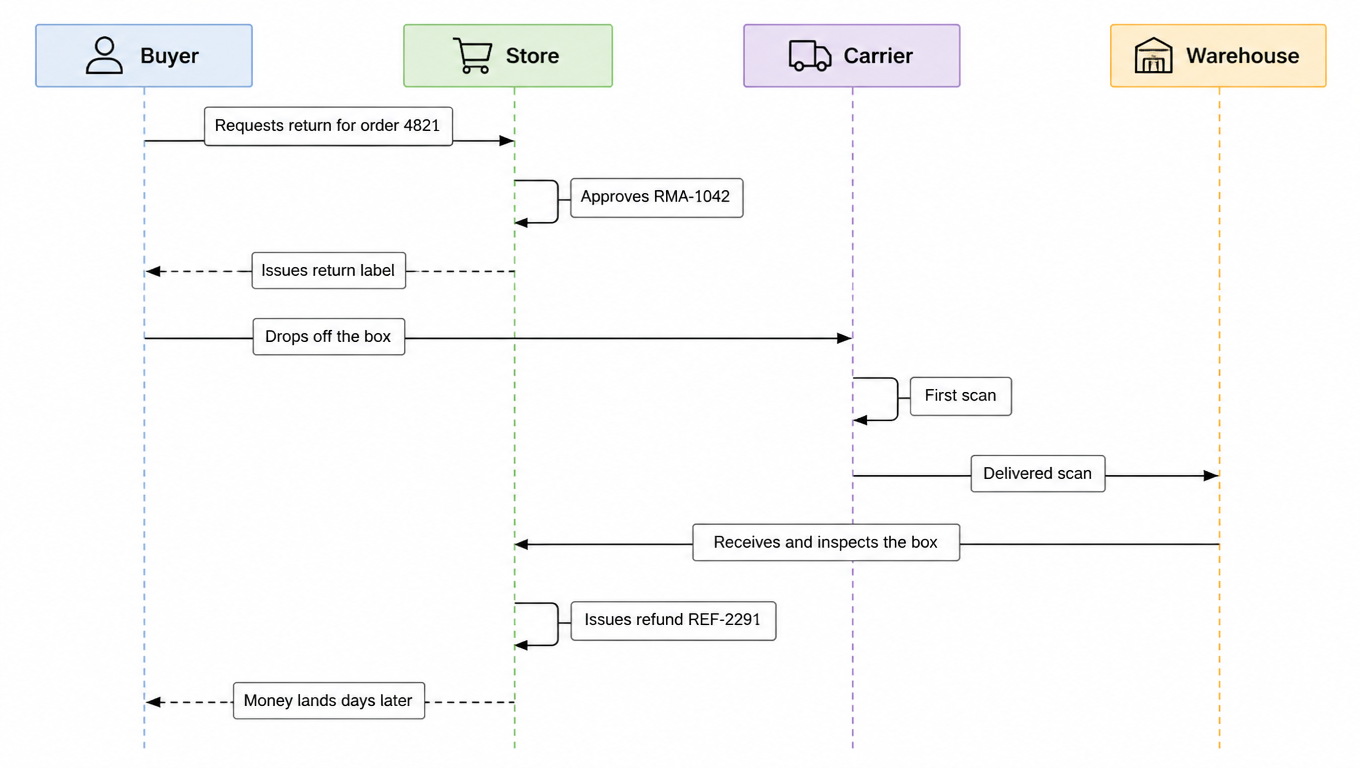
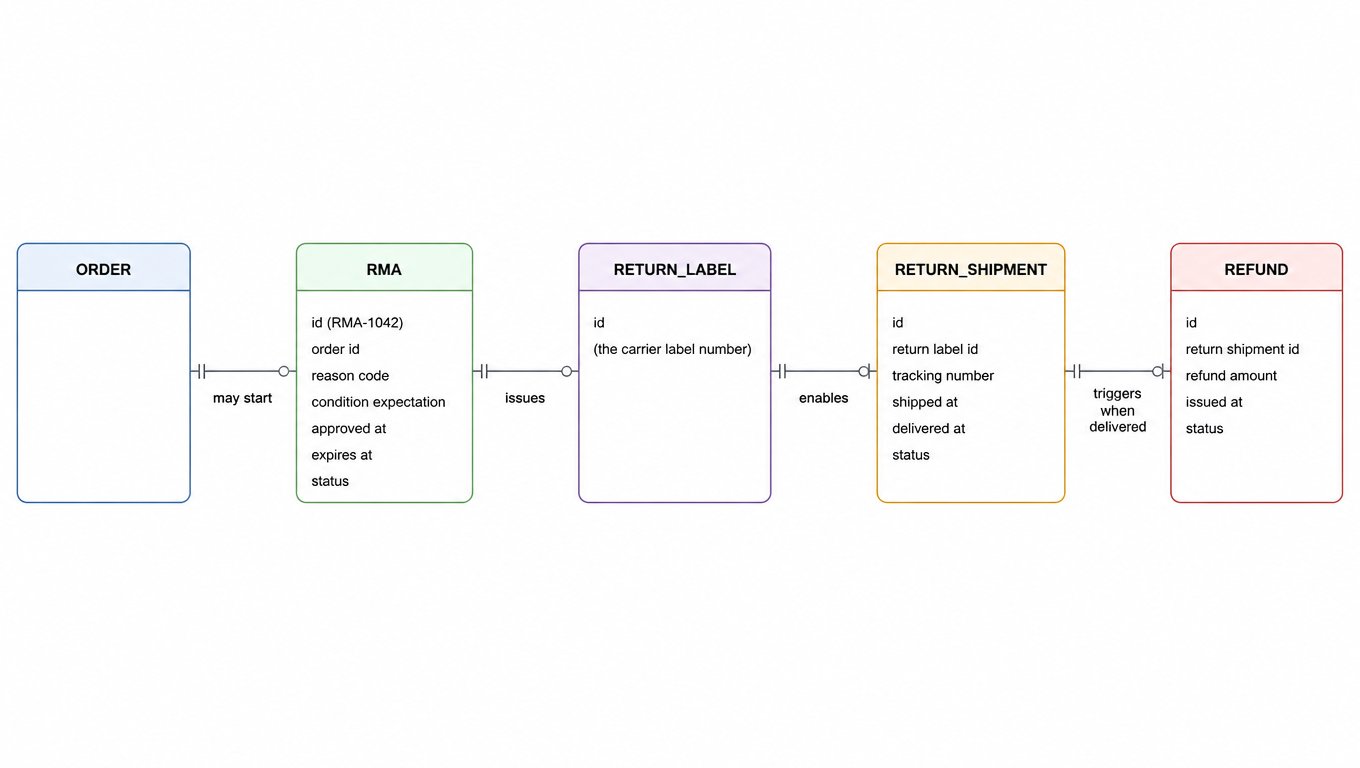
An RMA is permission. A return label is the instrument that lets a box travel. A return shipment is the physical movement of that box. A refund is the money moving back. Each has its own ID, owner, status, and lifecycle. They start in sequence, but after the buyer hands the box to the carrier they drift apart and live independently, and you need to track each one separately from then on.
| Object | What it is | What it is not | Typical status flow |
|---|---|---|---|
| RMA (authorization) | The seller record of whether a return is allowed, what is allowed back, and for how long | Not the movement of goods or money | requested → approved → expired / voided |
| Return label (instrument) | The prepaid label that makes the physical return possible | Not the return itself | issued → used / expired / voided |
| Return shipment (movement) | The box traveling back, tracked by carrier scan events | Not the refund | label_created → in_transit → delivered / exception |
| Refund (money) | The money moving back | Not "the return" | pending → processing → issued / failed |
Equally useful is what each one is not. An RMA is not the authorization to ship (it is the authorization). A label is not the shipment. A shipment that delivers is not a refund. And an issued refund is not money in the bank. One object moves boxes, one moves money, and the other two exist to authorize and record. The moment you remember which object is responsible for which promise, reverse logistics stops being a black box.