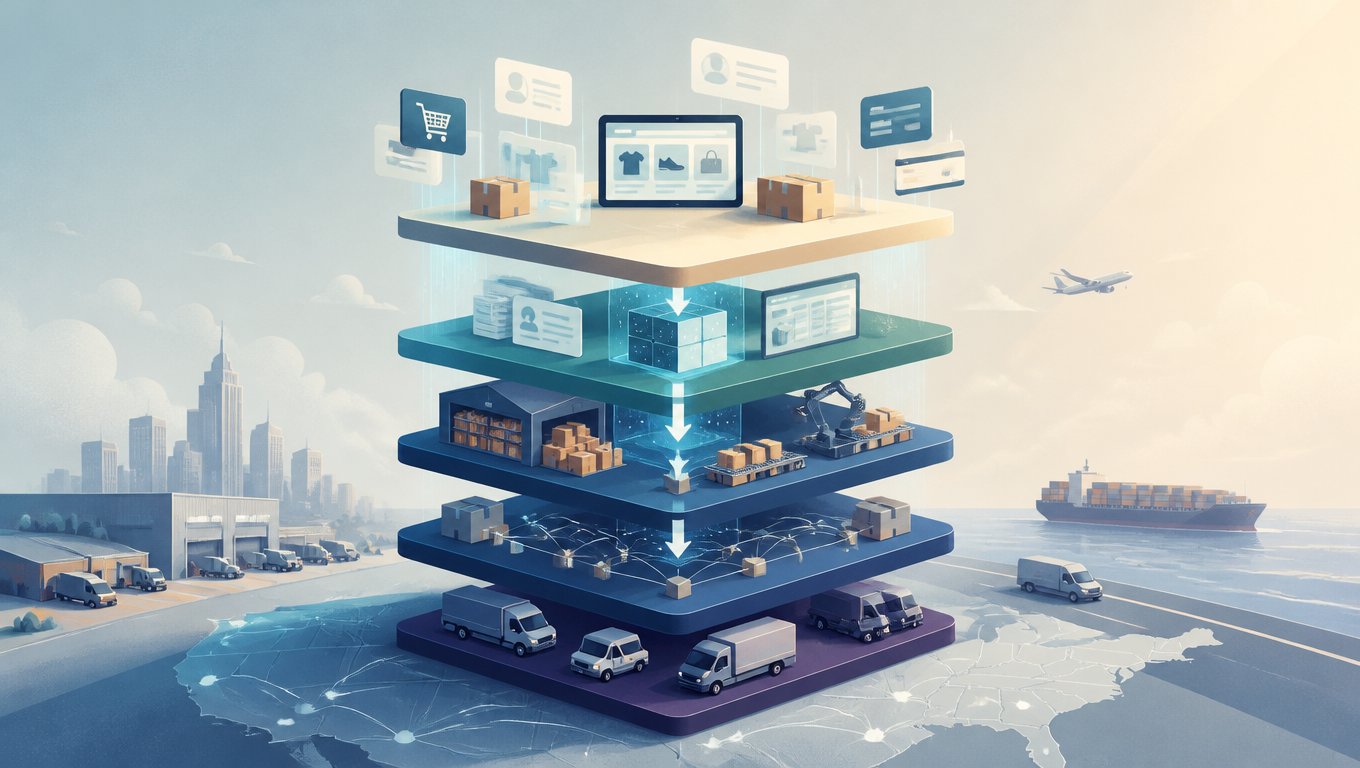
Why This Matters: A Stack, Not a Label Printer
The naive mental model looks like a single pipe. Order goes in, label comes out, the carrier does the rest.
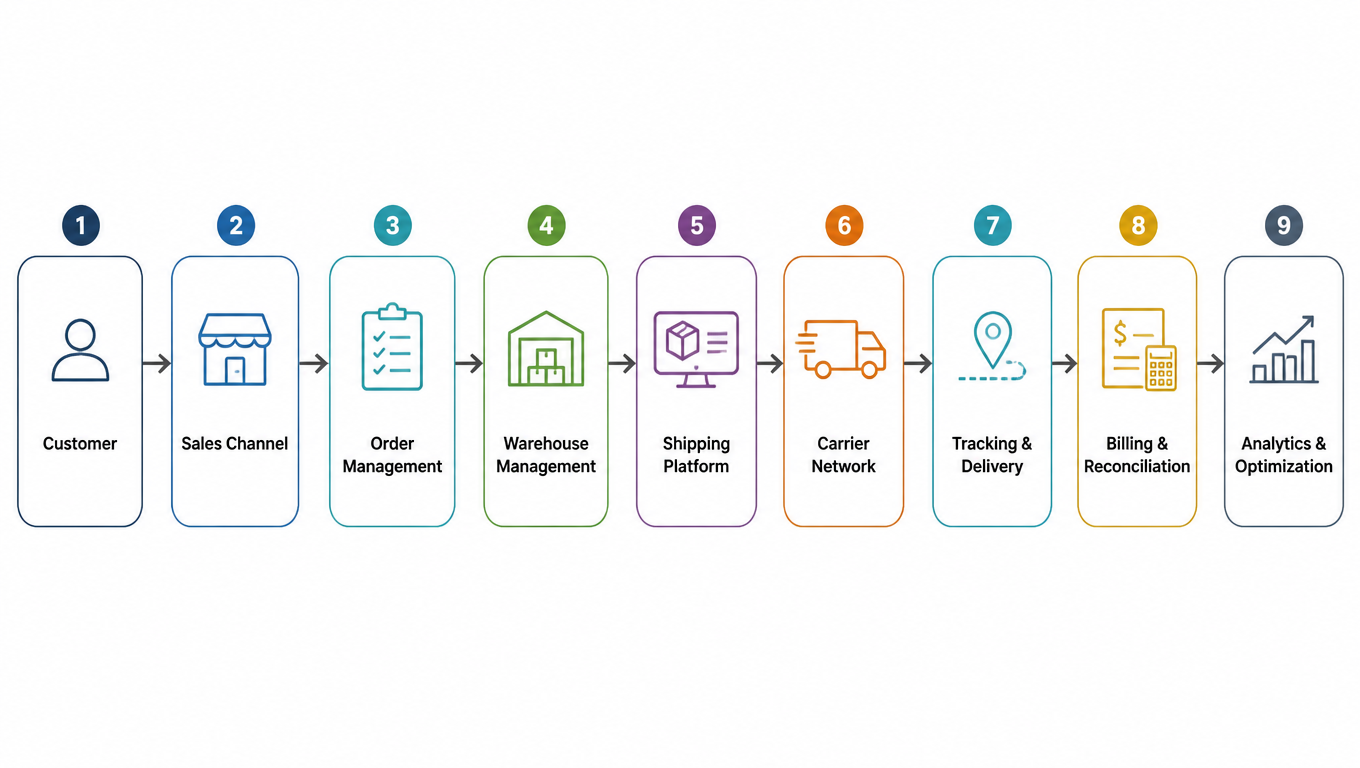
The ecommerce shipping overview connects the layers of the stack to the merchant operating model. Use the 3PL API procurement guide when evaluating the carrier-execution interface for a multi-client 3PL.
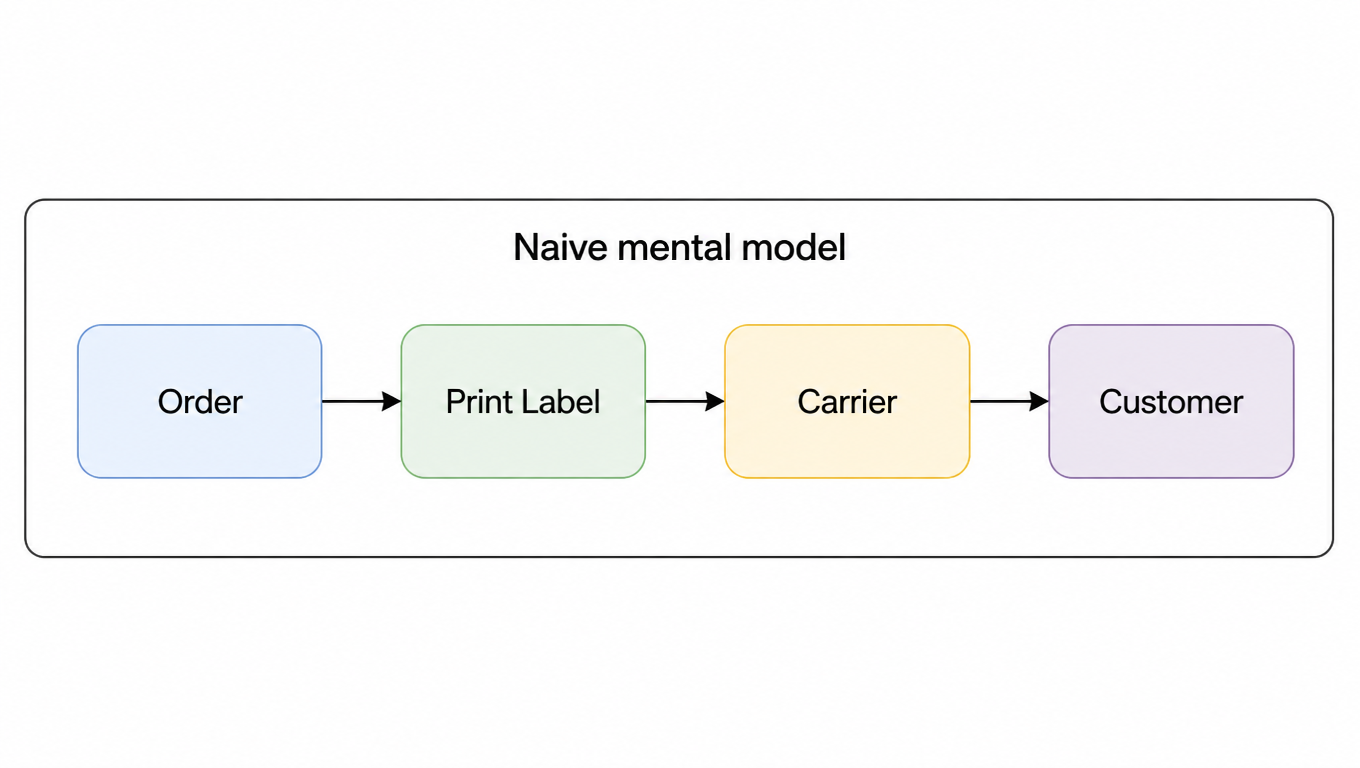
In reality, the pipe is a lie. A modern shipping operation is a stack of systems, people, workflows and data that spans the whole order lifecycle, from the sales channel where the order is created to the analytics that tell you which carrier actually made you money. Each layer has a distinct job, holds different data, and is owned by different decision makers.
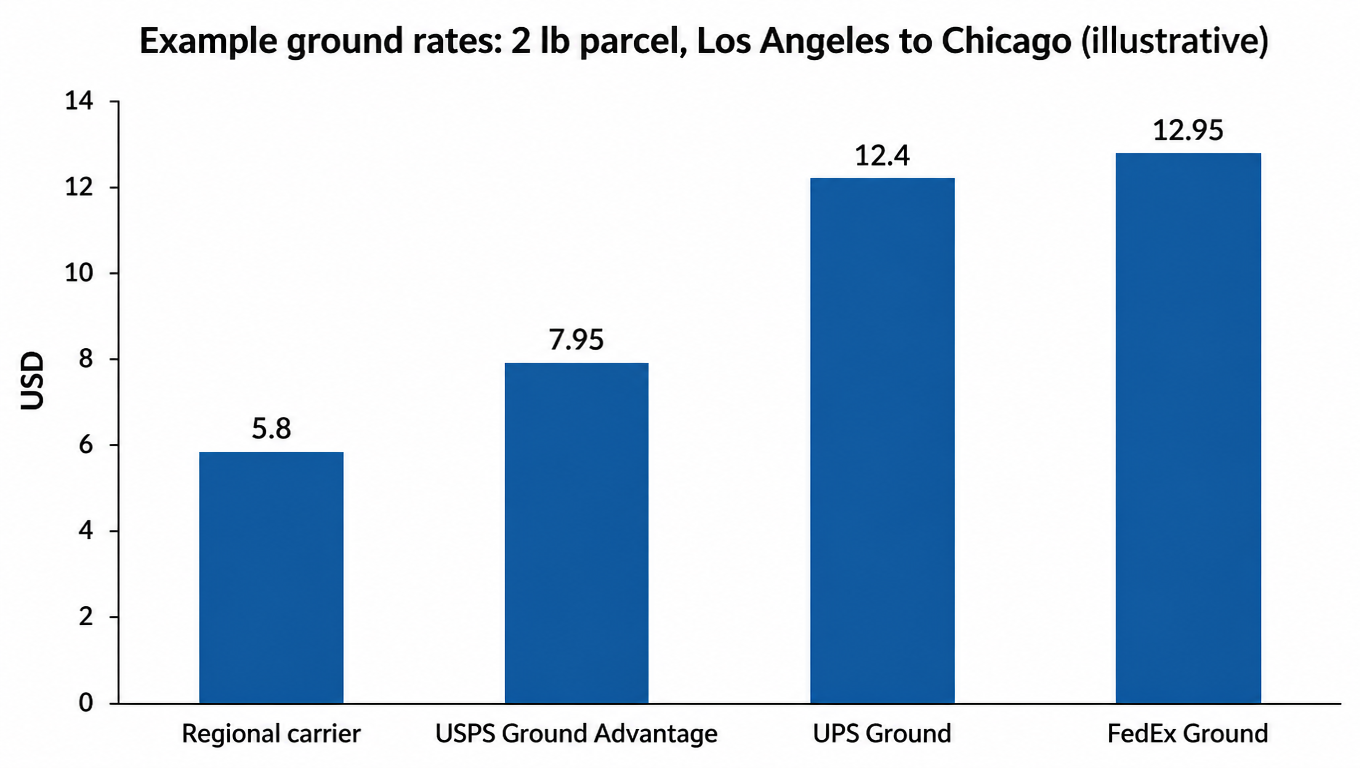
The stack view matters for a practical reason: costs and failures hide at the seams. A package is not expensive because of one bad label; it gets expensive because nobody reconciled the DIM surcharge on the invoice, or because the routing rule quietly sent a 3-pound parcel through a national carrier when a regional one was 40% cheaper. When you can see the whole stack, you can see where the money and the risk actually move.