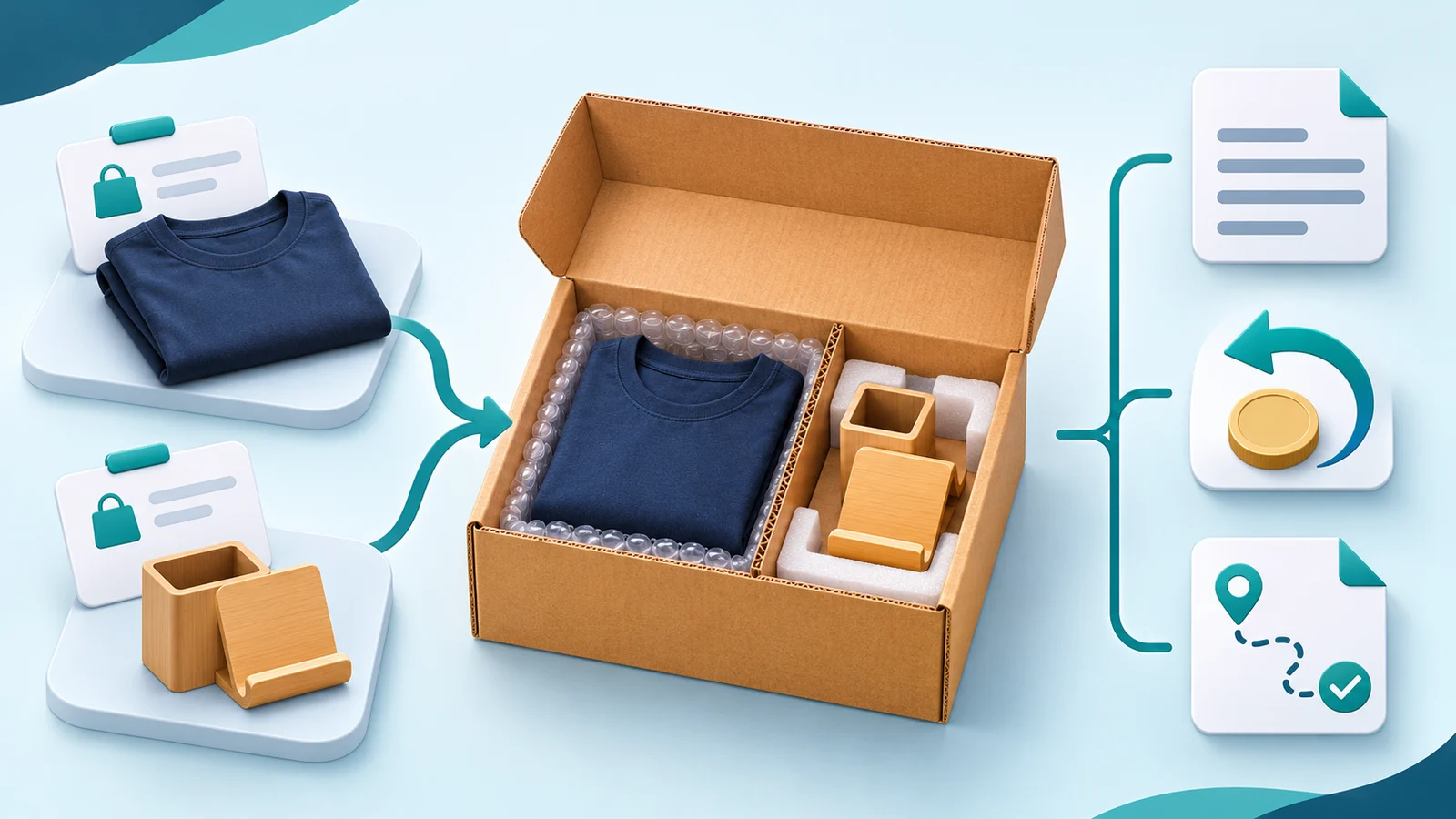
Compare three ways to buy and record a label
Start with what the shop can verify after purchase. Ask where the order address is entered, where the label is stored, how tracking returns to the order and who checks the record. When a team runs more than one shop, give each package a stable link to the correct shop and order. The number on a label can be perfectly valid and still be on the wrong Etsy order.
| Workflow | Address and label | Tracking in Etsy | Work, cost and fit | Verify before use |
|---|---|---|---|---|
| A. Buy in Etsy | Order address stays in Etsy. Buy and print there. | Etsy attaches tracking when included. | Fewer copies. Compare the eligible quote and fees. Useful for single-shop work. | Seller location, service and notification. Seller checks final fields. |
| B. Confirmed integration | Authorized connection supplies allowed fields. External provider creates label. | Permitted connection can send tracking. Seller checks the result. | Setup and possible fees. Useful across channels if supported. | Etsy permissions, account and triggers, write-back failure owner. |
| C. External purchase plus manual update | Seller enters or uses authorized address transfer. External tool prints label. | Seller enters actual carrier, ship date and tracking after handoff. | Additional entry and checks. Useful for selected parcels and required services. | Actual service, carrier recognition, cost and edit responsibility. |

Etsy's U.S. origin guidance says that from October 21, 2024, Shippo and ShipStation are the third-party shipping apps that can automatically import and export all shipping-related data when integrated. Etsy describes a legacy exception for another service integrated before October 21, 2024. Verify that the connection is still active for the actual account. A new setup should not assume the same access as an existing connection. Etsy says other apps can still be added with limited functions, and that work such as accessing addresses, submitting tracking or marking orders shipped may require manual action. Etsy third-party shipping guidance
An API for creating labels is a capability of the label provider. Test the Etsy side of the workflow separately. On a small sample, check who may read the address, what action triggers the write-back, which carrier value is sent, whether the shop receives a rejection and who fixes it. If the shop needs to copy and paste the address or submit the tracking number itself, budget that effort. For orders handled manually, build a queue with a named person who can finish the update when the packer is unavailable.
An Etsy label can be simpler for a seller who wants the order address, label and tracking handled in one workflow. Etsy says tracking is included when a label purchased there supports tracking. Some Etsy-purchased services have notifications tied to scans. External tools can help when the seller already buys labels across sales channels or needs a confirmed service the Etsy workflow does not offer. Either way, compare the quotes your shop can use for the service and shipping date. Etsy label purchase · Etsy tracking and completion
Before moving an account that already syncs, confirm how the current provider handles a failing address import, a late shipment and a voided label. Save evidence of the current setup. Check permissions before disconnecting a legacy connection or replacing it with a new authorization, because the public exception describes already integrated services. During a pilot, assign one source of tracking updates for each parcel so a late retry does not overwrite a correct entry.
When several people buy labels, set a convention for identifying the account and source shop. A report exported from one tool may group all channels together. Require the external record to reference the correct Etsy order and piece before the next employee completes it. A reconciliation failure should keep the affected record out of the automatic queue.