Ecommerce Shipping Guide

Unused and Voided Shipping Labels: When You Get Charged, Refunded, and Reconciled

Every shipper has done it: printed a label, and then the package never went out. The order was cancelled, the customer changed the delivery address, the cart was merged, or the print button was clicked twice. The label sits in the drawer or the void queue, and a question follows: where did the money go? The answer is not one rule. It depends on how the label was funded, when the void request was filed, and how your billing and reconciliation treat the transaction. This guide walks through the four money events in order: charge, void, refund, and reversal, and shows how they connect when a label is generated but the package never enters the carrier network.

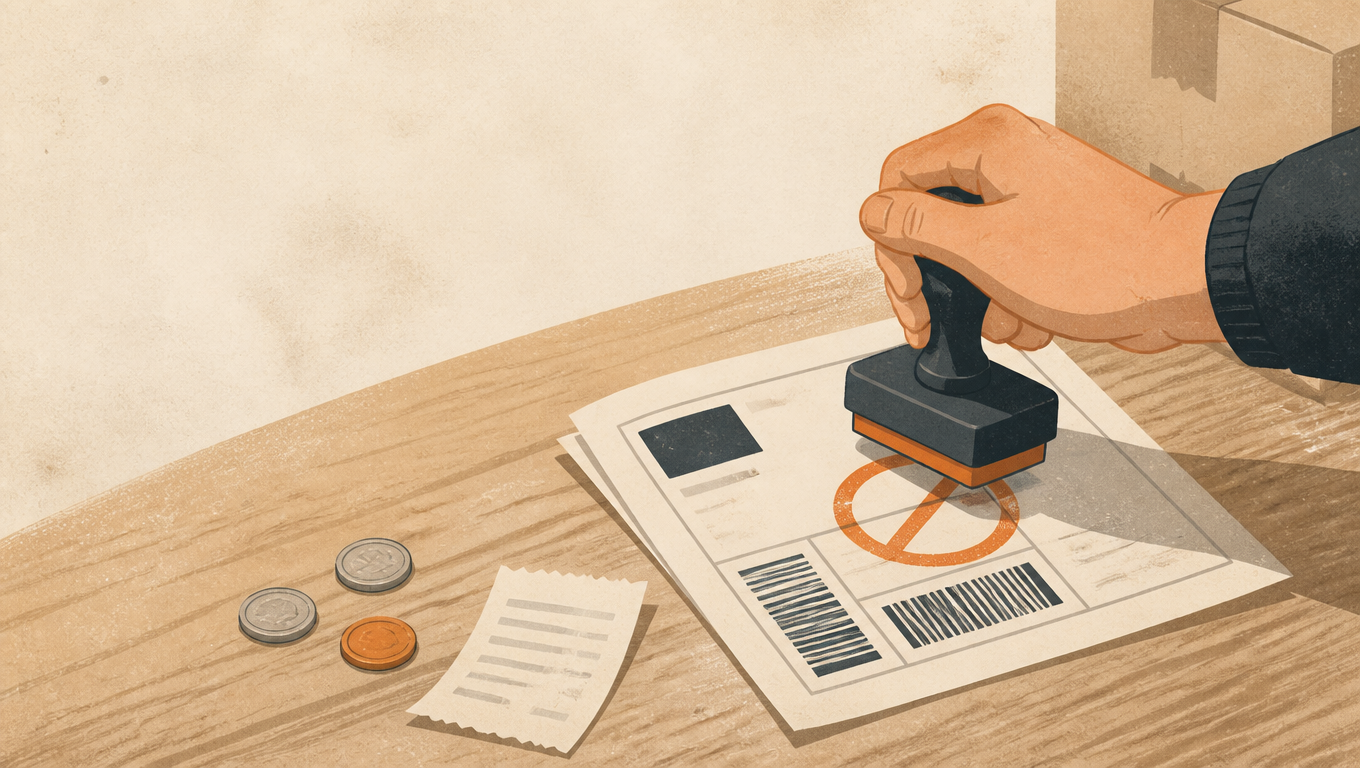
A hand stamps a shipping label on a workbench beside coins and a receipt.
A label, a stamp, a few coins: the money on a shipping label moves at its own pace, from purchase to void to refund

Why a Generated Label Is Not a Charge

Buying a label and paying for a label are two different events, and on some funding mechanisms they do not even happen at the same time. Once you know which mechanism you are on, every policy, window, and reconciliation step in this article falls into place.

Place label creation and cancellation within the Shipping API workflow overview so that their states remain separate from physical movement. Use the shipping reconciliation workflow to trace a void or refund through the carrier bill.

Prepaid funding covers USPS postage and most labels bought through shipping platforms with a card or an account balance. The money moves the moment the label is purchased. The platform deducts the rate, and the label is a paid asset from the second it exists. Post-billed funding covers UPS and FedEx carrier accounts that are invoiced in arrears. Nothing moves at purchase. The charge appears only when the package is scanned into the carrier network, on the next billing cycle[^2].

That is why "label purchased" and "money moved" are two separate events. On prepaid, an unused label has already taken your money, and getting it back is a refund. On post-billed, an unused label never took your money, and the correct outcome is not a refund at all. It is the absence of a charge. Keep this in mind every time a policy uses the word "refund", because for one of the two mechanisms the word is a misnomer. For a deeper look at why final charges diverge from quoted rates, see our guide on rate quote vs. final charge.
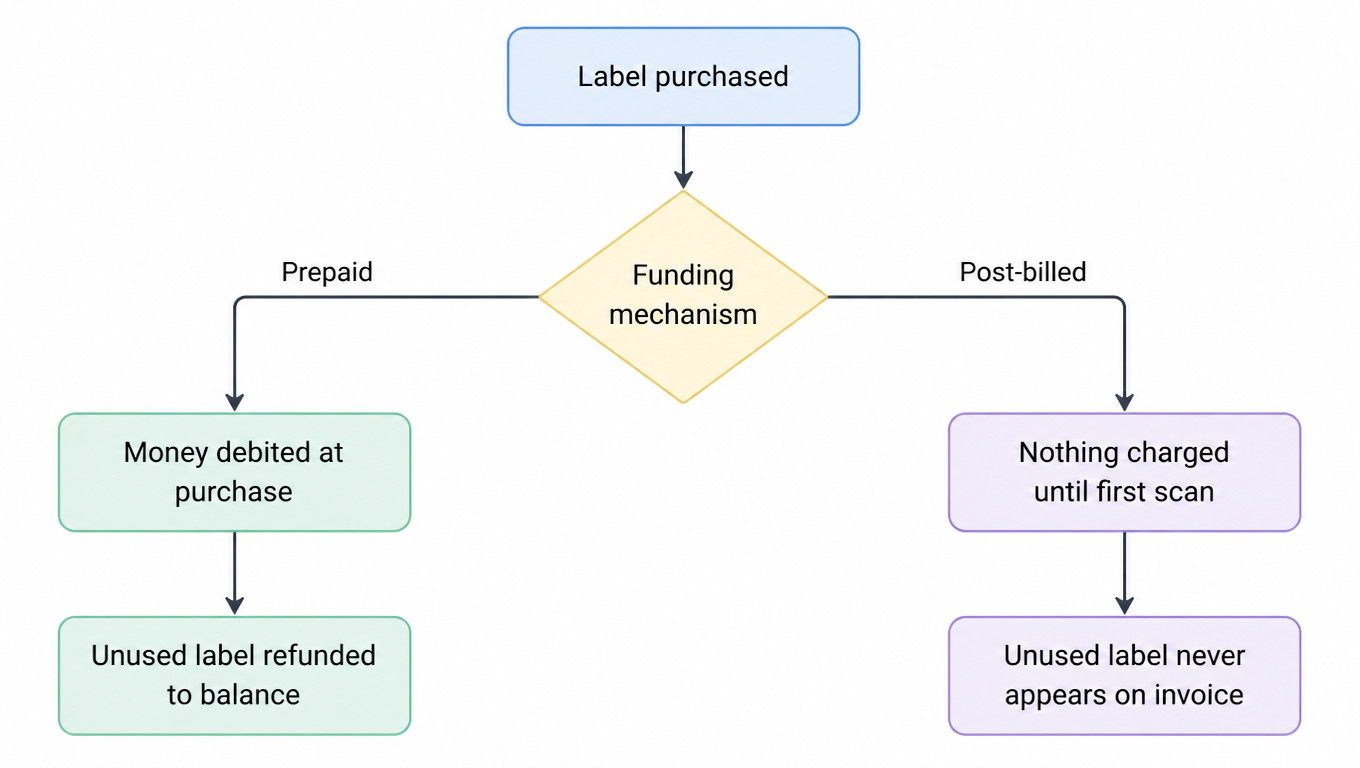
Billing flow contrasts prepaid label charges and refunds with postpaid billing triggered by the first scan.
Two funding mechanisms: prepaid debits at purchase, post-billed charges only on first scan

Label Status and Tracking Status Are Two Separate State Machines

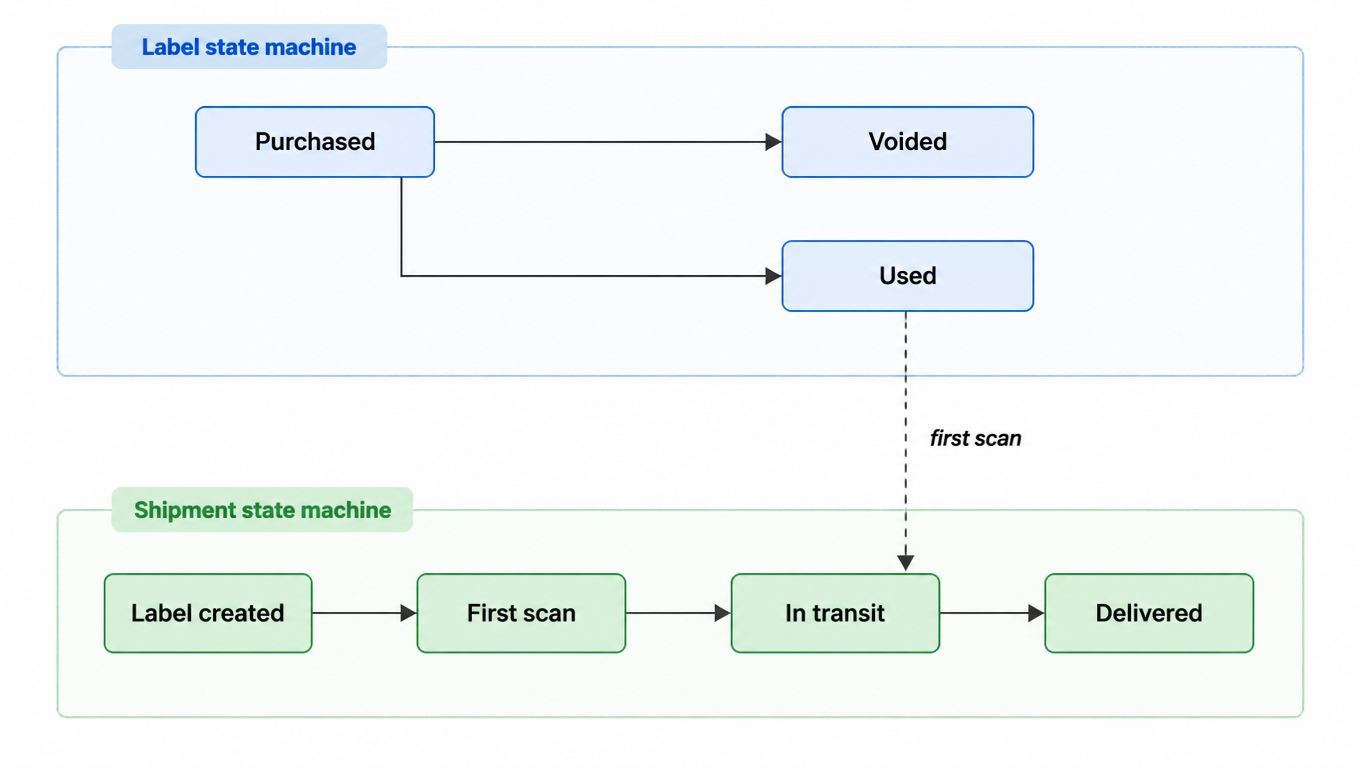
A label has its own lifecycle: purchased, then either used or voided. A shipment has another lifecycle: label created, first scan, in transit, delivered. Dashboards tend to blur the two into one timeline, but they advance independently and are driven by different actors.

Your actions drive the label state machine: you buy, you void. Carrier scans drive the shipment state machine. When a package never enters the carrier network, the two machines necessarily diverge, and this is exactly the scenario this article is about: the label says "purchased" or "voided", while the tracking number, if one exists, shows no scan at all. Neither state is wrong; they are simply measuring different things.

The two machines synchronize at exactly one point: the first scan. A label that has been scanned can no longer be voided with most carriers. A label that has never been scanned can still be voided, even if its tracking number exists and shows nothing. When you reconcile, compare the two machines separately: what you did to the label, and what the carrier actually saw. For why order status, shipment status, and tracking status drift apart, see our guide on order status vs. shipment status vs. tracking status.

Parallel label and parcel state machines meet at the first carrier scan.
The label state machine and the shipment state machine run in parallel and meet only at the first scan

Why Labels End Up Unused or Voided

  • Order cancelled after the label was purchased
  • Order changed, split, or merged after printing
  • Wrong address, wrong carrier, or wrong service level selected
  • Duplicate label generated by a retry or a double-click
  • Package never handed off and never scanned

These fall into two families. The intentional ones, like a cancelled order, are a policy question: when do you void, and who eats the float while the refund is pending. The accidental ones, like a wrong address or a duplicate print, are a system question: what prevents them from being created in the first place. The duplicate case matters most in API environments, where a timed-out request can trigger a retry that buys the same label twice. That one has a mechanical cure, and the engineering section comes back to it.

Void: The Window and the Rules

The single most important rule in this article: a void request is not a refund. Voiding is a request you file with the carrier or platform. The refund is a separate money event that may arrive days later, may land in a different place, and may never arrive at all. Never book the refund at the moment you click "void".

The windows and rules differ by carrier. USPS refunds unused labels that have not been scanned by the postage system; refund requests for Click-N-Ship labels can be filed up to 60 days after the print date, and the refund goes back to the postage balance or the original payment method[^1]. UPS labels on a carrier account can be voided before the first scan, within the applicable cutoff, and address corrections are a separate chargeable event that voiding does not undo[^6]. FedEx rules vary by label type, and some fees are not refundable[^5]. DHL Express and international carriers run on their own windows, and there is no uniform rule across them[^4].

Carrier policy is not platform policy. When a shipping platform shows a label as "voided" instantly, it may be fronting the refund from its own funds and collecting from the carrier later. That is a convenience, and it is also a separate policy you must verify[^3]. The exact answer for any label depends on three things: the carrier, the label type, and the channel or platform it was bought through. Verify the current terms for all three before you rely on the outcome.

Refund: Where the Money Goes and When It Lands

Refunds land in one of three places: back into the postage balance, back to the original payment method, or as a credit on the next invoice. The channel is usually set by the funding mechanism. On prepaid accounts the refund returns to the balance, which means the money does not become cash, it becomes reusable postage. Card refunds and invoice credits behave differently in your books, and each needs its own accounting treatment.

Timing is the part most people underestimate. Carrier-side refunds can take days or even weeks[^7], while platform-mediated refunds can be near-instant because the platform fronts the money. Whatever the timing, the refund is a distinct event from the void, and it needs its own record. If you only record the void, you will chase phantom recoveries at month end.

Not everything is refundable. Some surcharges, address correction fees, and international fees survive a void[^6]. When you estimate the recovery from a batch of voided labels, discount it by the non-refundable portion, and check where the refund actually landed before you update the ledger. A refund request that fails halfway is not an exception, it is an ordinary outcome.

Reversal: How Monthly Reconciliation Clears the Books

At month end, your records and the carrier's records have to agree. The core comparison is between label purchase records and actual scan records: labels purchased, labels scanned, labels voided, refunds received. Every label that was purchased and never scanned should show either a refund or a charge, and the two sides should balance to zero. When they do not, something is unrecorded, and unrecorded money is the whole problem this article exists to prevent.

On post-billed accounts, a charge for an unused label can still appear, for example when a label was scanned once and then lost, or when a fee was attached before the void went through[^2]. That is what billing adjustments are for: you dispute the line, the carrier credits the invoice, and the reversal is recorded on both sides. Keep the evidence for each dispute: the original label, the void request, and the scan history.

If you operate a 3PL or resell shipping through software, define explicitly when the customer's invoice is credited. There are three defensible options: on void confirmation, on refund receipt, or on a fixed reconciliation cycle. The third is the most predictable for your cash flow, because it never credits money you have not yet collected from the carrier. For the full methodology, see our shipping reconciliation guide.

On prepaid accounts, unused labels are a floating asset: they sit in the postage balance as prepaid inventory, not as spend. Reconcile them like inventory, with a count and a value, not like expense. A balance that keeps growing from voided-label refunds is not profit, it is working capital waiting to be reused on the next shipment.

Operations worker reconciles printed labels with a ledger at month-end.
Month-end reconciliation: every label against the ledger, and the one dollar that does not match is where the problem starts

Engineering Notes for API Integrators and Shipping Platforms

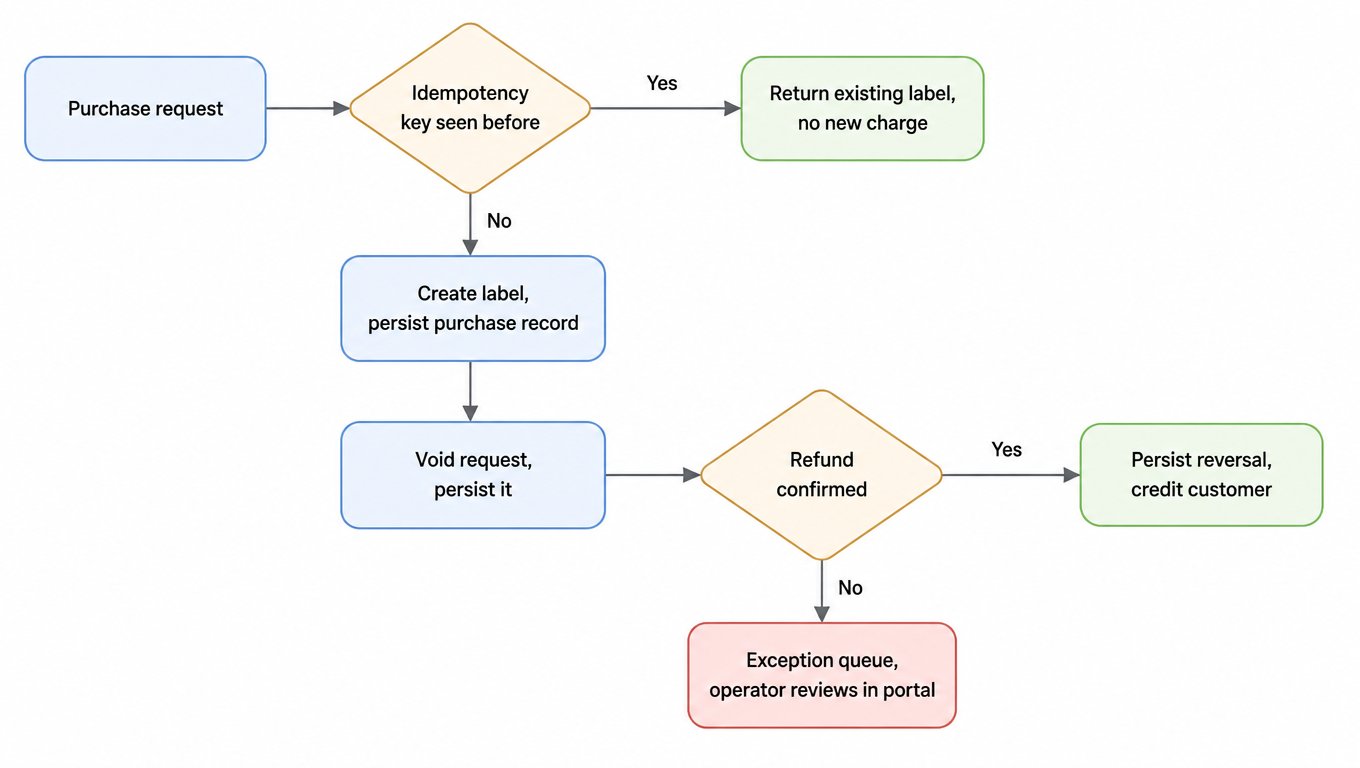
If you integrate directly with carriers or build a shipping platform, treat the label's money trail as three separate records that must all persist: the original label purchase, the void request, and the reversal or refund record. Each is a distinct event with its own timestamp and status. Do not collapse them into one row, because reconciliation and audit need to see the sequence, and a support ticket about a missing refund is resolved in minutes when all three records exist.

Prevent duplicates at the source with idempotency keys on label purchase. A timeout that triggers a retry must not buy the same label twice; a retry carrying the same key returns the original label instead of creating a new charge. This one mechanism removes the most common source of unused labels in API environments, and it is the cheapest fix in this article. Keeping label purchase, void, and reversal on one reconcilable chain is exactly what we build in our guide to the order, shipment, package, and label data model.

Void and refund failures are a normal part of operations, not an edge case. Route them to an exception queue with a visible status, and never let them fall through silently. The portal is the human checkpoint: it surfaces the discrepancies, shows the label, the void request, and the refund state side by side, and lets an operator decide. Automate what can be automated, and make everything else impossible to miss.

Label purchase flow checks idempotency, records purchases and void requests, and reconciles confirmed refunds or exceptions.
The API integration flow: idempotency keys stop duplicate purchases, void and refund failures land in the exception queue, and the portal handles what humans must decide

Operating Checklist and Carrier Quick Reference

A short operating discipline for anyone who buys labels in volume:

  • Buy labels only for packages that will actually ship; batch-print with intent, not by habit.
  • Verify before printing, and re-verify before voiding.
  • Automate voiding where the platform allows, so unused labels do not age past their window.
  • Reconcile on a fixed rhythm, weekly or monthly, not reactively.
  • Keep the three records: purchase, void request, refund.
Carrier Void window Refund channel Typical timing
USPSUnused, unscanned labels; request within 60 days of print date[^1]Postage balance or original paymentDays to weeks
UPS (account)Before first scan, within cutoffNext invoice creditNext billing cycle
FedExVaries by label typeVariesVaries
DHL ExpressVaries by origin and label typeVariesVaries

The table is a starting point, not a contract. Windows change, and platform policies differ from carrier policies. Verify the current terms for the exact carrier, label type, and channel you use, and your reconciliation will rarely surprise you.

Want every dollar on a label to be reconcilable?

EasyShippingX's Shipping API keeps label purchase, void, and reversal on one auditable chain: idempotency keys prevent double charges, voids are automatically paired with reversals, refund states are queryable, and billing rolls up to the order and client. An unused label stops being a month-end mystery and becomes one clear line in the ledger. See pricing or book a demo.

FAQ

It depends on the funding mechanism. Prepaid (USPS postage, labels bought by card or balance) debits at the moment of purchase, so an unused label needs a refund to come back. Post-billed (UPS and FedEx carrier accounts) charges nothing at purchase and bills only after the package is scanned into the network, so an unused label never appears on the invoice at all.
No. Voiding is a request you file with the carrier or platform; the refund is a separate money event that may arrive days later, land somewhere else, or never arrive at all. Never book the refund at the moment you click "void". If you record only the void, you will chase phantom recoveries at month end.
USPS refunds unused labels that have not been scanned by the postage system; Click-N-Ship refunds can be filed up to 60 days after the print date, back to the postage balance or original payment method. Other carriers differ: UPS account labels must be voided before the first scan within the applicable cutoff, while FedEx and DHL Express vary by label type and origin. Carrier policy is not platform policy, so verify the channel you actually use.
One of three places: back into the postage balance, back to the original payment method, or as a credit on the next invoice. Prepaid refunds usually return to the balance as reusable postage rather than cash; card refunds and invoice credits need separate accounting treatment. Timing ranges from near-instant (platform-fronted) to weeks (direct from the carrier).
Prepaid debits at purchase, making the label a paid asset from the moment it exists, so an unused label needs a refund to recover the money. Post-billed charges nothing at purchase and bills only after the package is scanned into the carrier network, so the correct outcome for an unused label is the absence of a charge, not a refund. The word "refund" means different things under the two mechanisms.
Use idempotency keys on the label purchase endpoint: a retry triggered by a timeout carries the same key, and the server returns the original label instead of creating a new charge. That is the most common source of unused labels in API environments and the cheapest fix. Also persist the purchase, void request, and reversal or refund as three separate records, route void and refund failures to an exception queue, and let the portal handle what humans must decide.