Which case or packing system fits this guitar?
Use the guitar’s outline and condition to choose the inner restraint. An acoustic has a hollow body and a top and bridge that should be free from unintended pressure. A solid-body electric still has a neck, tuners and hardware that can bear against the lid or box if the fit is wrong. For a bass, check the actual instrument and case length before ordering materials. A carton sold for a guitar may be too short with its supports installed.
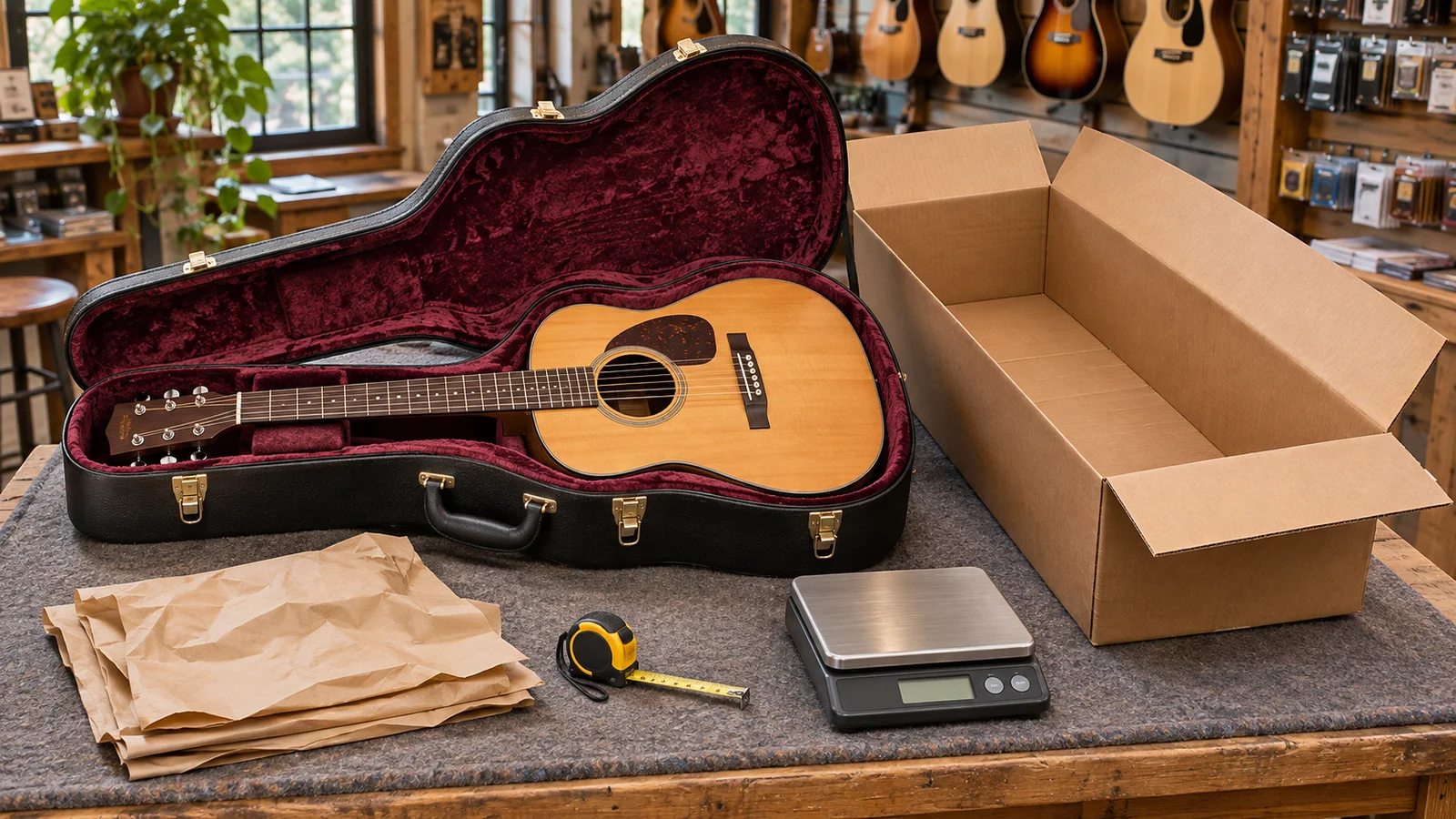
A fitted hard case can hold the instrument in a defined position and shield it from contact. A padded gig bag can separate the finish from nearby materials and restrain the instrument where its design allows. The shipping carton and cushioning address movement of the packed assembly and contact with the parcel exterior. Confirm both levels independently. Try the guitar in the case before committing to a box or a quote.
| Starting point | Fit, risks and next decision |
|---|---|
| Matched hard case | Check instrument restraint, closure, hardware clearance and the supported outer carton. Stop for shifting or pressure. |
| Soft bag only | Confirm a compatible shipping structure that isolates the instrument from the carton and meets channel terms. Consider a fitted case or professional packing. |
| Factory packing or kit | Check exact model compatibility, all inserts and intended orientation. Replace compromised parts. |
| No reliable system | Hold the shipment while sourcing a fitted system or qualified help. Estimate after the design is settled. |
| Vintage, custom, repaired or high-value | Check model-specific contacts, finish, condition and terms in advance. Escalate uncertain structural or coverage conditions. |
Compare the closed case with the space between the inserts. Check end clearance, maximum width and depth, including the handle, hinges and latches. A bass can fit lengthwise and still bear on a hinge. Adjust the box before quoting.
Pay attention to the order’s entire contents. If an accessory has its own heavy enclosure, decide whether it can stay in an isolated compartment or needs a separate parcel. Recheck the instrument’s contact points after adding it. Record the separate shipment if it changes what the buyer expects to find in the guitar carton.
A used factory carton is a candidate when its structure, inserts and intended configuration can be confirmed. Ask whether it was designed around the same body and neck geometry and whether it expects a case inside. Check for crushed corners, wet spots, compromised seams and missing inserts. A carton designed to support a rigid case cannot be assumed to locate a bare instrument or a thin gig bag.
Reverb describes a soft-case or no-case path that keeps the guitar cushioned away from the shipping carton. FedEx’s general guitar instructions recommend a cushioned hard or soft case. Treat the difference as a reason to verify a complete packing system and the selected service’s conditions, especially for a soft-bag-only shipment. Get the kit’s compatibility and assembly instructions before using it. Reverb’s example length suggestions and the 45 lb figure FedEx gives for its guitar box apply to those guides and materials. Check carrier limits separately. Reverb guitar packing · FedEx guitar packing
For a repaired headstock, lifting bridge, unstable crack or unknown finish, ask what the repairer or maker wants to bear against the case and what they want left clear. A case molded for a similar outline can press in a different place. Stop the routine packing workflow if those contacts cannot be resolved, if the instrument moves in its restraint, or if the packaging or protection terms require a different arrangement.