To ship golf clubs, choose packaging that protects the head, shaft and both ends first. Measure the sealed package, weigh everything inside, then compare services for the destination and packaging type. A lightweight club can still travel in a long parcel with dimensional weight or a length charge.
In a hypothetical sale, an eBay seller estimates postage from a bare putter on a scale. After adding head protection, shaft supports, end blocks and the carton, the package is longer and heavier than the item record suggests. The carton supplier’s listed size may be an inside dimension. The transport quote needs the finished outside measurements, including any extended section or bulge. Save the product measurements and parcel measurements as separate records.
This guide covers US domestic sales, returns and repair shipments for retailers and small 3PLs. Travel services handle a different task, often moving a packed bag to a destination on a schedule. Decide which task you are buying before comparing it with shipping a sold club. ShipSticks describes its service in that travel context. The packaging and account terms for a specific bag or case still need verification. ShipSticks overview
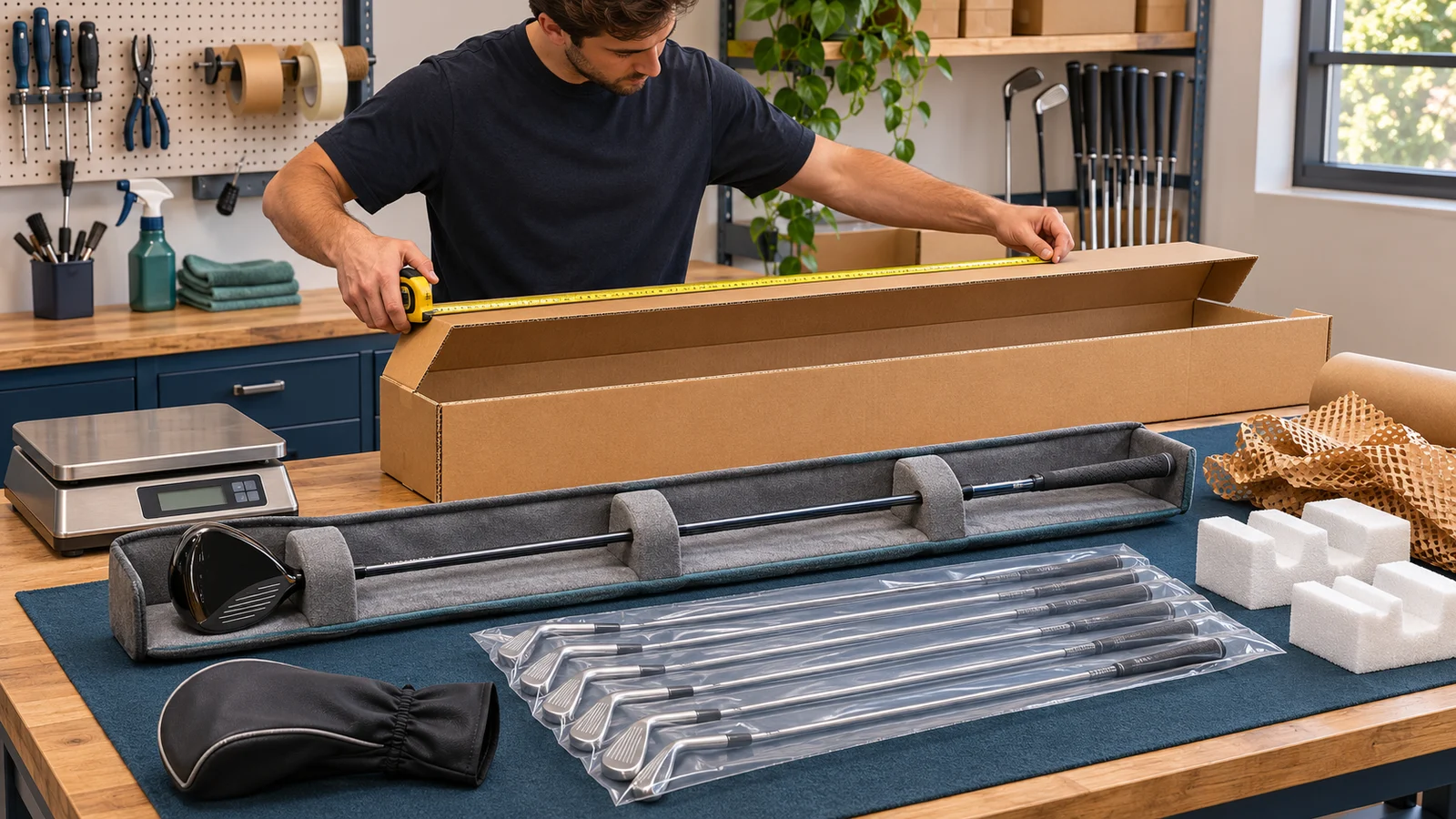
Golf club packing bench illustration. Check carton size against the clubs and their protective materials.
1. Identify the club and everything in the order
A driver is the long club typically used from the tee. Irons, wedges and putters have different head shapes and intended uses, which affect the box and head restraint. The shaft connects the grip to the clubhead. Keep that distinction in the inventory record, especially when a buyer is purchasing a replacement shaft, a head alone or a fully assembled club. An empty travel case and a bag full of clubs are different shipments.
Task
Length and head mass
Shaft risk
Pack candidate
Special check / typical use
Single putter, wedge or iron
Use actual protected length; dense head
Bending and point pressure
Fitted long carton with head cradle and end blocks
Size and finish; individual sale
Long driver
Longer span; head at one end
Bending and end impact
Sound long or verified telescoping carton
Model and assembly agreement; shop sale
Several clubs / set
Actual count and composition; multiple heads
Head-to-shaft collision
Divided head zone and individual protection
Full weight and order list; set fulfillment
Clubs + bag / travel case
Packed length and full contents
Movement inside bag or case
Internal restraint plus accepted outer package
Material, labeling and fees; bulky order or travel task
Before picking a carton, ask whether the model has a manufacturer-designed removable head, whether the buyer expects it assembled, and whether anyone receiving it can correctly restore the assembly. Then list the bag, balls, headcovers, adjustment tool, spare weights and other accessories. Small dense accessories can increase gross weight and cause damage if loose. Count them into the order and give them a separate secured compartment.
For a set, verify the actual club list rather than a generic set weight. Record which irons or wedges are included and whether a club has a different shaft or custom length. A missing club is an order exception to resolve before packing. A long club that barely fits when unprotected requires a different design once clearance and end restraint are included. Keep the longest protected assembly in view throughout box selection.
2. Build support rather than relying on more wrap
The working aim is to restrain the head’s concentrated mass while protecting the slender shaft from bending and point pressure. Cushion surfaces that could rub, restrain the protected components and support the carton against normal handling. Confirm the arrangement when the package is on different sides. Use a sample or mockup to trial a new design before adopting it for customer orders. Record what moved or contacted the shell when the sample was reopened. The safe parcel packing guide covers general box and closure checks.
A shorter single club
Fit a cover or protective wrap around the head, including the face and exposed edges. A headcover can protect the finish, but still needs a cradle or blocking to control movement. Keep the head away from the carton end. Spread restraint over the protected head and grip areas so a heavy head cannot swing into a box wall.
Position the protected shaft on broad, soft contact surfaces where the design allows support. The supports should stay fixed inside the package and should not create tight bands around an unprotected shaft. Cover contact areas as needed for the finish. Use rigid end protection with cushioning and clearance so the head or grip cannot punch through the closure. Close the package without forcing an insert onto the shaft.
Before sealing, check the head cradle, grip restraint and any intermediate supports. Gently change the package’s orientation and listen or inspect for movement while the design remains accessible. Fix the cause of a shift rather than adding loose filler over it. Photograph the arrangement and verify the carton stays straight. A creased wall or weak seam may need another box even when the club feels stationary.
A long driver or other long club
Long cartons are more vulnerable to bending across an unsupported span and to end impacts. Protect the head and the transition near it, while keeping the shaft from acting as the structural spine of the box. Use a suitable long carton and fitted inserts or a protective inner assembly that distribute forces. Check supports for compatibility with the actual shaft, head and finish. A rigid reinforcement must not become an exposed hard edge against the club.
Test the complete length, not just the head compartment. A telescoping carton must have the overlap, closure and strength specified for that packaging design. Measure it after the sections are secured. If the overlap is inadequate or the seam flexes, select a different carton. Joining scraps of old boxes can leave an unsupported hinge. A purpose-designed extendable box can be useful when its strength and fit are verified.
FedEx’s club guide describes individual and bag-sized packaging and warns about tall clubs during transport. SidelineSwap recommends protecting heads, filling movement space and selecting long packaging. Its page also suggests joined cartons and refers to a 48-inch surcharge threshold. Treat those as that platform’s guidance. Verify the actual outer package against the chosen service, and approve the carton structure separately. FedEx golf club guide and SidelineSwap packing suggestions
Several clubs or a set of irons
Protect each head and separate it from adjacent heads and shafts. A cover alone may leave metal edges able to press through a shared layer. Use dividers, individual sleeves and fitted head compartments as appropriate. Stagger or orient clubs only where the design keeps the heavy head of one away from another club’s shaft. Confirm that no part can slide into a neighbor’s unprotected area.
Build the package in a defined order and keep the assembly stable while adding each club. Avoid concentrating all heavy heads against one unsupported panel. Restrain the complete protected group with broad support, leaving the shafts free of pinching straps or ties. Secure tools and weights in their own pouch or compartment attached to the internal packaging. Put the accessory count and club list on the pack record, then verify them before closure.
Check the set for head-to-head, head-to-shaft and end-cap contact. Photograph the divisions before covering them with the next layer. If a shared box cannot keep those clearances, redesign the inserts or split the shipment. The choice should come from the protected assembly and the full cost of the actual parcels. A carton that takes every club is only a candidate until those checks pass.
Illustrative structures, not universal box specifications. Check fit, contact and movement for the actual clubs.
For a trial pack, mark the position of each support on the insert drawing. Open the sample after gently changing its orientation and check those locations again. Check a long panel for bowing and an end block for displacement. This is a practical fit and movement check, not a certified transport test or a promise against damage. If the design is uncertain, ask a qualified packaging provider to evaluate it before releasing customer goods.
A golf bag, soft cover or hard travel case
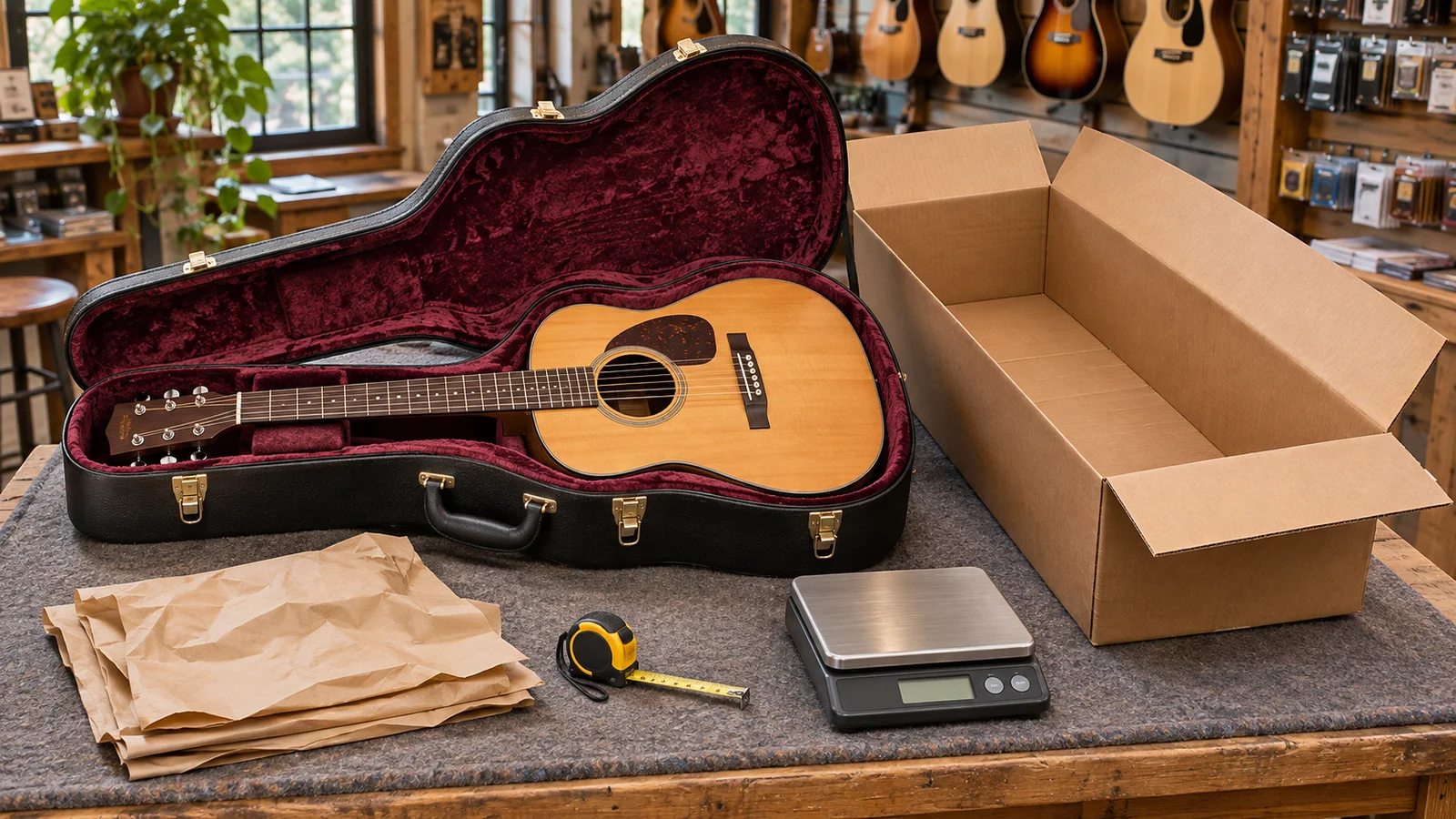
An ordinary golf bag organizes equipment and may leave the longest clubs exposed. A soft travel cover adds containment but needs protection and restraint for what it encloses. A hard case can offer a stronger shell, yet the clubs still need secure internal support. Inspect pockets, closures, handles and moving parts, and account for everything that will travel.
Ask the service whether the bag or case is accepted as the outer package, how it must be closed and labeled, and what packaging-related fees apply. FedEx describes accepting a hard travel case without a corrugated container for an additional fee in its own service context. That acceptance cannot establish eligibility for another service or account. An outer carton changes both package characteristics and measurements. Price the actual option selected. FedEx golf club packaging
Buy and reuse packaging by specification
For repeat orders, keep a box and insert specification by club type, protected length and order composition. Check the usable interior, board strength, load capacity and measured outside dimensions. Manufacturer packaging can be a useful starting point if it fits the same contents and remains sound. Inspect reused cartons for moisture, crushed corners, creases, torn seams and weakened closures. Replace damaged components and remove obsolete labels. A box that survived one trip still needs a condition check for the next.
3. Remove a head only when the model and delivery plan allow it
Head removal is a separate decision from carton length. Confirm that the precise model was designed for it, the correct manufacturer method and tool are available, the owner authorizes the work, and the recipient can reassemble it correctly. If any condition is unresolved, keep the club assembled or ask a qualified club technician. A bonded head does not become a detachable head because a shorter box is cheaper.
Titleist’s SureFit guide describes its sleeve and ring settings, its matched wrench procedure and what to do if the screw binds. Those instructions belong to the covered SureFit equipment. Check the right model and handedness information. This article does not supply a torque value or a substitute tool. Do not heat a bonded joint, cut a shaft or force an adapter to reduce shipping length. Titleist SureFit guide
When removal is approved, photograph the original setting and assembly condition before touching it. Keep the head, shaft, adapter components, fasteners and required tool identified with the order. Follow the manufacturer’s instructions on which parts remain attached. Cushion and secure the head separately, protect the shaft and adapter ends, and provide the agreed reassembly information. Recount components before closure.
If the buyer bought an assembled club, get agreement before changing the delivery format. Add technician time, packing, documentation and any receiving-end assembly to the comparison. A lower label price can lose its advantage before those costs are included. Even a positive saving does not override the product condition or delivery agreement. Use the flow below to decide whether packing can continue.
Suggested seller and 3PL workflow. Unresolved condition, authorization or fit requires an assigned owner before release.
4. Separate weight, dimensional pricing and package fees
Work from the selected service’s rules and the date of shipment. USPS retail prices, USPS commercial standards and an account-specific quote describe different pricing contexts. A published rate is useful for checking a charge, but the final quote still needs origin and destination ZIP Codes, package data, service and any eligible account terms. Retain the quoted components and identify which fees are already included.
Price / acceptance check
USPS Ground Advantage context
What to record
Actual weight
Entire sealed parcel, not bare club weight
Scale reading and unit
DIM weight
Commercial zones 1–9; calculated volume >1,728 in³. Rectangular sides round UP; divide by 139; round pounds UP; compare actual weight.
DMM 283.1.4; dimension/divisor provisions effective July 12, 2026
Length fee
Ordinary outbound commercial: >22 through 30 in, or >30 in. Current >30 in fee: $10.00. USPS price list
DMM 283.1.7; Notice 123 effective October 4, 2026
Cube fee
>3,456 in³; rectangular dimensions round to NEAREST whole inch for this fee. Can combine with the applicable length or characteristics fee.
Keep fee rounding separate from DIM rounding
Nonstandard characteristics
Check DMM 201.7.6.2, including cylindrical tubes and listed materials. When length and characteristics both apply, use the higher fee.
Actual shape and material; a long rectangle is not a cylinder
Maximum acceptance
Ground Advantage: up to 70 lb and 130 in length + girth, subject to all standards.
Longest side plus perimeter around the other two; check actual service
Oversized pricing
Commercial length + girth >108 through 130 in uses zoned oversized prices; distinct from DIM and nonstandard fees.
DMM 283.1.1; §1.7 excludes oversized-priced and Ground Advantage Return parcels
For the USPS comparisons here, use ordinary outbound USPS Ground Advantage Commercial parcels within its standards, not a dedicated return service or an oversized-priced parcel. DMM 283.1.4 applies DIM to parcels for zones 1–9 whose calculated volume exceeds 1,728 cubic inches. Rectangular dimensions round up to the next whole inch. Divide the resulting volume by 139 and round up to a whole pound when the threshold is exceeded. Those dimension and divisor provisions are marked effective July 12, 2026. USPS DMM 283
Length and characteristics fees are a separate check. Under DMM 283.1.7, an outbound parcel over 22 through 30 inches falls into one length tier, and one over 30 inches into another. The cube fee applies above 3,456 cubic inches using its specified measurement method. The length and characteristics fees use the higher applicable one when both apply, while the cube fee can apply alongside it. The exceptions for oversized pricing and Ground Advantage Return mean that a return requires its own check. USPS DMM 283.1.7
The current Notice 123, effective October 4, 2026, lists the over-30-inch Ground Advantage commercial length fee as $10.00. Check the live fee schedule when shipping. Pirate Ship’s irregular-package article describes its own packaging selection and includes tubes and unboxed bags among its examples. Use the actual carrier’s shape and material definitions for your package. A long rectangular corrugated carton is not a cylinder simply because it holds a club. USPS fee names and tests should not be substituted for UPS or FedEx Additional Handling. USPS Notice 123 and Pirate Ship irregular-package guidance
The 48-inch boundary example
Assume two sealed rectangular corrugated parcels going to the same destination, each weighing 2 lb. A measures 48 × 6 × 6 inches. B measures 48.2 × 6 × 6 inches. The dimensions are teaching inputs and do not specify suitable packaging for any model.
For A, rounding leaves 48 × 6 × 6 = 1,728 cubic inches. This equals the threshold, so this example does not trigger DIM. Its weight-based calculation remains at 2 lb. For B, round the length to 49 before multiplying. The DIM volume is 49 × 6 × 6 = 1,764 cubic inches, strictly greater than 1,728. Then 1,764 ÷ 139 is about 12.69, rounded up to 13 lb. Compare that with the actual 2 lb, giving 13 lb for the weight-based charge. USPS DMM 283.1.4
Hypothetical sealed rectangular parcels, same destination and 2 lb actual weight. DIM does not remove the separate length fee.
Both parcels still exceed 30 inches in length and can carry the applicable length fee in this outbound example. Neither reaches the cube fee threshold. A also fails the longest-dimension condition for commercial cubic prices, so being exactly one cubic foot does not establish cubic eligibility. A DIM result and a surcharge are different parts of the price. Use the USPS dimension fee guide and the DIM calculator with the correct service rules. USPS DMM 283
Measure honestly at maximum points after sealing. Keep the actual readings as well as the inputs rounded for the specific calculation. The cube-fee method can differ from DIM rounding. Do not shorten the declared dimension, compress the box or remove needed protection to match a rate boundary. If packaging changes, weigh and measure again. No rate comparison can decide how little protection the shaft and head need.
Record the measuring tool, unit and maximum outside points in the package file. A box supplier may describe usable space inside an unassembled carton; your parcel includes board, closure and any protrusion. A return customer may measure only the printed panel length and miss an extended section. Ask for a tape visible along the complete sealed box. If the image and entered dimensions disagree, resolve that difference before buying a label.
Compare one box with two complete shipments
Use a full ledger including postage, materials, labor, applicable fees and optional protection. Here is a separate hypothetical model, independent of the 2-lb dimension example. One suitable shared box costs $18 postage, $6 materials, $4 labor, $10 fees and $2 optional protection, totaling $40. Two suitable boxes cost $10 + $12 postage, $3 + $4 materials, $3 + $3 labor, $10 + $10 fees and $1 + $1 protection, totaling $57. Splitting costs $17 more in this scenario.
Hypothetical cost
One suitable carton
Two suitable parcels
Postage, excluding separately listed fees
$18
$10 + $12 = $22
Materials
$6
$3 + $4 = $7
Labor
$4
$3 + $3 = $6
Applicable fees (assumed)
$10
$10 + $10 = $20
Optional protection
$2
$1 + $1 = $2
Total
$40
$57; $17 more
The model keeps fees outside the postage line. If a real quote bundles them, do not add them again. Include each parcel’s final measurements and terms before choosing. Change the assumptions when one box needs a stronger insert, the second parcel changes service, or the buyer’s delivery request differs. All the model amounts are assumed, including the fee inputs. They are not a quote from USPS, FedEx or EasyShippingX.
5. Four seller decisions with different outcomes
A. An eBay seller ships a used putter
In this hypothetical sale, the seller has one used putter and its headcover. They verify model, handedness, shaft specification, custom length information and visible wear against the listing. A reused carton has a bend near its middle. A sound purpose-made long carton with fitted supports is the alternative. The seller rules out the weakened carton because the shaft would be exposed to bending there.
Protect the head, locate the shaft without pinching and install end restraint. Recount the headcover, photograph condition and the open assembly, then seal, measure and weigh. Use those readings to choose an eligible service and save the quote. Attach tracking to the actual package and retain handoff evidence. Save the approved pack specification for another matching putter, and review fit again if the model or length changes.
If the listing and the picked putter disagree, hold before buying postage. Ask the seller to resolve the model or modification against the sale record. If a carton is replaced after measurement, retain the earlier record as superseded and measure the replacement. The saved specification should identify the insert and box together, since substituting one component can remove the clearance that made the first design work.
B. A professional shop ships a long driver
In this hypothetical shop order, the driver has an adjustable manufacturer-designed connection. Staff can follow the model instructions, but the buyer expects an assembled club ready for use. The shop compares an assembled protective pack and an approved head-off pack, including labor, components and reassembly. The shortened pack returns a lower label price. The shop excludes it for this order because the buyer has not accepted the changed delivery condition.
Keep the original setting and assembly intact, document the head and shaft, and use a suitable long carton with supported clearance at both ends. If the buyer instead authorizes head removal and can reassemble it, a qualified employee can follow the model procedure and record all parts. The decision changes only after that approval and a complete reprice.
C. A buyer purchases several irons
In this hypothetical order, multiple irons go to one buyer at the same complete address. Individual sleeves and a divided head zone fit in one tested carton without head-to-shaft contact. The alternative is two separately restrained packages. Under the teaching model the complete costs are $40 and $57. The shared box is selected because it passes the protection checks and costs less under those assumptions.
Confirm the parcel service accepts the actual box and review the marketplace’s tracking treatment. Keep all original order and item references attached to the shared pack. If the layout changes or protection fails, split and reprice even if it costs more. Use the eBay combined shipping guide for the payment and tracking steps that depend on the order’s state.
D. A repair shop starts with an empty packaging kit
In this hypothetical return-for-repair, the customer has no original box and offers a narrow damaged mailer. Sending a label alone is the cheapest immediate action but leaves the packaging problem unresolved. Compare a purpose-made kit shipped out empty, local professional packing and a customer-supplied pack that the shop can verify. Include the kit’s own postage, materials and preparation, then the protected return’s separate measurements and charges.
The shop selects the kit because this customer cannot source a suitable carton locally. First verify the club’s length and contents so the kit actually fits. Include inserts, closure instructions and the order identifier. Ask for packing photos and the final return dimensions and weight before approving the return label. Upon arrival, staff match the contents and condition to the intake record before starting repair. The two directions have separate package and custody records.
For the kit route, give the customer a pack identifier and a simple sequence: protect the head, place the supported assembly, secure accessories, photograph the open arrangement, close and measure. Ask them to stop if an insert cannot seat without force. The repair team reviews an exception rather than asking the customer to improvise around a bent shaft. A kit selected for one club may be unsuitable if the customer adds another club or a bag.
If the kit does not fit the protected club, stop and select a larger suitable design or a local packing provider. Ask the customer which accessory or measurement differs rather than asking them to press the lid closed. Record whether the shop is collecting the complete club, a separate shaft or a head. That intake scope determines what should arrive, what needs protection and whether a missing component is actually an exception.
6. Document used condition and control the return
Photograph the club overall, head face and sole, hosel, shaft, grip and accessories before packing. Record model, handedness, shaft markings, known modifications, and any relevant length measurement method. Include serial markings when present, but assess them alongside the other evidence. A marking may be absent, shared or insufficient to prove identity by itself. Keep preexisting scratches and finish wear visible in the condition record.
The pack evidence should show head protection, shaft supports, dividers, accessories, the sealed carton, label and outside measurements. Photograph the scale reading with the package identified. Retain the service and value records and the actual handoff reference. If a bill later differs, compare the exact parcel and its measured attributes using the weight adjustment dispute guide.
For a return, ask what changed and what packaging is available before issuing instructions. A suspected shaft fracture, missing accessory, incorrect model or damage on arrival needs an inspection record. Separate an existing mark, transport damage, an item mismatch and a requested repair. Only the eligible transport-loss part belongs in an insurance claim. Check proof of value, packaging obligations, limits and the correct claim channel for the purchased protection. Declared value and insurance follow their respective terms. USPS DMM 609 and FedEx declared value guidance
At receiving, photograph the unopened parcel and match its tracking to the return authorization. Compare the unboxing with the outgoing condition record and the customer’s description. Note a disagreement as unresolved until the appropriate team reviews it. A repair request does not itself establish transport damage, and a visible mark does not establish when it happened. Separate the refund or repair decision from any later carrier claim so each owner knows what is waiting on evidence. USPS evidence requirements
A new return carton changes the dimensions, weight and possibly packaging classification. A standard label bought for a parcel traveling back is different from a dedicated returns product. DMM 283 specifically excludes Ground Advantage Return parcels from the nonstandard fees in that section, while USPS return services have their own conditions. Confirm which service was actually purchased before applying an outbound fee calculation. Use the returns shipping guide to set the customer and warehouse handoff. USPS DMM 283 and DMM 505
7. Use a seller and 3PL release checklist
Stop the order for a damaged shaft, wrong item, missing accessory, unapproved disassembly, unsuitable box or a package outside the selected service’s terms. The inventory or repair lead resolves the item question. The pack lead approves the design. The shipping operator verifies the service and fees. A reviewer checks the evidence and the final parcel before releasing it. Assign the next action instead of leaving a carton with an unexplained hold.
Mismatch, damage or missing item → inventory / repair lead
Authorize
Head removal permitted? Owner agreement, recipient assembly plan, settings and components
Any unresolved condition → qualified product lead
Pack
Pack ID, sound carton, head separation, shaft support, end clearance, secured accessories; movement check
Unsuitable structure or contact → pack lead
Measure and price
Outside dimensions and unit, actual packed weight and unit, ZIPs, package type, available service, complete fee review
Outside service terms or incomplete data → shipping operator
Release and handoff
Photos, reviewer, release status, label/tracking, physical handoff record and date
Repack or changed label → repeat review
Keep the record usable for the next shift. Write an explicit hold reason, who can clear it and what evidence they need. Link the photos to the pack identifier and tracking number without exposing customer information in public files. If a parcel is repacked after review, invalidate the old dimensions and label as appropriate, record the replacement and repeat the release check. A complete record follows the physical package through the handoff.
After packing, use the outside dimensions, actual weight, destination and package type to check services available to the account. EasyShippingX supports rate comparison, labels and tracking for enabled channels. Confirm the long parcel and its contents meet the actual service’s acceptance limits, including any regional option. Prepare the approved package data before requesting a quote and arranging the physical handoff.
Golf club shipping FAQ
There is no single national price. Quote the sealed parcel by outside dimensions, packed weight, ZIP Codes, service and packaging type. Add materials, labor, applicable fees and optional protection.
Yes, when the contents and finished package meet the selected USPS service’s standards. Ground Advantage has weight and size limits, and long parcels can carry DIM pricing or extra fees. Confirm the actual account service.
Use a sound carton sized for the protected assembly, with head restraint, broad shaft support and end protection. Verify the usable inside space, board strength and sealed outside dimensions. A universal box size cannot fit every club.
Only if the specific model is designed for removal, the correct manufacturer procedure and tool are available, the work is authorized, and the recipient can reassemble it. Otherwise keep it assembled or consult a qualified technician.
Only when the chosen service accepts that packed bag or case as the outer package and the contents are adequately restrained. Verify closure, labels, material rules and fees. A provider’s hard-case acceptance does not apply to every service.
Sometimes. Compare one protected, eligible carton with all separately protected parcels, including packing, labor, fees and tracking implications. In the hypothetical model here, one carton costs $40 and two cost $57.
Sources and methodology
Sources reviewed November 7, 2026. Carrier rules, platform recommendations and model instructions have different scopes. Packing steps are suggested internal procedures. Dimensions, costs and seller cases used for comparison are hypothetical.
Packing recommendations and case acceptance in FedEx’s service context. FedEx golf club guide