重量调整争议 · 审计与申诉Weight Adjustment Disputes · Audit & Challenge

运费重量调整争议:如何审计并追回承运商多收的钱Shipping Weight Adjustment Disputes: How to Audit and Challenge Incorrect Carrier Charges

每个月,承运商都会在发货后重新称重、重新测量包裹,而其中相当一部分重量调整本身就是错的。这篇指南覆盖一笔重量调整争议的完整生命周期:怎么在账单上发现这笔费用、怎么准备一份能赢的证据包、怎么逐类挑战每一种错误,以及什么时候升级申诉才值得。它同时写给包裹两端的读者:管理货量的 3PL 和仓库运营者,以及为账单买单的电商卖家。Every month, carriers adjust parcel weights and dimensions after the fact, and a meaningful share of those adjustments are themselves wrong. This guide covers the full lifecycle of a weight adjustment dispute: how to detect the charge on your invoice, how to build an evidence pack that wins, how to challenge each type of error, and when escalation is worth the effort. It is written for both sides of the parcel: the 3PL or warehouse operator managing volume, and the e-commerce seller footing the bill.

前半部分讲清楚重量调整为什么发生、怎么在账单上发现它们、怎么准备证据包。中间用一条七环节证据链,把每一类错误定位到它被引入的那一环。最后给你可直接复制的申诉信模板、预防机制,以及什么时候该请货运审计公司。承运商审计每一件包裹,而大多数发货人一件都不审计;这篇文章就是来改变这一边的。The first half explains why weight adjustments happen, how to spot them on your invoice, and how to build the evidence pack. The middle maps every error type to the link in a seven-step evidence chain where it was introduced. The end gives you copy-ready dispute letter templates, prevention habits, and when to bring in a freight audit company. The carrier audits every parcel, and most shippers audit none; this article is about changing that one side.

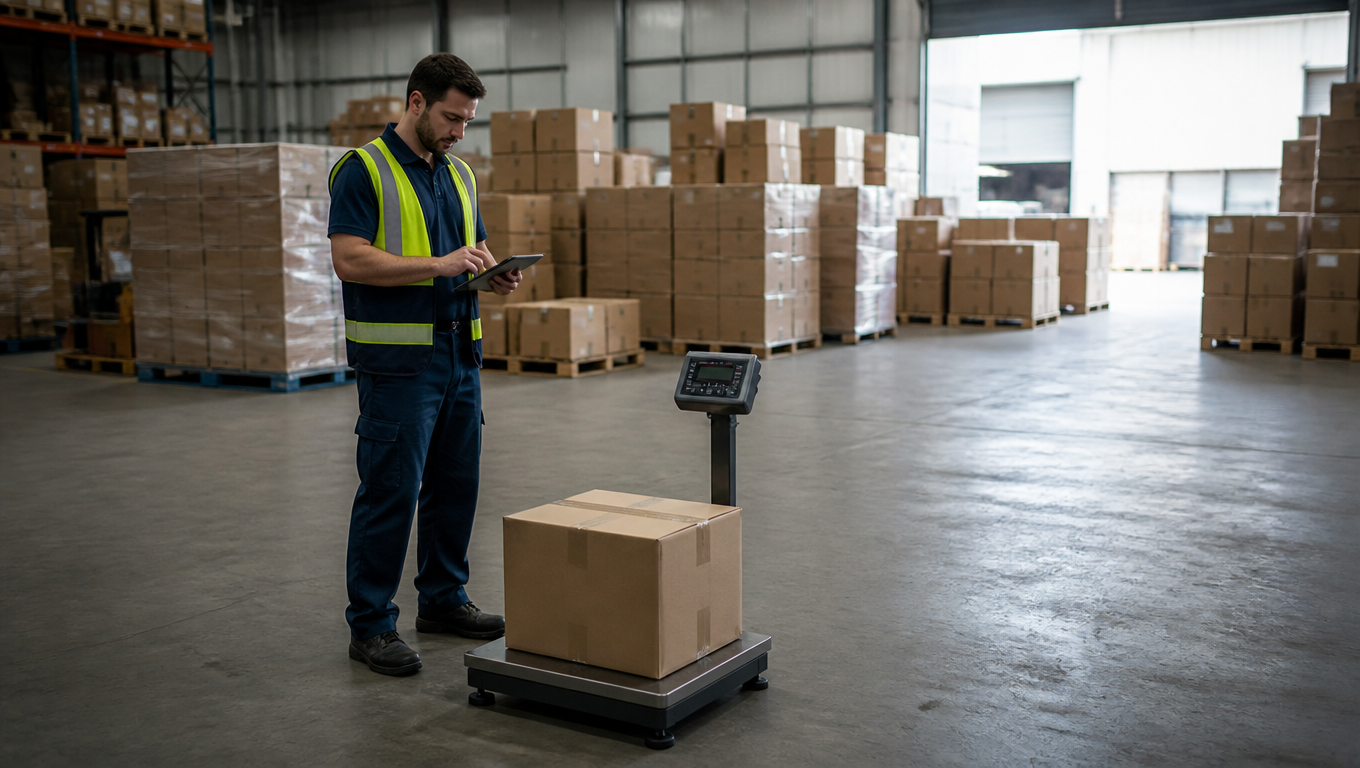
仓库操作员在数字地磅上称量一只纸箱,同时在平板电脑上记录读数,身后是待发出的货箱堆
你打包时称出来的重量,才是账单上该有的重量The weight you recorded at pack time is the weight your invoice should carry

一、为什么会有重量调整,又为什么大多数人不去申诉1. Why Weight Adjustments Happen, and Why Most Go Unchallenged

承运商并不按面单上你申报的重量计费,而是按实际重量和体积重中较大者计费,体积重(DIM weight)就是包裹体积除以服务特定的除数:UPS 和 FedEx 多数境内服务是 139 [^1][^2],USPS 对超过 1 立方英尺的包裹是 166 [^3]。一只实际 8 磅、尺寸 18 x 14 x 12 英寸的箱子,体积重是 3,024 / 139 = 21.8 磅,进位到 22 磅。承运商按 22 磅收费,因为这只箱子占据的卡车空间比它的物理重量所暗示的更多。Carriers do not bill you on the weight you declare on the label. They bill the greater of the actual weight and the dimensional weight, commonly called DIM weight. DIM weight is the parcel's volume in cubic inches divided by a service-specific divisor: 139 for most UPS and FedEx domestic services [^1][^2], 166 for USPS parcels over one cubic foot [^3]. A box that weighs 8 lb but measures 18 by 14 by 12 in has a DIM weight of 3,024 / 139 = 21.8 lb, which rounds up to 22 lb. The carrier charges 22 lb, because the box occupies more truck space than its physical weight suggests.

调整之所以发生,是因为承运商会在分拣网络里重新称重、重新测量包裹,通常使用自动化体积测量仪和动态秤,结果在发货几天或几周后落到你的账单上。到账的是一行带调整代码、带新计费重量的条目,挂在一票你也许早已划上句号的运单上。大多数账单在没人读那些行的情况下就被付掉了。The adjustment happens because carriers re-weigh and re-measure parcels in their sortation networks, often with automated dimensioners and in-motion scales, and the result lands on your invoice days or weeks after the shipment date. What arrives is a line item with an adjustment code and a new billed weight, attached to a shipment you may have already written off as done. Most invoices are paid without anyone reading those lines.

调整是承运商一条众所周知的收入流,其中一部分是错的:体积测量仪把箱盖读成箱子的一部分、两个包裹被扫成一个、费率表套错了分区、同一个包裹被调整了两次。当你签下货量合同时,重量复检是承运商留在手里的标准机制。这种不对称是结构性的:承运商审计每一件包裹,而大多数发货人一件都不审计。Adjustments are a known revenue stream for carriers, and a share of them are wrong. Dimensioners misread a flap, two parcels scan as one, a rate table is applied to the wrong zone, a parcel is adjusted twice. When you negotiate a volume contract, weight re-inspection is a standard mechanism the carrier keeps in reserve. The asymmetry is structural: the carrier audits every parcel, and most shippers audit none.

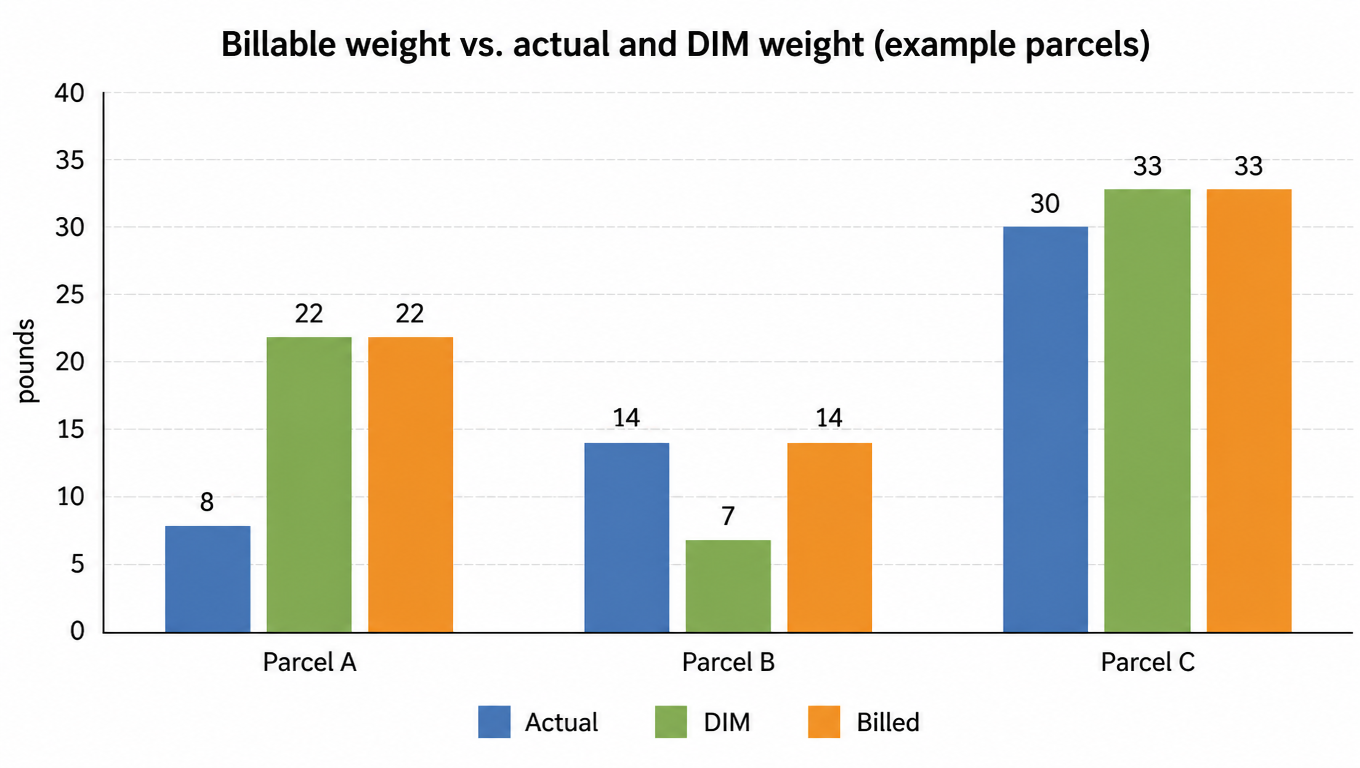
柱状图:包裹 A、B、C 的实际重量、体积重与计费重量对比,计费重量取两者较大者Bar chart: actual, DIM, and billed weight for parcels A, B, and C; billed weight is the greater of the two
计费重量取实际重量和体积重中较大者;争议的问题是:这个数到底是不是你包裹的真实数据?The billed weight is the greater of the two; the dispute question is whether that number is what your parcel actually was

金额小,是没人去争的原因。单个包裹涨 3 磅只是几美元的事;一个季度几千个包裹就是另一回事。如果你的运费支出里有哪怕 1% 到 2% 漏进了无人过问的调整,而典型的调整又偏高,这笔漏损会悄悄复利。看一周里三个示例包裹:包裹 A 实际 8 磅、尺寸 18 x 14 x 12 英寸,按 22 磅体积重计费;包裹 B 实际 14 磅、尺寸 12 x 10 x 8 英寸,按 14 磅计费;包裹 C 实际 30 磅、尺寸 20 x 16 x 14 英寸,按 33 磅计费。每个例子里计费重量都是两者中较大者,这是正确的计费做法。争议的问题是另一个:这个计费重量,是不是你包裹真实的数据?要回答它,你得知道调整从哪来,并且有能证明它的记录。Small amounts are why nobody fights. A 3 lb jump on one parcel is a few dollars; on thousands of parcels a quarter, it is a different story. If even 1 to 2 percent of your freight spend leaks to unreviewed adjustments, and the typical adjustment is overstated, the leak compounds quietly. Consider three example parcels from a single week. Parcel A weighs 8 lb actual, measures 18 x 14 x 12 in, and bills at its 22 lb DIM weight. Parcel B weighs 14 lb actual, measures 12 x 10 x 8 in, and bills at 14 lb. Parcel C weighs 30 lb actual, measures 20 x 16 x 14 in, and bills at 33 lb. In each case the billed weight is the greater of the two, which is correct billing practice. The dispute question is different: is the billed weight the number your parcel actually was? Answering that requires knowing where the adjustment came from and having records that can prove it.

二、怎么在账单上发现一笔调整2. How to Detect an Adjustment on Your Invoice

调整出现在三个地方:月账单的行项目、承运商生成的账单明细报表、以及承运商门户的账单或开票区。在账单上它们通常以单独行出现,带一个调整代码并引用回原始运单。代码是你判断承运商声称发生了什么事的第一条线索,所以要学代码族而不是死记代码串,因为各家承运商的字符串不一样。Adjustments live in three places: the line items of your monthly invoice, the billing detail reports your carrier generates, and the billing or invoicing section of your carrier portal. On the invoice they usually appear as separate lines with an adjustment code and a reference back to the original shipment. The code is your first clue to what the carrier claims happened, so learn the code families rather than the exact strings, because the strings differ from carrier to carrier.

代码族是稳定的。重量复检代码意味着承运商声称你的包裹比你申报的重;体积复测代码意味着承运商的测量仪读出的尺寸和你系统记录的不同;费率更正代码意味着承运商用了和你预期不同的费率、服务等级、分区或货物等级。有些代码只是信息性的,有些是收费,有些是退款;读对它们,是「去争一笔收费」和「追回本该属于你的钱」之间的区别。The families are stable. A weight re-inspection code means the carrier claims your parcel weighed more than you declared. A dimensional re-measurement code means the carrier's dimensioner read different dimensions than your system recorded. A rate correction code means the carrier applied a different rate, service level, zone, or class than you expected. Some codes are informational, some are charges, and some are credits; reading them correctly is the difference between disputing a charge and refunding money you were owed.

建立月度对账节奏。导出账单行项目,从你的发货系统拉出清单数据,按跟踪号把两者 join 起来。凡是计费重量、尺寸或费率与清单不符的行,全部标出来。用 WMS 报表、货运审计工具还是一张电子表格都行,工具不重要,节奏才重要。每月第一周跑一次对账,就能在调整还处在申诉窗口内的时候抓住它们。Build a monthly reconciliation cadence. Export the invoice line items, pull your manifest data from your shipping system, and join the two on tracking number. Flag every line where the billed weight, dimensions, or rate differ from your manifest. A WMS report, a freight audit tool, or a spreadsheet match will do; the tool does not matter, the schedule does. A reconciliation that runs the first week of every month catches adjustments while they are still inside the filing window.

盯住三个指标。调整率,即被调整的包裹占全部包裹的比例,告诉你承运商的复检有多频繁地和你的清单不一致。调整金额占运费支出的百分比,告诉你这花了多少钱。问题最严重的线路和承运商,告诉你下个月该把审计指向哪里。把这三个数字按三个月趋势看,就能把「偶尔的意外」变成一件有主理人的流程。Track three metrics. Adjustment rate is adjusted parcels as a share of total parcels, and it tells you how often your carrier's re-inspection disagrees with your manifest. Adjustment dollars as a percentage of freight spend tells you how much this costs. Worst offending lanes and carriers tells you where to point the audit next month. Trended over three months, these numbers turn an occasional surprise into a process with an owner.

三、准备证据包:你的记录是基线3. Build the Evidence Pack: Your Records Are the Baseline

争议发生时,承运商的记录是「主张」,你的记录是「基线」。承运商拿出一条扫描事件和一个数字,你需要的是能说明你仓库里实际出去的是什么货的文件。对每一件可能被争议的包裹,保留:装箱单、打包时的秤重读数、箱子尺寸、一张照片、跟踪号、送达扫描。When a dispute happens, the carrier's records are the claim and your records are the baseline. The carrier will present a scan event and a number; you need the documents that say what actually left your building. For every parcel that might be disputed, keep: the packing slip, the scale weight at pack time, the box dimensions, a photo, the tracking number, and the delivery scan.

清单(manifest)是真相来源。清单是你交运了什么、何时交运的记录,承运商预期拿它来对账,所以它是任何重量争议里最有说服力的一份文件。面单也很重要:面单上申报的重量和尺寸,就是承运商系统在它自己扫描之前被告知的数据。Your manifest is the ground truth. The manifest is the record of what you handed over and when, and carriers expect to reconcile against it, so it is the single most persuasive document in any weight dispute. The label matters too: the declared weight and dimensions on the label are what the carrier's system was told before its own scan.

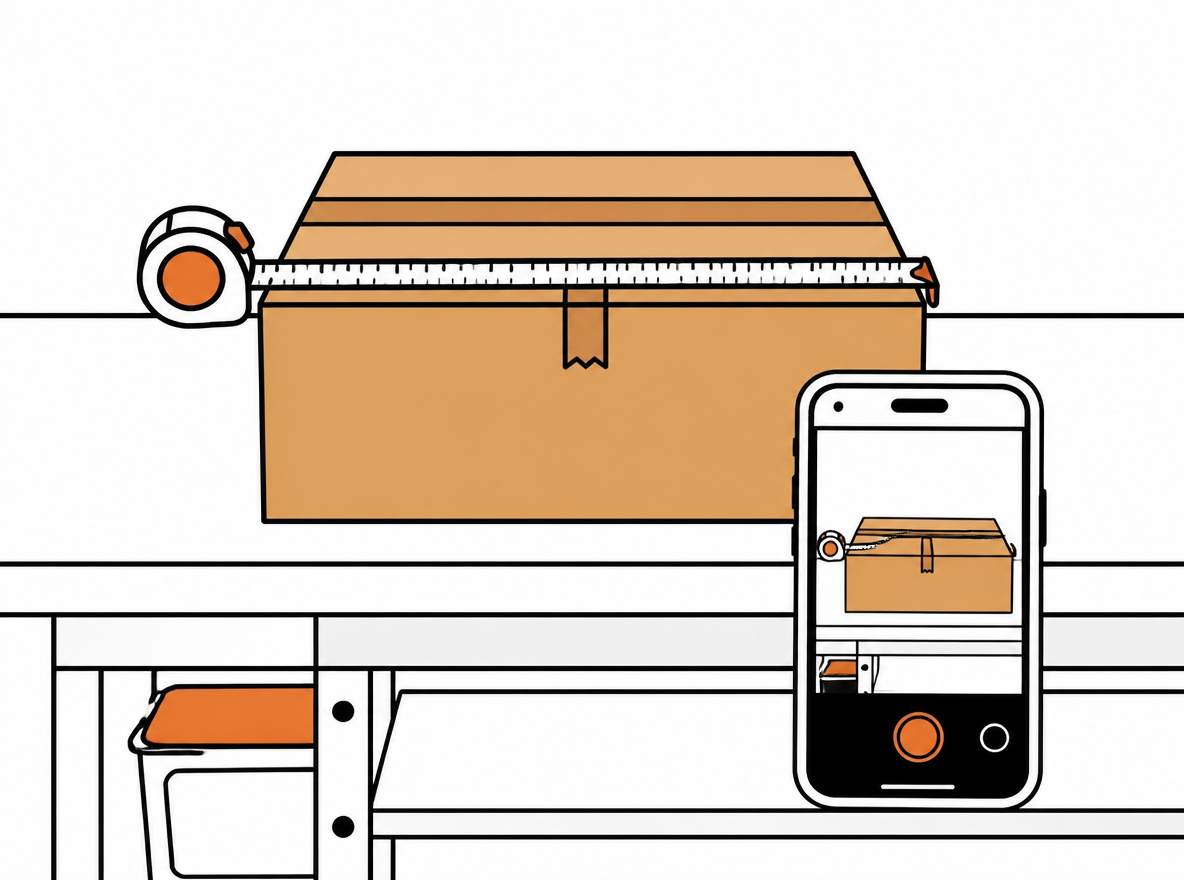
采用一套尺寸拍照规范。对不寻常的包裹、高价值包裹和常走线路,把箱子放在卷尺边上拍照,数字要能看清,画面里要带时间戳。一件包裹一张照片,按跟踪号归档,花几秒钟,却能省下原本要扯几周的争论。维护一份争议日志,记录争议 ID、账单号、调整代码、金额、日期、状态和承运商联系人;没有日志的争议,是你会跟丢的争议。Adopt a dimensional photo protocol. For unusual parcels, high-value parcels, and recurring lanes, photograph the box with a tape measure stretched across it so the numbers are readable, with a timestamp visible in the frame. One photo per parcel, stored against the tracking number, costs seconds and settles arguments that would otherwise run for weeks. Keep a dispute log with the dispute ID, invoice number, adjustment code, amount, dates, status, and the carrier contact; a dispute without a log is a dispute you will lose track of.

在第一笔争议之前就定好谁来负责审计。运营负责证据:秤重读数、尺寸、照片、清单。财务负责提交:账单、争议门户、跟进排期。如果责任不清,争议会死于无人照看,所以在流程上写下一个名字,并对结果负责。Decide who owns the audit before the first dispute. Operations owns evidence: scale readings, dims, photos, and the manifest. Finance owns filing: the invoice, the dispute portal, the follow-up schedule. If ownership is unclear, the dispute dies of neglect, so write one name on the process and hold them to it.

工作台上的一只纸箱,卷尺横跨纸箱全长,画面里有一部显示时间戳拍照应用的手机
一张带卷尺和时间戳的照片,能省下几周的扯皮One photo with a tape measure and timestamp can save weeks of back-and-forth

四、追溯证据链:从订单到账单调整4. Trace the Evidence Chain: From Order to Invoice Adjustment

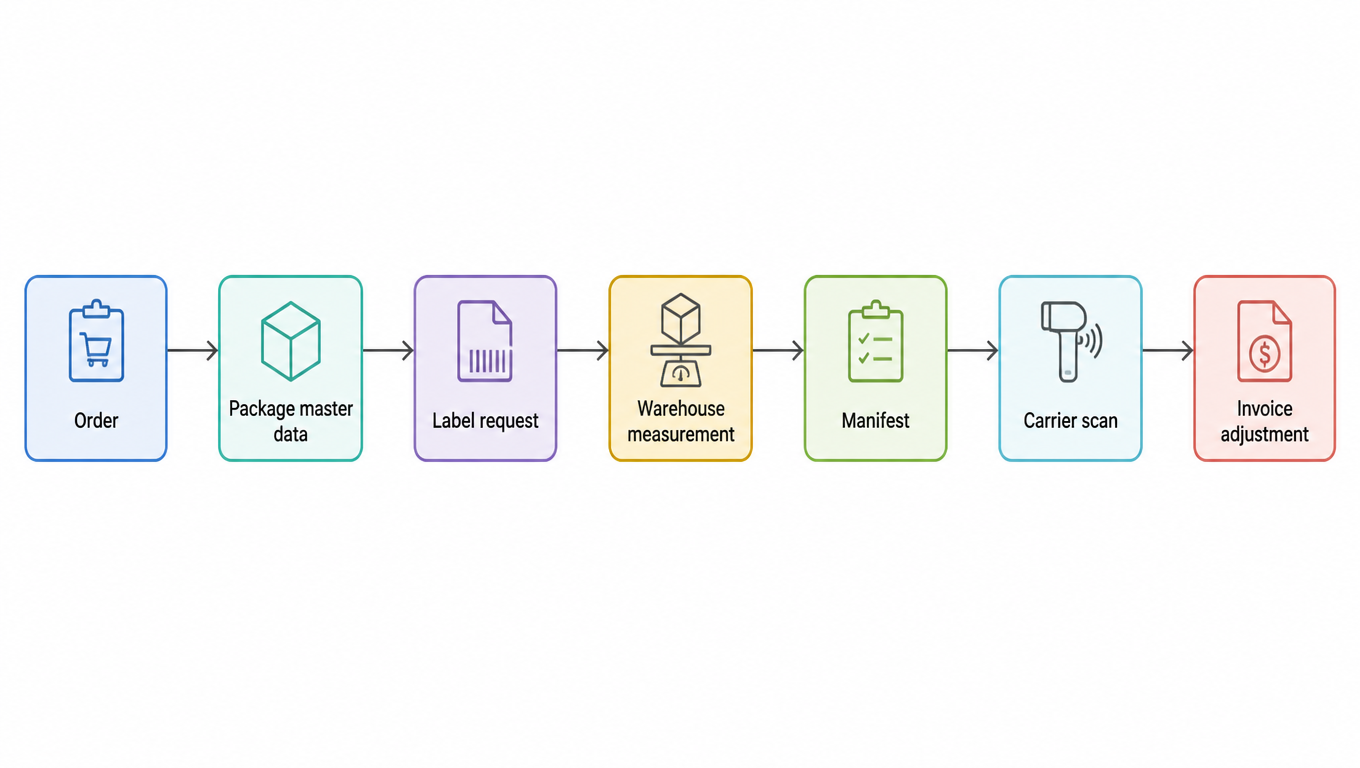
一笔重量调整争议,本质上是在声称你的订单和承运商账单之间的链条上有什么东西断了。这条链有七个环节,每一环都产生可以核查的数据:订单、包裹主数据、面单请求、仓库称量、清单、承运商扫描、账单调整。A weight adjustment dispute is a claim that something broke in the chain between your order and the carrier's invoice. The chain has seven links, and each link creates data that can be checked. Order, package master data, label request, warehouse measurement, manifest, carrier scan, invoice adjustment.

在订单这一环,你的系统记录卖出了什么,包括商品主数据里保存的每个 SKU 的重量和尺寸。面单请求在生成面单的那一刻,把申报的重量和尺寸发给承运商。仓库称量是你打包时秤和卷尺实际读到的数。清单是离开仓库的记录。承运商扫描是发生在承运商分拣网络里的复称和复测。账单调整就是由此产生的费用。At the order link, your system records what was sold, including the item weights and dimensions held in your product master data. The label request sends the declared weight and dimensions to the carrier at the moment the label is generated. The warehouse measurement is what your scale and tape actually read at pack time. The manifest is the record of what left the building. The carrier scan is the re-weigh and re-measure that happens in the carrier's sortation network. The invoice adjustment is the charge that results.

流程图:订单、包裹主数据、面单请求、仓库称量、清单、承运商扫描、账单调整七环节证据链Flowchart: the seven-link evidence chain from order, package master data, label request, warehouse measurement, manifest, carrier scan, to invoice adjustment
七环节证据链:争议就是链条断了一环,证据包按顺序证明每一环The seven-link evidence chain: a dispute claims one link broke, and the evidence pack proves each link in order

错误会在特定环节被引入,而每类错误都有自己的特征。打包时的测量错误会污染仓库称量以及它下游的一切。面单数据错配发生在面单生成时填入了错误的尺寸,于是包裹还没出门,申报重量就已经和实测重量对不上。清单传输断档意味着承运商从未收到它本该匹配的记录。承运商扫描本身也会读错:测量仪把箱盖读成箱子的一部分,秤把还搭在传送带上的包裹读进去。Errors get introduced at specific links, and each error type has a signature. Measurement mistakes at pack time corrupt the warehouse measurement and everything downstream. Label data mismatches happen when the wrong dimensions are entered at label generation, so the declared weight differs from the measured weight before the parcel ever leaves. Manifest transmission gaps mean the carrier never received the record it should match. And the carrier scan itself can misread: a dimensioner reading a flap as part of the box, a scale reading a parcel still touching the conveyor.

这条链就是你的审计地图。一笔争议是「某环断了」的主张,所以证据包按顺序证明每一环:订单记录、主数据、面单、称量、清单、扫描、账单行。当承运商说「我们复称是 24 磅」时,你用面单上的 21 磅、清单上的 21 磅和打包时的照片作答,举证压力就转到他们的扫描数据上。链条更完整的一方赢。The chain is your audit map. A dispute is the claim that one link broke, so the evidence pack proves each link in order: the order record, the master data, the label, the measurement, the manifest, the scan, and the invoice line. When the carrier says "we re-weighed it at 24 lb," you answer with the label at 21 lb, the manifest at 21 lb, and the pack-time photo, and the burden shifts to their scan data. The party with the more complete chain wins.

五、最常见的调整错误,以及怎么逐类挑战5. The Most Common Adjustment Errors, and How to Challenge Each

实际重量不符。承运商的计费重量超过你的秤重读数。先核实你自己的数字:检查秤是否校准、读数是否在打包时记录。再查进位规则,多数地面承运商向上进位到下一个整磅,所以 21.1 磅的包裹按 22 磅计费不是错误 [^1]。如果计费重量仍然超过你的实测重量加进位,就提交带秤重读数的打包照片、清单那一行和面单,并引用账单上的调整代码。Actual weight mismatch. The carrier's billed weight exceeds your scale weight. First verify your own number: check the scale was calibrated and the reading recorded at pack time. Then check rounding, most ground carriers round up to the next whole pound, so a 21.1 lb parcel bills at 22 lb and that is not an error [^1]. If the billed weight still exceeds your measured weight plus rounding, submit the pack-time photo with the scale reading visible, the manifest line, and the label, referencing the adjustment code on the invoice.

体积重错误。承运商的尺寸和你量的不一样。查三件事:你的实测尺寸、你实际所用服务的除数、以及进位规则。承运商按整英寸测量、向上进位 [^2],所以 18.1 英寸的边会读成 19 英寸,无视进位规则的争议会输。还要确认是同一只箱子:如果承运商的测量仪读的是另一件包裹,那就是幽灵测量,仅凭这一点调整就应当被撤销。Dimensional weight errors. The carrier's dimensions differ from yours. Check three things: your measured dims, the divisor for the service you actually used, and the rounding rules. Carriers measure in whole inches, rounding up [^2], so an 18.1 in side reads 19 in, and a dispute that ignores rounding rules will lose. Also confirm it is the same box: if the carrier's dimensioner read a different parcel than the one you shipped, that is a phantom measurement and the adjustment should be reversed on those grounds alone.

费率、等级或分区错误。承运商用了错误的费率:和你购买的服务等级不同、从输错的邮编算出的分区、或零担(LTL)货件上错误的 NMFC 货物等级。这类争议最容易赢,因为合同费率表就是你的证据,而且没有歧义。提交费率表或费率报价、起运地和目的地邮编、以及提单上的 NMFC 等级。Rate, class, or zone errors. The carrier applied the wrong rate: a different service level than you purchased, a zone computed from a mistyped ZIP, or on LTL shipments the wrong NMFC class. These are the easiest disputes to win because the contract rate sheet is your evidence and it is unambiguous. Submit the rate sheet or rate quote, the origin and destination ZIPs, and the NMFC class from your bill of lading.

重复或幽灵调整,以及第三方开票方。同一票货在两张不同的账单上被调整了两次,或者一笔调整出现时承运商自己的追踪里根本没有复称事件。两者都可以用一张简单的日志核查。另外,如果你通过转售商、货代或平台下单,检查他们的加价是不是加在了调整之上而不是基础费率上:一笔带着利润加成的转嫁调整,等于让你被收了两次钱。Duplicate or phantom adjustments, and third-party billers. The same shipment is adjusted twice on two different invoices, or an adjustment appears with no re-weigh event in the carrier's own tracking. Both are checkable with a simple log. And if you buy through a reseller, a freight forwarder, or a platform, check whether their markup was applied on top of the adjustment rather than to the base rate; a passed-through adjustment with a margin on it is double-charging you twice.

六、申诉流程,一步一步来6. The Dispute Process, Step by Step

先搞清楚你的申诉窗口。承运商合同通常允许发票日后 30 到 180 天内提交争议 [^4][^5],窗口因承运商和合同而异。找到你的窗口,写下来,写进日历,因为晚一天提交的争议,无论证据多好都会被直接驳回,连内容都不看。Know your filing window. Carrier contracts typically allow 30 to 180 days after the invoice date to file a dispute [^4][^5], and the window varies by carrier and by contract. Find yours, write it down, and calendar it, because a dispute filed one day late is dismissed without a look at the merits, no matter how good your evidence is.

通过官方渠道提交:争议门户、账单争议表单、或合同里为账单查询指定的邮箱。无论哪个渠道,第一要求都是拿到一个争议或工单 ID,这样你才有可以升级的线索。把整个证据包放进第一条消息:账单号、调整代码、跟踪号、你的清单那一行、你的照片、以及你期望的退款金额。每一次来回都要花几周,所以一次完整的提交顶得上十次追问。File through the official channel: the dispute portal, the billing dispute form, or the email address your contract names for billing inquiries. Whatever the channel, the first requirement is a dispute or ticket ID, so you have a thread to escalate. Put the entire evidence pack in the first message: invoice number, adjustment code, tracking number, your manifest line, your photos, and the credit you expect. Every round trip costs weeks, so one complete submission is worth ten follow-ups.

沿梯子升级。一线客服先应答,他们只能看到自己屏幕上的内容。下一级是主管,然后是理赔或应收账款,再往上是对客户经理或客户体验副总裁的执行层升级。每一级都需要一个行动的理由,而这个理由就是一份干净、有据可查、有完整纸面痕迹的争议:你的证据越完整,管理者越难开口说不。Escalate on a ladder. Frontline support answers first and is limited to what their screen shows. The next rung is a supervisor, then claims or accounts receivable, then an executive escalation to your account executive or the VP of customer experience. Each rung needs a reason to act, and the reason is a clean, documented dispute with a paper trail: the more complete your evidence, the less comfortable a manager is saying no.

预期会收到推脱,并准备好反驳。「你的秤肯定不准」用校准贴纸和打包照片回答。「包裹在网络里被复测过」用对扫描事件、时间戳和测量仪抓拍图像的索取来回答。「申诉窗口已过」用发票日期和争议提交日期来回答,两者都有记录。按固定节奏跟踪状态并跟进,因为争议死于沉默的次数,远多于死于裁决的次数。Expect pushback and prepare counters. "Your scale must have been wrong" is answered with a calibration sticker and a pack-time photo. "The parcel was re-measured in our network" is answered with a request for the scan event, its timestamp, and the image the dimensioner captured. "The filing window has passed" is answered with the invoice date and the dispute submission date, both documented. Track status and follow up on a fixed schedule, because disputes die silently more often than they die by decision.

七、可以直接复制的申诉信模板7. Dispute Letter Templates You Can Copy

下面的模板适用于三个单票案例和一个批量案例。填好占位符、附上指定的证据、写清你期望的退款金额、设一个回复期限。把信控制在一页内;证据负责论证,信只是把它框起来。The templates below work for the three single-shipment cases and one bulk case. Fill in the placeholders, attach the evidence named, state the credit you expect, and set a response date. Keep the letter to one page; the evidence does the arguing, the letter just frames it.

模板 1:实际重量不符,单票Template 1: actual weight discrepancy, single shipment

主题:重量调整争议,账单 [账单号],运单 [跟踪号]Subject: Weight Adjustment Dispute, Invoice [number], Tracking [number]

尊敬的 [承运商账单联系人]:Dear [carrier billing contact],

我们对运单 [跟踪号]、账单 [账单号]、调整代码 [代码]、金额 [金额] 上的重量调整提出争议。该包裹在打包时用认证秤称得 [重量] 磅,清单和面单传输的是同一个重量。照片和清单见附件。计费重量 [计费重量] 磅与我们的记录不符。请撤销该调整并退回 [金额]。我们期待在 [日期,如 10 个工作日] 前收到您的答复。We dispute the weight adjustment on shipment [tracking number], invoice [number], adjustment code [code], amount [amount]. The parcel was weighed on a certified scale at pack time at [weight] lb. The manifest and the label transmitted the same weight. Photos and the manifest are attached. The billed weight of [billed weight] lb does not match our records. Please reverse the adjustment and issue a credit of [amount]. We expect your response by [date, e.g., 10 business days].

此致,[姓名],[公司],[账号],[电话]Regards, [name], [company], [account number], [phone]

模板 2:体积重错误,单票Template 2: dimensional weight error, single shipment

主题:体积重调整争议,账单 [账单号],运单 [跟踪号]Subject: DIM Adjustment Dispute, Invoice [number], Tracking [number]

尊敬的 [承运商账单联系人]:Dear [carrier billing contact],

我们对运单 [跟踪号]、账单 [账单号]、调整代码 [代码]、金额 [金额] 上的体积重调整提出争议。该包裹在打包时测得 [长] x [宽] x [高] 英寸,按 [服务] 的 [除数] 除数计算,体积重为 [计算值] 磅。面单和清单传输了这些尺寸。带卷尺的照片见附件。承运商的计费尺寸 [计费尺寸] 与我们发出的包裹不符。请撤销该调整并退回 [金额]。我们期待在 [日期] 前收到您的答复。We dispute the dimensional weight adjustment on shipment [tracking number], invoice [number], adjustment code [code], amount [amount]. The parcel was measured at pack time at [length] x [width] x [height] in, which gives a DIM weight of [computed] lb under the [divisor] divisor for [service]. The label and manifest transmitted these dimensions. A photo with the tape measure in frame is attached. The carrier's billed dimensions of [billed dims] do not match the parcel we shipped. Please reverse the adjustment and issue a credit of [amount]. We expect your response by [date].

此致,[姓名],[公司],[账号],[电话]Regards, [name], [company], [account number], [phone]

模板 3:费率、等级或分区错误Template 3: rate, class, or zone error

主题:费率更正争议,账单 [账单号],运单 [跟踪号]Subject: Rate Correction Dispute, Invoice [number], Tracking [number]

尊敬的 [承运商账单联系人]:Dear [carrier billing contact],

我们对运单 [跟踪号]、账单 [账单号]、调整代码 [代码]、金额 [金额] 上使用的费率提出争议。该货件按我们协议中的费率 [合同费率] 以 [服务等级] 交运。账单使用了 [计费费率],对应的是 [错误的服务/分区/等级]。我们的费率表和该货件的起运地、目的地邮编见附件。请重新计价并退回 [金额]。我们期待在 [日期] 前收到您的答复。We dispute the rate applied to shipment [tracking number], invoice [number], adjustment code [code], amount [amount]. The shipment was tendered under [service level] at the rate in our agreement, [contract rate]. The invoice applied [billed rate], which corresponds to [wrong service/zone/class]. Our rate sheet and the shipment's origin and destination ZIPs are attached. Please re-rate the shipment and issue a credit of [amount]. We expect your response by [date].

此致,[姓名],[公司],[账号],[电话]Regards, [name], [company], [account number], [phone]

模板 4:覆盖多票的批量争议Template 4: bulk dispute covering many shipments

主题:批量调整争议,[N] 票货件,账单 [账单号]Subject: Bulk Adjustment Dispute, [N] Shipments, Invoice [number]

尊敬的 [承运商账单联系人]:Dear [carrier billing contact],

我们请求对账单 [账单号] 上的 [N] 笔重量和体积重调整进行批量复核。附件 CSV 列出了每一笔的跟踪号、账单行、调整代码、声称重量、我们的清单重量和请求的退款金额,合计 [总额]。每一行都有我们的清单支撑,适用的还有存档的打包照片。请确认收到、复核整批,并对我们标记的行发放退款。我们期待在 [日期] 前收到答复。We request a batch review of [N] weight and DIM adjustments on invoice [number]. The attached CSV lists each tracking number, invoice line, adjustment code, claimed weight, our manifest weight, and the credit requested, totaling [total]. Each line is supported by our manifest and, where applicable, pack-time photos on file. Please confirm receipt, review the batch, and issue credits for the lines we marked. We expect a response by [date].

此致,[姓名],[公司],[账号],[电话]Regards, [name], [company], [account number], [phone]

这些模板为什么有效:每封信都引用了账单号和调整代码,让争议落到正确的桌面;附上证据而不是承诺提供;写明期望的确切退款金额;设一个回复期限让线索不漂走。批量模板比单票模板更重要,因为大多数可追回的钱躺在成批的小额调整里,而不是单笔大额里。What makes these work: every letter references the invoice number and adjustment code so the dispute lands on the right desk, attaches the evidence rather than promising it, states the exact credit expected, and sets a response date so the thread does not drift. The bulk template matters more than the single ones, because most recoverable dollars sit in batches of small adjustments, not in single large ones.
八、在调整发生之前就把它防住8. Prevent the Next Adjustment Before It Happens

打包时称量并测量每一只箱子,把两个数都记进 WMS。你能证明的包裹,才是你能捍卫的包裹;一份与清单一致的打包记录,能把大多数争议从「公说公有理」变成一次简单的文件核对。按计划校准你的秤并保留贴纸;认证秤的读数,是比非认证秤强得多的证物。Weigh and measure every box at pack time, and record both in the WMS. The parcel you can prove is the parcel you can defend, and a pack-time record that matches your manifest takes most disputes from he-said-she-said to a simple document check. Calibrate your scales on a schedule and keep the stickers; a certified scale reading is a much stronger exhibit than an uncertified one.

搞清你的体积重除数和包裹结构。如果很大一部分包裹按体积重而不是实际重量计费,那你的箱子就是你的账单,包装纪律就是直接的成本杠杆:选对尺寸的箱子、最少的填充物、不按体积重费率运空气。体积重吃重的运营,应该在承运商的测量仪之前先审计自己的尺寸,因为承运商对每件包裹都审计尺寸,而你不能反驳的东西,就会被收费。Know your DIM divisor and your parcel mix. If a large share of your parcels bill by DIM weight rather than actual weight, then your boxes are your bill, and packing discipline is a direct cost lever: right-size boxes, minimal void fill, and no air shipped at DIM rates. A dim-heavy operation should audit dimensions before the carrier's dimensioner does, because the carrier audits dims on everything and you will be charged for what you cannot disprove.

每月对账,而不是每年。月度节奏让争议始终落在申诉窗口内、让证据保持新鲜、让数字对管 P&L 的人始终可见。如果某家承运商持续产生坏调整,拿着三个月的指标去找你的客户代表升级;一家看到发货人在审计的承运商,会在源头修掉错误,而这些数字在你下一次费率谈判时同样是筹码。Reconcile monthly, not annually. The monthly cadence keeps disputes inside the filing window, keeps the evidence fresh, and keeps the numbers visible to whoever owns the P&L. And if one carrier keeps producing bad adjustments, escalate to your account representative with the three-month metrics in hand; a carrier that sees a shipper auditing will fix the errors at the source, and the same numbers are leverage at your next rate negotiation.

九、什么时候升级申诉值得,什么时候不值得9. When Escalation Makes Sense, and When It Doesn't

你的承运商合同里,有账单桌之外的争议解决机制:带明确门槛和流程的仲裁与争议解决条款。在需要它们之前先读一遍,因为它们规定了游戏的规则,包括你能不能把争议告上法庭、强制仲裁的最低金额是多少。对大多数单笔争议,这套机制是杀鸡用牛刀;对系统性模式,它是唯一能推动承运商法务团队的杠杆。Your carrier contract has dispute-resolution machinery beyond the billing desk: arbitration and dispute-resolution clauses with defined thresholds and processes. Read them before you need them, because they set the rules of the game, including whether you can take a dispute to court at all and what the minimum amount is for binding arbitration. For most single disputes, this machinery is overkill; for a systematic pattern, it is the only lever that moves the carrier's legal team.

小额诉讼和法律途径适合大额、重复发生、承运商模式明确且账单桌不响应的情形。只有当追回的金额大到值得投入时间时,经济账才站在你这边:几百美元的小额诉讼费,往往值得对一家宁可缺席也不派律师的承运商提起;每票几美元就不值得,这正是批量之所以重要的原因。Small claims and legal routes make sense for large recurring amounts where the carrier's pattern is clear and its billing desk is not responding. The economics favor you only when the recovery is big enough to justify the time: a few hundred dollars in a small claims filing is often worth it against a carrier that will default rather than send counsel; a few dollars per parcel is not, which is why batching matters.

货运审计与支付(FAP)服务商把整个闭环专业化。他们的成本模型通常是追回金额的分成或按票收费 [^6],当你的货量大、内部时间稀缺时,他们值得:他们跑对账、提交争议、追跟进。当你的调整量小到可以忽略时,他们不值得,因为服务费会超过追回的金额。Freight audit and payment (FAP) providers professionalize the whole loop. Their cost model is typically a share of recovered dollars or a per-invoice fee [^6], and they pay off when your volume is high and your internal time is scarce: they run the reconciliation, file the disputes, and chase the follow-ups. They do not pay off when your adjustment volume is a rounding error, because the fee will exceed the recovery.

用成本收益规则做决定:预期追回金额超过你的时间成本就申诉,把零散的小争议并成每月一次批量请求,然后让流程跑起来。安静的赢面是行为性的:知道你会检查的承运商,会先检查自己;对不审计的发货人悄悄复利的调整率,对审计的发货人是往下走的。审计不是一次性的清理,它是运费运营里常设的一部分;这个月你赢下的争议,就是下个月根本不会被制造出来的那些。Apply the cost-benefit rule: dispute when the expected recovery beats your time cost, batch small disputes into one monthly request, and let the process run. The quiet win is behavioral. The carrier that knows you check will check itself, and the adjustment rate that compounds quietly against an un-audited shipper trends down for one that audits. The audit is not a one-time cleanup; it is a standing part of freight operations, and the disputes you win this month are the ones that never get created next month.

常见问题FAQ

因为承运商不按面单上你申报的重量计费,而是按实际重量和体积重中较大者计费;体积重等于包裹体积(立方英寸)除以服务特定的除数(UPS 和 FedEx 多数境内服务是 139,USPS 对超过 1 立方英尺的包裹是 166)[^1][^2][^3]。承运商在分拣网络里用动态秤和自动体积测量仪重新称重、重新测量,结果在发货几天或几周后以一行带调整代码的条目出现在你的账单上。Carriers do not bill on the weight you declare on the label. They bill the greater of actual weight and dimensional (DIM) weight, which is the parcel's volume in cubic inches divided by a service-specific divisor (139 for most UPS and FedEx domestic services, 166 for USPS parcels over one cubic foot) [^1][^2][^3]. In their sortation networks, carriers re-weigh and re-measure parcels with in-motion scales and automated dimensioners, and the result lands on your invoice days or weeks later as a line item with an adjustment code.
三个位置:月账单的行项目、承运商生成的账单明细报表、承运商门户的账单区。行项目通常带调整代码并引用原始运单。建立月度对账节奏:导出账单行、从发货系统拉清单数据、按跟踪号关联,凡是计费重量、尺寸或费率与清单不符的都标出来。每月第一周跑一次,让争议始终落在申诉窗口内。Three places: the line items of your monthly invoice, the billing detail reports your carrier generates, and the billing section of your carrier portal. Line items carry an adjustment code and reference the original shipment. Build a monthly reconciliation cadence: export invoice lines, pull manifest data from your shipping system, join on tracking number, and flag every line where billed weight, dimensions, or rate differ. Run it the first week of every month so disputes stay inside the filing window.
打包时的秤重读数、箱子尺寸、带卷尺和时间戳的照片、清单那一行、面单、跟踪号和送达扫描。清单是你交运记录的真相来源,也是承运商预期用来对账的文件。给每件可疑包裹留一张照片存档,用争议日志记录争议 ID、账单号、调整代码、金额、日期、状态和承运商联系人。The pack-time scale reading, box dimensions, a timestamped photo with the tape measure in frame, the manifest line, the label, the tracking number, and the delivery scan. The manifest is the ground truth of what you handed over and the document carriers expect to reconcile against. Keep one photo per disputed parcel on file, and log dispute ID, invoice number, adjustment code, amount, dates, status, and the carrier contact in a dispute log.
通常是从发票日算起 30 到 180 天,取决于承运商和你的合同:例如 FedEx 一般要求发票日后 30 天内提交,UPS 合同里常见 180 天 [^4][^5]。找到你自己的窗口,写下来,写进日历。晚一天提交的争议,无论证据多好都会被直接驳回。Typically 30 to 180 days after the invoice date, depending on the carrier and your contract. FedEx generally requires disputes within 30 days of the invoice date, while UPS contracts commonly allow 180 days [^4][^5]. Find your window, write it down, and calendar it. A dispute filed one day late is dismissed without a look at the merits, no matter how good your evidence is.
货运审计与支付(FAP)服务商的收费模式通常是追回金额的分成或按票收费 [^6]。货量大、内部时间稀缺时,他们替你跑对账、提交争议、跟进结果,通常值得;调整量小到可以忽略时,服务费会超过追回的金额,就不值得。通用成本收益规则:预期追回金额超过你的时间成本就申诉,零散小争议按月批量提交一次。Freight audit and payment (FAP) providers typically charge a share of recovered dollars or a per-invoice fee [^6]. They pay off when your volume is high and internal time is scarce: they run the reconciliation, file the disputes, and chase the follow-ups. They do not pay off when your adjustment volume is a rounding error, because the fee will exceed the recovery. The general cost-benefit rule: dispute when the expected recovery beats your time cost, and batch small disputes into one monthly request.

参考来源Sources

正文中的 [^N] 标记对应下方来源。费率与承运商政策都会变,申诉前请以官方现行文本和你自己的合同条款为准。The [^N] markers in the text map to the sources below. Rates and carrier policies change, so verify against the current official texts and your own contract terms before filing.

  1. [^1] UPS《包裹尺寸与重量》[^1] UPS: Shipping Dimensions and Weight ups.com
  2. [^2] FedEx 常见问题:如何计算包裹体积重[^2] FedEx FAQ: How do I calculate dimensional weight of a package? fedex.com
  3. [^3] USPS《包裹尺寸、重量与费用标准》[^3] USPS: Parcel Size, Weight & Fee Standards faq.usps.com
  4. [^4] FedEx 常见问题:我的账单有误,该怎么办?[^4] FedEx FAQ: My invoice is incorrect, what do I do? fedex.com
  5. [^5] UPS 2025 年费率表 / 服务条款(美国)[^5] 2025 UPS Tariff / Terms & Conditions of Service, United States ups.com
  6. [^6] Nuvocargo《运费账单错误与隐性成本》[^6] Freight Invoice Errors and Hidden Costs | Nuvocargo nuvocargo.com
Get Rate Comparison
Get Rate Comparison