USPS cubic pricing charges a parcel for the space it takes up rather than for what it weighs. You measure the packed box, round it into a cubic tier, and pay a zone-based price for that tier, as long as the parcel stays inside a set of size and weight limits. It exists on two services only, USPS Ground Advantage Commercial and Priority Mail, and it is not automatically cheaper than either the weight-based price or Flat Rate.
There is one useful way to think about it. In the published price table, the cubic price for a tier lands very close to the weight price for a parcel weighing about ten times the tier in pounds. A 0.30 cubic foot parcel is priced near a 3 lb parcel, a 0.50 cubic foot parcel near a 5 lb parcel. So cubic pays off when a parcel weighs more than roughly ten times its tier, which for a box that genuinely fills its tier is the same as being denser than about 10 lb per cubic foot. It quietly loses when the parcel is lighter than that.
What follows is the qualification check, the tier arithmetic, three side-by-side comparisons, and a way to screen your own order history for the SKUs worth testing. All prices follow the USPS commercial schedule in Notice 123 effective October 4, 2026.
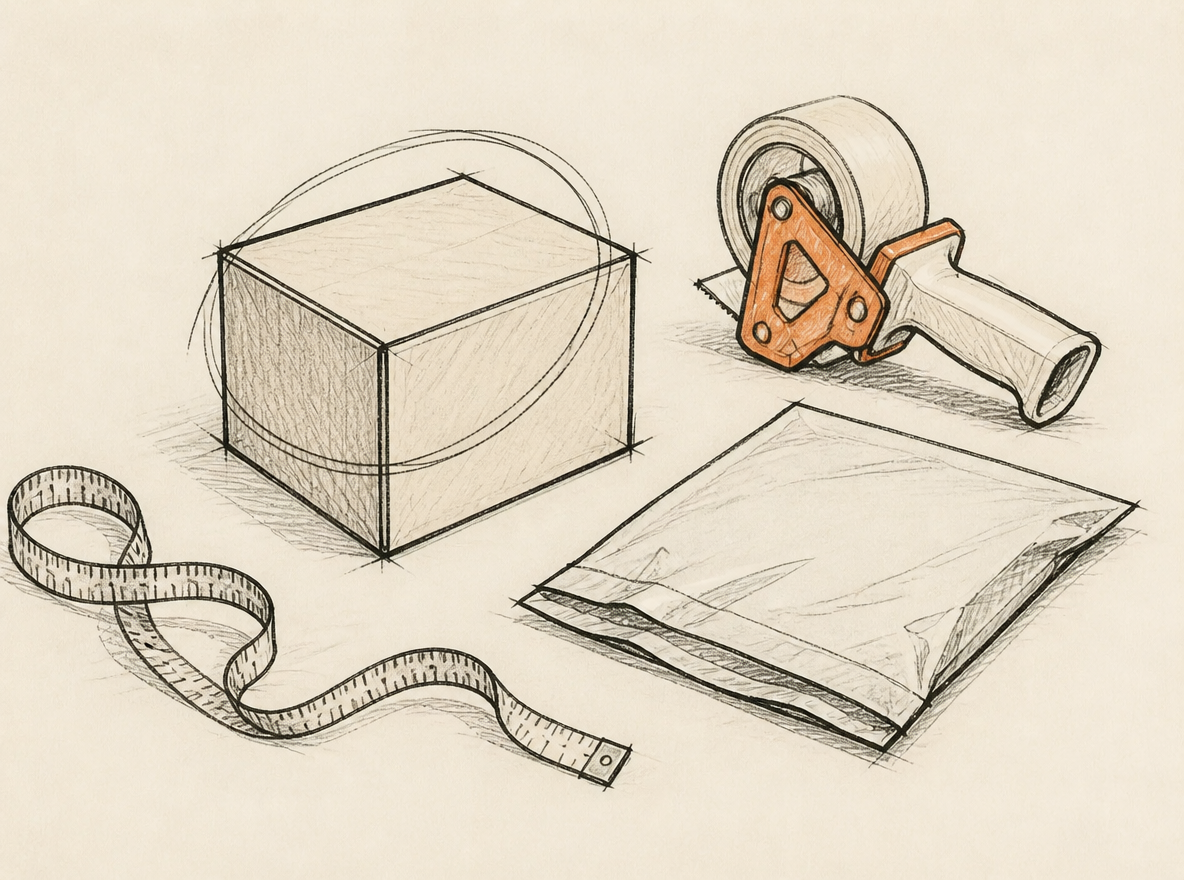
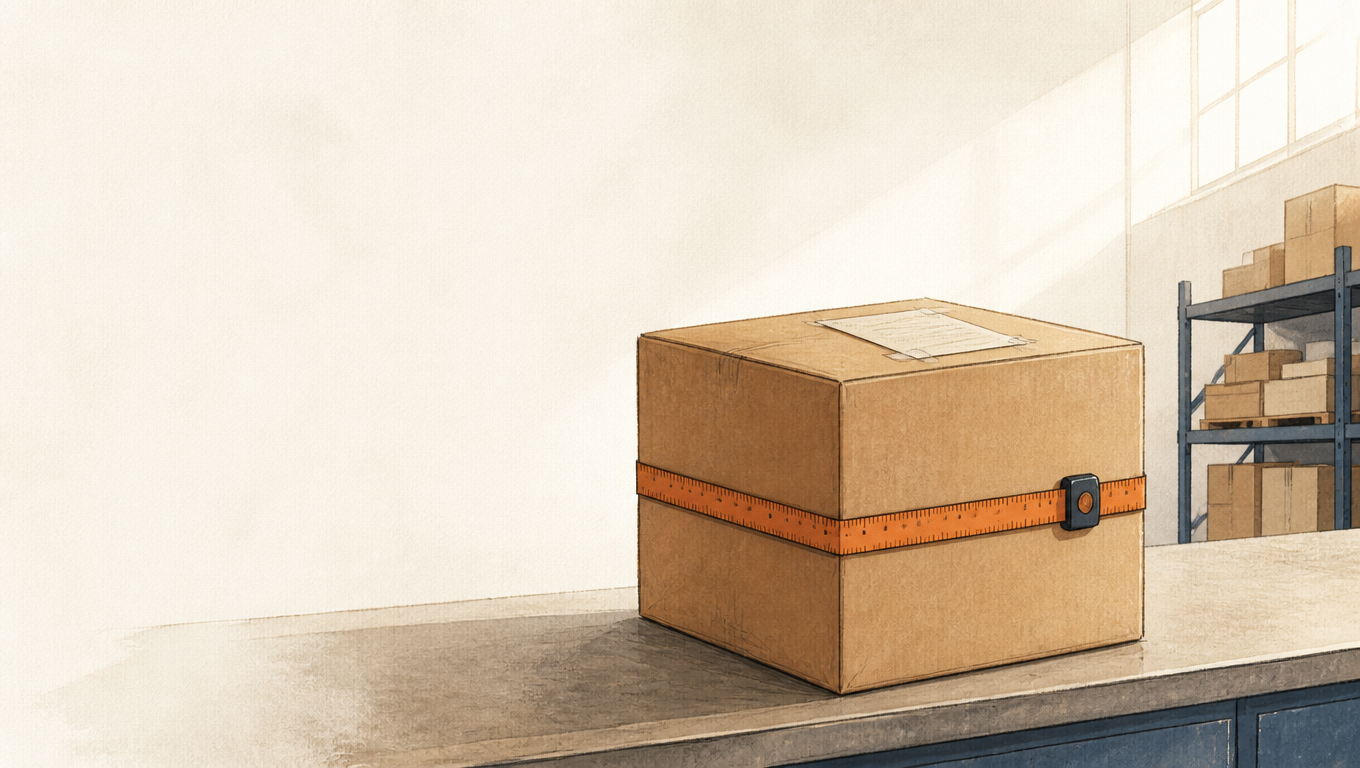
Cubic pricing starts with a tape measure, not a scale
Three ways USPS can price the same box
The same carton can be priced three different ways, and the differences are structural rather than cosmetic. Get clear on what drives each one and every later comparison follows.
Item
Weight-based
Cubic
Flat Rate
What drives the price
Chargeable weight × zone
Cubic tier × zone
A USPS-supplied container
Role of weight
The price itself
Eligibility ceiling only (20 lb)
Eligibility ceiling only (70 lb domestic)
What you have to measure
Packed weight
Packed length, width, height
Nothing
Rounding
Weight rounds up to the next whole pound; retail Ground Advantage prices in 4, 8, 12 and 15.999 oz steps
Each dimension rounds down to the nearest 1/4 inch; volume rounds up to the next tier
None
Zone dependent
Yes
Yes
No
Sold as
Retail and commercial
Commercial only
Retail and commercial
Weight-based pricing is the default. A parcel weighing 1.25 lb is charged as 2 lb, and the price climbs with zone. Ground Advantage softens that for very light parcels by grouping retail prices into a few ounce steps, so a 4 oz parcel and a 15 oz parcel can cost the same.
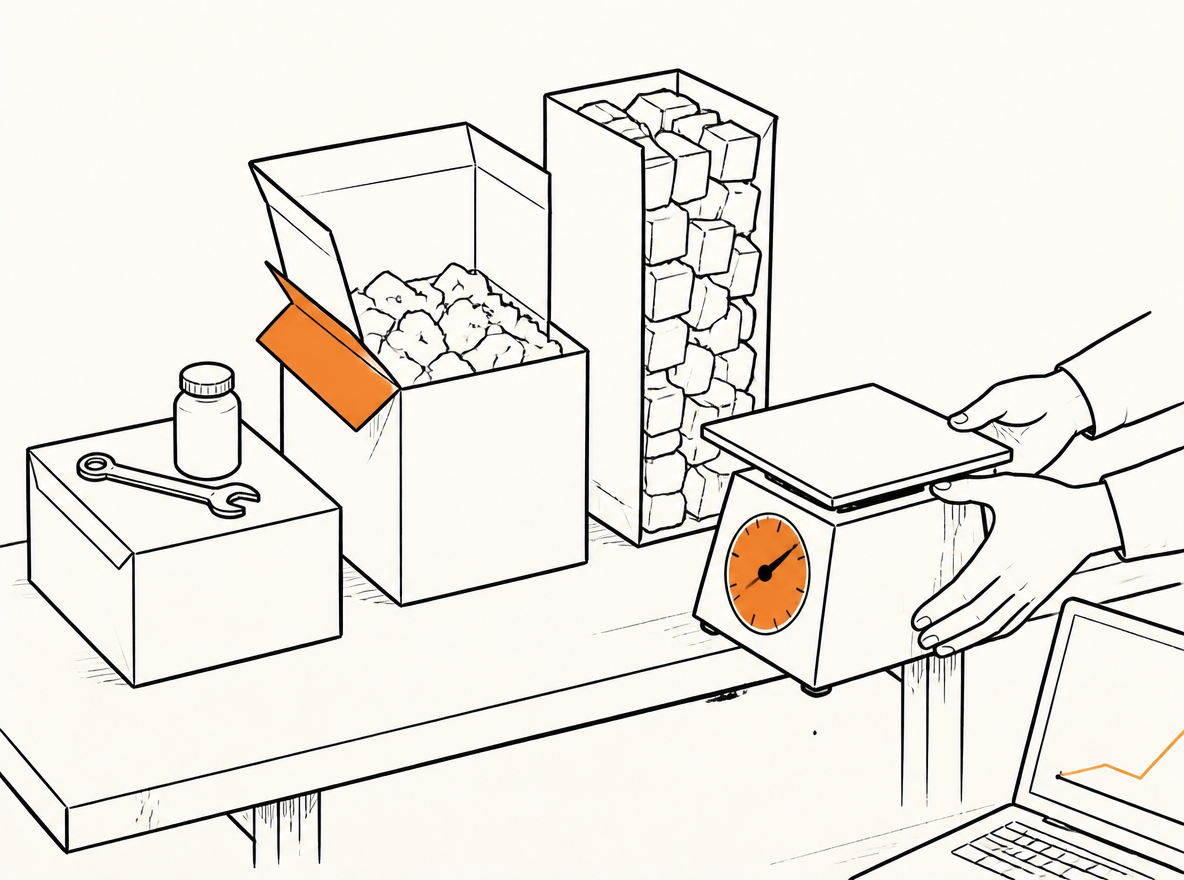
Cubic replaces the weight axis with a volume axis. Weight only decides whether you are allowed in; inside the programme, a 2 lb parcel and a 19 lb parcel in the same tier pay the same postage. That is the entire appeal for dense goods.
Flat Rate removes both axes. You buy a USPS-produced envelope or box and pay one price to any domestic zone, up to 70 lb. The trade is that you must use that container, so the price applies to whatever fits inside it, not to your own packaging.
Two of the three interact in a way that catches people out. Cubic exists only at or below 1 cubic foot for Ground Advantage, and dimensional weight begins only above 1 cubic foot. The threshold is the same, so a parcel that grows past it loses the cubic option and simultaneously becomes subject to dimensional weight at a divisor of 139. See Domestic Mail Manual 283.
Which parcels qualify
Cubic is not a pricing option you can simply choose at checkout. Both services impose hard limits, and Priority Mail imposes tighter ones than Ground Advantage.
Limit
USPS Ground Advantage Commercial Cubic
Priority Mail Cubic
Maximum volume
1.00 cubic foot (1,728 cubic inches)
0.50 cubic foot (864 cubic inches)
Maximum weight
20 lb
20 lb
Longest side
22 inches
22 inches
Tiers
Ten, 0.10 through 1.00
Five, 0.10 through 0.50
Rolls and tubes
Not eligible
Not eligible
Soft packs and padded envelopes
Eligible, measured by length plus width
Eligible, measured by length plus width
Service standard
2 to 5 days
2 to 3 days
Three details in that table decide more cases than the headline limits.
Only commercial prices have a cubic column. Ground Advantage cubic is described in the Domestic Mail Manual as the commercial version of the service, available to PC Postage users, permit imprint mailers, IBI meter users and USPS Returns permit holders. Priority Mail cubic requires commercial prices as well: registered PC Postage end users can print single cubic pieces, while permit imprint customers must use USPS Ship or file an electronic postage statement with a manifest and mail at least 200 pieces or 50 lb at a time. Retail counter pricing has no cubic tier at all.
The longest-side limit is measured on the packed parcel, not the product. A 20-inch item in a 24-inch box fails the 22-inch test no matter how tight the fit looks on the shelf.
Soft packaging is measured differently, and that is usually good news. Poly mailers and padded envelopes are assessed on length plus width rather than volume, with a 36-inch cap. A flat mailer whose real volume is trivial can therefore land in a tier above what its cube would suggest, but a bulky one can also fit where the cube method would have failed.
How to calculate your cubic tier
The arithmetic is simple, but the rounding order matters. USPS rounds each dimension down to the nearest 1/4 inch, multiplies, divides by 1,728, and then places the parcel in the next tier up. Note which way the rounding runs: cubic rounds measurements down, while dimensional weight rounds them up to the next whole inch. A parcel sitting near a boundary therefore gets the friendliest reading from the cubic method and the harshest one from the dimensional-weight method.
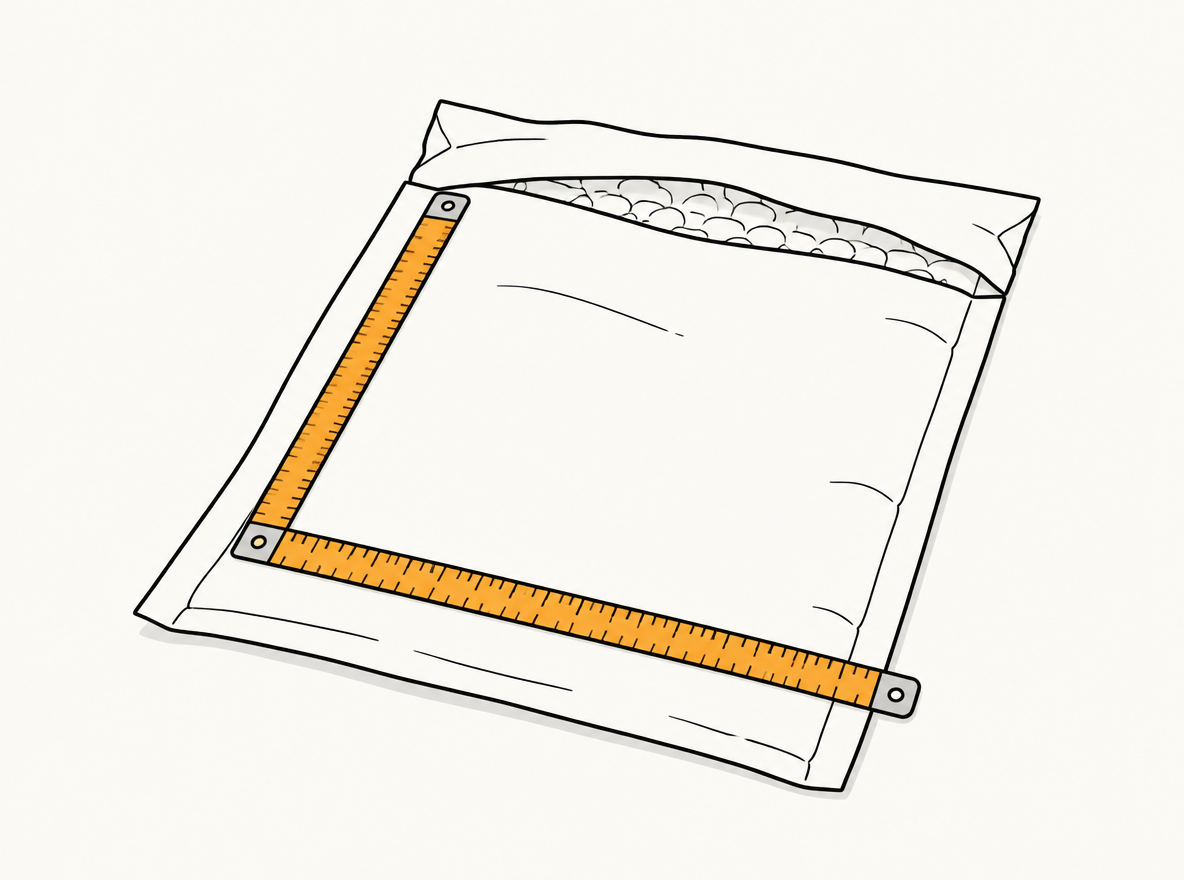
Soft packs need only length and width: add them and read the tier
Take a box measuring 10 × 8 × 6 inches, which is 480 cubic inches. Divide by 1,728 and you get 0.278 cubic feet. The tiers are ceilings, so this parcel does not round to the nearest 0.10; it falls into the 0.30 tier because it exceeds the 0.20 ceiling. The exact boundary matters: 0.20 cubic foot is 345.6 cubic inches, 0.30 is 518.4.
A worked figure from the Domestic Mail Manual shows the same logic with awkward measurements. A parcel of 6-1/8 × 5-7/8 × 6-3/8 inches rounds down to 6 × 5-3/4 × 6-1/4, which is 215.6 cubic inches, or 0.125 cubic feet. That exceeds the 0.10 ceiling, so it prices at 0.20.
Because tiers are ceilings rather than rounded values, tiny changes in packing can move a parcel a whole tier. An 11 × 9 × 7 inch box is 693 cubic inches, or 0.401 cubic feet, which puts it in the 0.50 tier. Shave a quarter inch off the length and the same contents measure 10-3/4 × 9 × 7, or 677.25 cubic inches, which is 0.392 and lands in 0.40. At zone 5 that trim is worth $0.89; at zone 8 it is worth $1.61.
Soft packs and padded envelopes skip the multiplication entirely. Measure the outside length and width of the packaging material, round each down to the nearest 1/4 inch, add them, and read the tier from the sum.
Tier
Length plus width
Example
0.10
Up to 21 inches
10 × 10 padded mailer
0.20
More than 21, up to 27 inches
12 × 12 padded mailer
0.30
More than 27, up to 31 inches
14 × 15 poly mailer
0.40
More than 31, up to 34 inches
15 × 18 poly mailer
0.50
More than 34, up to 36 inches
17 × 18 poly mailer
Anything above 36 inches combined is outside cubic. Pleated or expandable mailers do not get this shortcut and must be measured as three-dimensional parcels, which is exactly the case where a gusseted mailer starts behaving like a box. To check a box against the size limits quickly before packing, run it through our package size checker.
One more ceiling to keep in view: 1 cubic foot is where cubic ends and dimensional weight begins. A 12 × 12 × 12 inch carton measures exactly 1,728 cubic inches, so it is eligible at the top tier. Make it 12 × 12 × 12-1/2 and it measures 1,800 cubic inches and is no longer cubic. Dimensional weight then re-measures the same carton with every side rounded up to the next whole inch, so it is rated as 12 × 12 × 13, or 1,872 cubic inches, divided by 139 and rounded up to 14 lb. The parcel did not get heavier; it stopped being eligible.
When cubic wins, and when it barely helps
Reading the Ground Advantage commercial table side by side is the fastest way to understand cubic. Across tiers and zones, the cubic price for a tier sits within a few percent of the weight price for roughly ten times the tier in pounds. At zone 5, the 0.20 tier costs $9.92 against $10.50 for a 2 lb parcel, the 0.30 tier costs $11.51 against $12.12 for 3 lb, and the 0.50 tier costs $14.37 against $14.53 for 5 lb. Priority Mail cubic is even more tightly pegged: the 0.20 tier is priced identically to the 2 lb rate and the 0.30 tier identically to the 3 lb rate.
So the practical question is not "is cubic cheaper" but "does this parcel weigh more than about ten times its tier". Three examples below, all comparing commercial prices for the same service, using the October 2026 price list.
Parcel
Pounds per tier cubic foot
GA weight
GA cubic
PM weight
PM cubic
A: 8 oz, 6 × 4 × 2 in (0.10 tier)
5
$8.24 zone 5 / $8.95 zone 8
$9.04 / $10.68
$13.82 / $16.07
$13.87 / $16.36
B: 8 lb, 8 × 6 × 6 in (0.20 tier)
40
$16.54 / $23.95
$9.92 / $12.39
$27.66 / $38.90
$14.02 / $17.22
C: 3 lb, 12 × 12 × 12 in (1.00 tier)
3
$12.12 / $16.30
$18.68 / $27.35
$17.41 / $21.42
Not eligible
Scenario A, light and small. A jewellery or supplement order in a small carton weighs 8 oz and measures only 0.028 cubic feet, which is charged at the 0.10 tier floor. Against that tier it is worth 5 lb per cubic foot, and cubic is the worse answer at every zone, by $0.80 at zone 5 and $1.73 at zone 8. The weight price for a sub-1-lb parcel is already the cheapest line USPS sells, and light parcels simply do not have a weight problem for cubic to solve.
Scenario B, dense and small. Eight pounds of hardware, bottles or books in an 8 × 6 × 6 fits the 0.20 tier. Here cubic cuts $6.62 at zone 5 and $11.56 at zone 8 on Ground Advantage. On Priority Mail the same parcel goes from $27.66 to $14.02 at zone 5, a 49 percent cut, and the parcel keeps the 2 to 3 day service standard. This is the profile cubic was built for: high density, small footprint, unremarkable weight.
Scenario C, near the volume ceiling. A 12-inch cube at 3 lb is mostly air, and weight-based pricing wins by $6.56 at zone 5 and $11.05 at zone 8. The same carton at 15 lb flips: cubic costs $18.68 against $22.90 for the weight price at zone 5, and $27.35 against $34.66 at zone 8. Priority Mail cubic cannot help here at all, since it stops at 0.50 cubic foot.
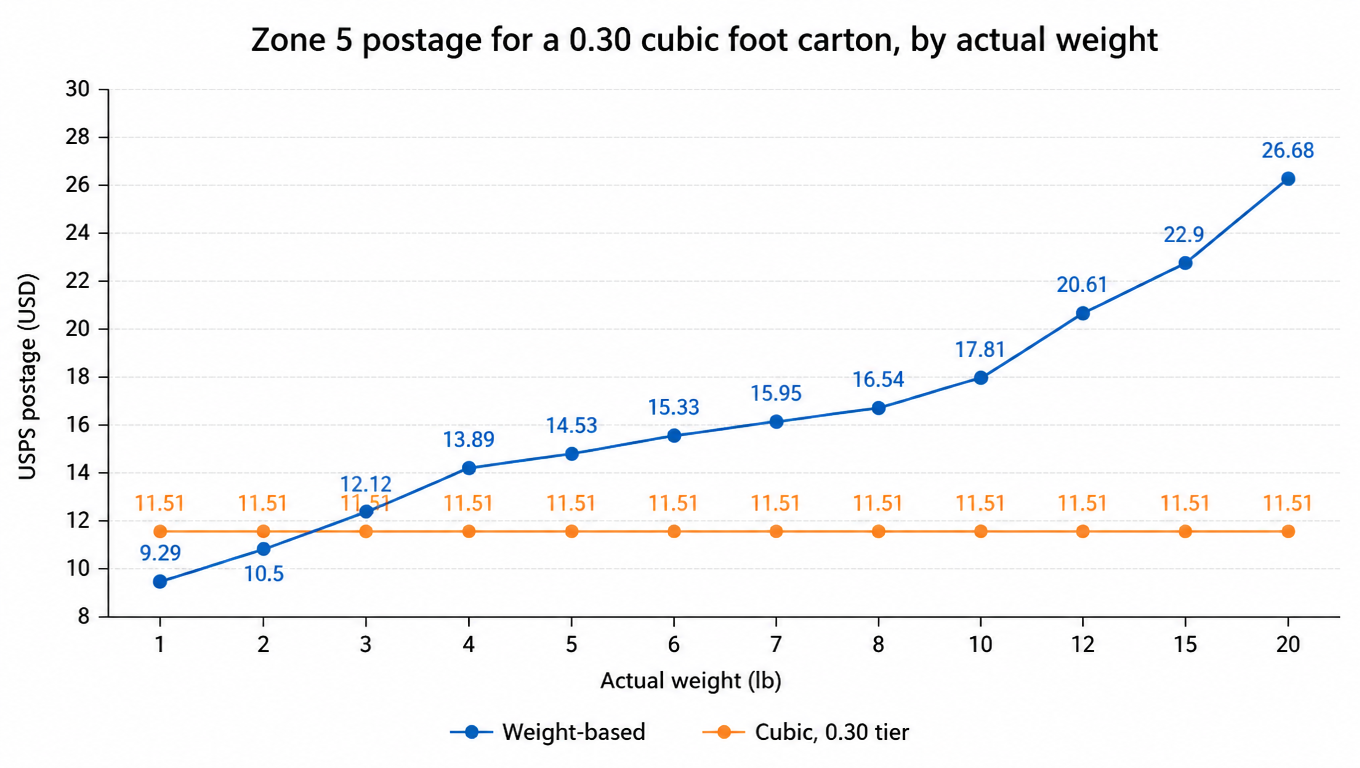
Neither volume nor weight decides it: the ratio doesSame 0.30 tier: cubic is a flat line while the weight price climbs (commercial, zone 5, October 2026)
The chart is the whole argument in one picture. For a carton that fits the 0.30 tier, the cubic line is flat at $11.51 regardless of weight, while the weight-based line climbs. The two cross around 3 lb, which is exactly the ten-pounds-per-cubic-foot ratio, and everything heavier is money left on the counter.
Flat Rate enters as a fourth number, and it is easy to overrate. Commercial Priority Mail Flat Rate pricing is $12.95 for a Small Flat Rate Box, $22.02 for Medium, $32.75 for Large and $12.84 for a Padded Flat Rate Envelope, with no zone variation. That makes Flat Rate attractive for heavy parcels going far, but the Small Flat Rate Box has an interior of 8-5/8 × 5-3/8 × 1-5/8 inches, roughly 75 cubic inches. Scenario B does not fit in it. To use Flat Rate you would have to repack the order, and once you use USPS Flat Rate packaging you must pay the Flat Rate price, so the two programmes cannot be combined on one parcel.
Where Flat Rate earns its keep is a heavy, compact item on a long zone where cubic still loses. Compare scenario B at zone 8: Ground Advantage cubic is $12.39, Priority Mail cubic $17.22, and the Small Flat Rate Box $12.95, which is faster than Ground Advantage but only if the item fits inside 75 cubic inches. Above that, cubic is usually the cheaper answer, and the Flat Rate premium buys speed.
Speed is the honest tiebreaker throughout. Ground Advantage is expected in 2 to 5 days, and some destinations, including Alaska, Hawaii and offshore locations, can take longer. Priority Mail is 2 to 3 days, not guaranteed. Between two cubic prices, the one that meets your delivery promise wins; between cubic and weight, the saving has to be real before it is worth changing how you pack. For how dimensional weight and size fees stack on top, see our guide to dimensional weight and dimension fees.
How to find the SKUs worth testing in your own order data
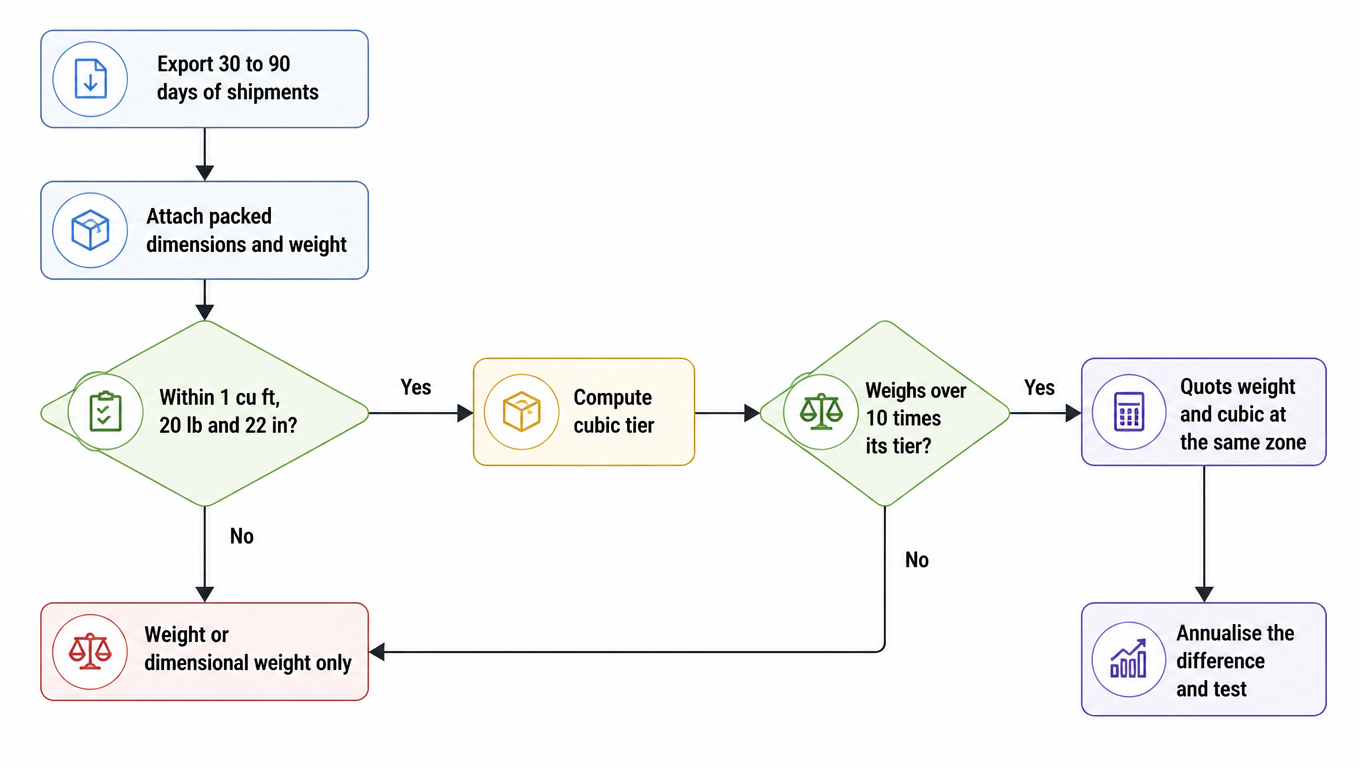
The order of operations matters here. Screen for eligibility first, price second; there is no point comparing rates for parcels that cannot use cubic.
Screen eligibility before pricing and half the comparisons disappear
Step 1, export the right fields. You need packed length, width and height, packed weight, destination ZIP, the service used and the postage paid, for 30 to 90 days. The dimension fields are the ones that go missing. Most order management systems store product dimensions rather than packed dimensions, and the two differ by whatever void fill and outer carton you add.
Step 2, build package profiles. Group SKUs by the carton they actually ship in. One profile per carton plus packing method is enough; you do not need a dimension for every SKU. If your system has no dimension data, measure twenty recent shipments by hand, which is enough to establish the tiers you are really using.
Step 3, screen before pricing. Drop anything over 1 cubic foot (0.50 for a Priority Mail test), over 20 lb, over 22 inches on the longest side, or packed in a roll or tube. Drop anything already going out in USPS Flat Rate packaging, since that parcel is committed to the Flat Rate price.
Step 4, compute tier and the weight-to-tier ratio. From the packed dimensions, round each side down to the nearest quarter inch, multiply, divide by 1,728, and take the next tier up. Then divide packed weight by the tier value rather than by the raw volume, because the tier is what you are actually charged for. Sort by that ratio. Profiles above roughly 10 pounds per tier-cubic-foot are your candidates, and the further above, the bigger the spread.
Step 5, price both ways for the same service and zone. Use the same zone band your orders actually hit, and quote weight-based and cubic for the identical service. A saving that only exists because you switched from Priority Mail to Ground Advantage is not a cubic saving; it is a service downgrade, and it belongs in a different conversation. For the service question itself, see our comparison of Ground Advantage, Priority Mail and Flat Rate.
Step 6, annualise and sanity check. Multiply the per-parcel difference by monthly volume and twelve. Then check three operational facts before you quote the number: whether the delivery promise survives the service mix, whether the dimension data feeding your label platform matches what you pack, and whether any profile sits close enough to a tier boundary that a slightly different carton would move it. USPS also charges a Dimension Noncompliance fee of $3.00 when dimensions are missing or inaccurate for parcels exceeding 1 cubic foot or 22 inches in length, so sloppy dimension data can erase a tier's worth of saving on its own.
Questions merchants ask before switching
No. Cubic wins on dense parcels that fit its limits, and Flat Rate wins on heavy, compact parcels going long distances where you can also use the free USPS packaging. In the example above, an 8 lb parcel in an 8 × 6 × 6 carton costs $12.39 by Ground Advantage cubic to zone 8, less than the $12.95 Small Flat Rate Box, but the Flat Rate option arrives faster and needs no dimension data.
Measure the outside length and width of the packaging material, round each down to the nearest quarter inch, and add them. Up to 21 inches is the 0.10 tier, up to 27 is 0.20, up to 31 is 0.30, up to 34 is 0.40 and up to 36 is 0.50. Pleated or gusseted mailers must be measured as three-dimensional parcels instead.
Because for Priority Mail the cubic tiers are priced to match the weight table at ten pounds per cubic foot, so a parcel at or below that density gains nothing. Ground Advantage cubic is usually a few percent below the equivalent weight price, but only when the parcel is heavier than ten times its tier.
It loses Ground Advantage cubic and becomes subject to dimensional weight, calculated from length × width × height divided by 139 and rounded up, with each side first rounded up to the next whole inch, and charged whenever it exceeds the actual weight. That is why a quarter of an inch on one side, taking a carton from 1,728 to 1,800 cubic inches, can cost several dollars without any change in contents.
No. Cubic prices sit in the commercial price list, which means approved PC Postage, permit imprint, IBI meters or USPS Returns. Retail counter pricing has no cubic tier. Whether you already qualify through one of those channels is worth confirming separately.
No, and they pull in opposite directions. Cubic replaces weight with volume inside 1 cubic foot, rounding dimensions down and looking up a tier price; dimensional weight applies above 1 cubic foot, rounding dimensions up and dividing by 139 to produce a larger weight. The same carton reads at its most generous under cubic and at its harshest under dimensional weight. The full method is in our dimensional weight guide.
Links verified October 24, 2026, with prices taken from the commercial schedule in Notice 123 effective October 4, 2026. After every USPS price adjustment, re-check both the tier prices and the weight prices rather than carrying an old table into a new model.
Want to know how many of your parcels qualify for cubic?
Send us two or three of your typical packed package profiles, with dimensions, weight and a rough destination mix, and we will walk through what the comparison looks like for the services and rates your account can actually access, including whether a cubic line appears at all and what it would save against what you ship today. EasyShippingX is a channel-neutral shipping layer: one consistent way to compare US domestic carrier options and execute through a portal, a spreadsheet, or an API.