What 3PL and 4PL actually mean in U.S. parcel work
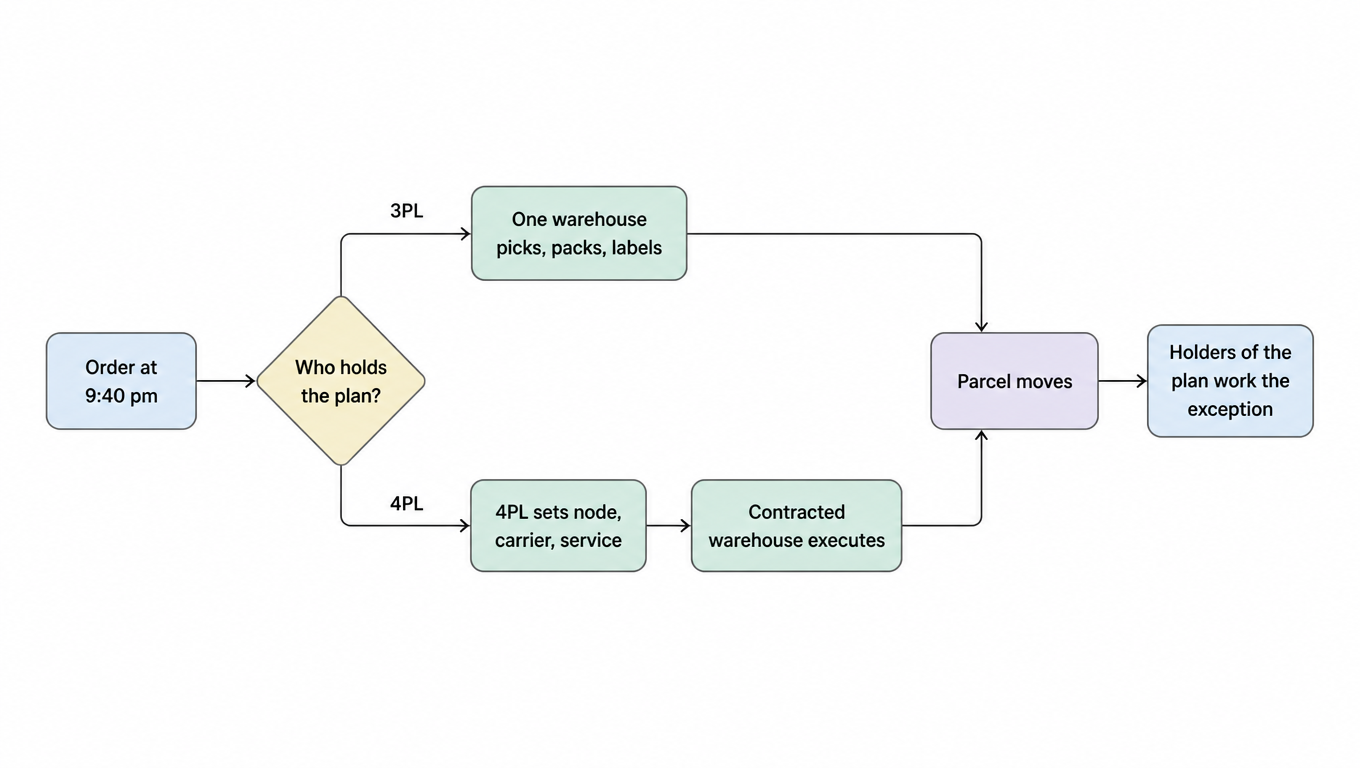
A 3PL is an operator. You hand it inventory; it stores the goods, receives inbound freight, picks, packs, prints the label, and hands the parcel to a carrier. In the common U.S. small-parcel arrangement the 3PL also supplies the shipping software and, often, the carrier rates, either through its own account or through a rate card it resells to you. The defining feature is that the work happens inside a building the 3PL controls, and the accountability for that work sits with the people standing in it.
A 4PL is a coordinator. It typically does not own the warehouses or the trucks; it owns the plan. It selects and manages the providers underneath, sets the routing rules, decides which node serves which ZIP code, chooses the carrier and service mix across the network, consolidates the data, and answers for the exceptions across all of it. Some 4PLs are non-asset based by design, supplying logistics expertise and the systems that connect the partners rather than the buildings themselves[^1], and a common shorthand is that a 4PL coordinates multiple 3PLs, carriers, and systems under one strategy[^2].
The honest caveat: the market uses both labels loosely. You will find 3PLs that quietly run multi-node orchestration and call it account management, and you will find 4PLs that own a building or two. The words describe where the coordination lives by default, not a clean taxonomy. That is why the useful question is never "are you a 3PL or a 4PL" but "which of these specific decisions do you own, in writing."
| What to look at | Typical 3PL answer | Typical 4PL answer |
|---|---|---|
| Assets | Buildings, racks, and pack lines it operates | Usually none, a network of contracted providers |
| Core product | Capacity and execution quality | Rules, routing, data, and accountability |
| Your counterpart | A warehouse manager ten feet from the cartons | An account team closest to your data |
Both models meet at the same interface: whose system your order data lands in, and who buys the label. That is why the execution side of this choice always comes back to one thing, quoting a measured parcel against the carrier options actually eligible for it. The wider picture sits in 3PL shipping operations.