地址验证指南Address Validation Guide

地址验证API:2026年如何杜绝跨境退货Address Validation APIs: How to Eliminate Cross-Border Returns in 2026

写给海外仓和第三方物流公司(3PL)的地址验证API实战指南。拆解地址错误为什么是跨境退货的头号隐形杀手,地址验证API到底怎么工作,仓库和3PL为什么必须把它接进系统,以及如何选到真正适合跨境小包裹场景的方案。A practical address validation API guide for overseas warehouses and third-party logistics companies (3PLs). Why bad addresses are the #1 hidden cause of cross-border returns, how address validation APIs work, why warehouses and 3PLs should integrate them, and how to pick a solution built for cross-border small parcels.

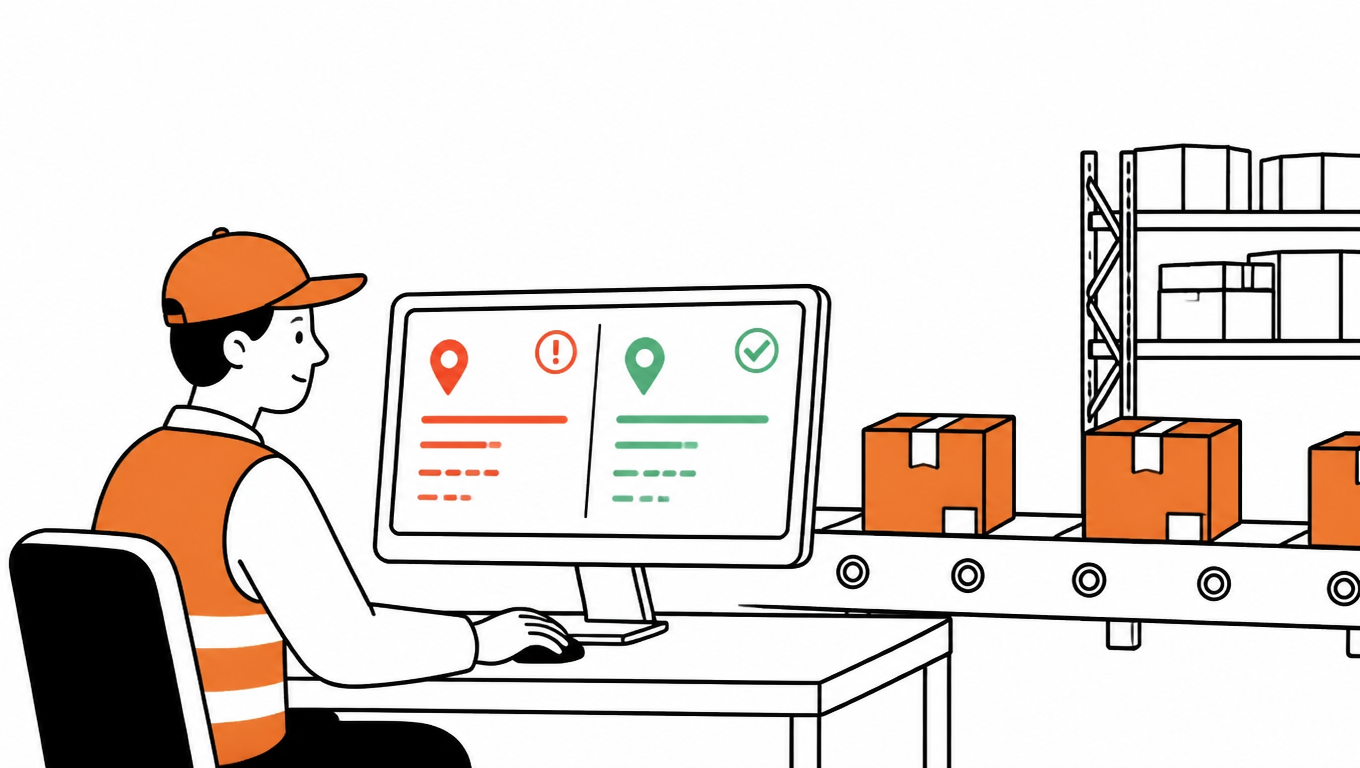
仓库操作员使用地址验证系统修正地址

为什么地址错误是跨境退货的头号隐形杀手Why Bad Addresses Are the #1 Hidden Cause of Cross-Border Returns

如果你经营一家海外仓或者第三方物流公司,你应该对这个场景不陌生:一个包裹贴上标签、装上卡车、飞越大洋,两周后原封不动地退回来。退货理由不是商品有瑕疵,也不是客户改了主意,而是地址错了。在跨境小包裹领域,地址错误造成的退货,是比产品质量问题更隐蔽、也更贵的成本黑洞。If you run an overseas warehouse or a third-party logistics company, this scene is probably familiar: a package gets labeled, loaded onto a truck, flown across an ocean, and comes back unopened two weeks later. The reason is not a defective product or a changed mind. The address was wrong. In cross-border small parcel shipping, returns caused by address errors are a cost black hole that is more hidden, and more expensive, than product quality issues.

研究表明,近20%的线上订单地址存在错误,包括邮编不匹配、格式不一致、关键字段缺失等。在跨境小包裹物流中,这些地址问题导致的投递失败和退货占比,远高于很多人的直觉判断。很多人以为跨境退货主要是买家反悔或者商品不符预期,但实际上,有一大块退货根本没有进入过"客户体验"环节,包裹连送到客户手里的机会都没有。Studies suggest that nearly 20% of online orders contain address errors, including mismatched postal codes, inconsistent formatting, and missing key fields. In cross-border small parcel shipping, delivery failures and returns caused by these address issues account for a far bigger share than most people assume. Many assume cross-border returns are mostly buyers changing their minds or products not matching expectations. In reality, a large share of returns never enter the "customer experience" stage at all: the package never even had a chance to be delivered.

地址错误在国内物流中已经是个麻烦,放到跨境场景里会被急剧放大。国内一件包裹地址错了,退回成本可能就是一趟同城快递的钱。跨境包裹一旦投递失败,你需要承担的是:双程国际运费、目的国海关的退运处理费、仓库重新入库的人工,以及一个几乎不可能挽回的客户。更隐蔽的成本是:即使地址错误被快递商中途修正(而非直接退回),UPS和FedEx也会收取每票23.5到24美元的地址修正附加费。算一笔最简单的账:一票发往欧洲的小包裹,往返运费加退运杂费轻松超过15美元,而很多中小卖家的单品毛利也就10到15美元。一次地址错误,整单利润归零甚至倒亏。Address errors are already a headache in domestic shipping; cross-border magnifies them sharply. A wrong address on a domestic parcel may only cost a one-way local courier trip to return. For a cross-border parcel, a failed delivery means you absorb round-trip international freight, customs handling fees in the destination country, re-warehousing labor, and a customer that is nearly impossible to win back. There is also a hidden cost: even when the carrier corrects the address mid-route instead of returning the parcel, UPS and FedEx charge USD 23.5 to 24 per shipment as an address correction surcharge. Do the math on one small parcel to Europe: round-trip freight plus return handling easily exceeds USD 15, while many small and mid-sized sellers only make USD 10 to 15 gross margin per item. One bad address wipes the profit to zero, or worse.

更棘手的是,地址错误的表现形式五花八门。巴西买家忘了填CPF税号,导致海关不放行;韩国地址少了区号(dong),当地快递无法派送;德国买家把街道名和门牌号写反了;英国邮编和城市名不匹配;美国地址的公寓号丢失……这些问题在订单导入阶段看起来只是一行地址字符串,但到了目的地就会变成一票无法投递的包裹。仓库和3PL面对这种情况时,陷入两难:发出去大概率被退,不发又要向客户解释为什么卡着不发货,两边都不讨好。What makes it worse is the variety of address failures. A Brazilian buyer forgets the CPF tax ID, and customs holds the parcel. A Korean address is missing the district (dong), and local couriers cannot deliver. A German buyer swaps street name and house number. A UK postcode does not match the city. A US address loses the apartment number. At order import these look like harmless strings of text; at the destination they become undeliverable parcels. Warehouses and 3PLs end up stuck: ship it and it will likely come back, or hold it and explain to the client why nothing has shipped. Neither option is good.

地址验证API是什么,它到底怎么工作What an Address Validation API Is and How It Works

地址验证API的本质很简单:它是一个云端接口,你把原始的收件地址字符串传进去,它返回一个经过标准化处理、与官方地址库比对、填充了缺失字段并修正了错误的地址,同时附上置信度评分。这个过程可以拆成四个环节。An address validation API is simple in essence: a cloud interface. You pass in the raw recipient address string, and it returns a standardized address that has been checked against official address databases, filled in with missing fields, corrected for errors, and scored for confidence. The process splits into four steps.

标准化、校验、补全、纠错Standardize, Validate, Complete, Correct

第一步是标准化,按照目的地国家的邮政规范重新组织地址字段。比如美国地址的格式是"门牌号+街道名+城市+州缩写+邮编",日本地址的层级是"都道府县+市区町村+町域+番地",API需要知道每个国家的正确格式并把原始数据映射进去。第二步是校验,把标准化后的地址与当地邮政当局的官方地址数据库进行比对,确认这个地址是否真实存在。第三步是补全,在原始地址缺少某些字段时,根据数据库自动填充。比如客户只写了街道名和城市,API帮你补上正确的邮编。第四步是纠错,修正明显的拼写错误和格式问题,例如把"Stree"改回"Street",把全角数字转成半角。First, standardization: reorganize the address fields according to the destination country's postal conventions. A US address is "house number + street + city + state abbreviation + ZIP". A Japanese address is layered as "prefecture + city + district + block number". The API needs to know each country's correct format and map the raw input into it. Second, validation: compare the standardized address against the official address database of the local postal authority to confirm the address really exists. Third, completion: fill in missing fields from the database when the raw address lacks them. If the customer only provided street and city, the API adds the correct postal code. Fourth, correction: fix obvious spelling and format errors, like changing "Stree" to "Street" or converting full-width digits to half-width.

在实际使用中,地址验证API通常支持两种模式:实时单条验证和批量验证。实时验证适合放在前端,消费者在结账页面输入地址时,系统即时给出提示。批量验证适合仓库操作场景,每天从Shopify或WooCommerce导入几百上千个订单后,统一跑一遍地址清洗,把有问题的订单挑出来集中处理。两种模式解决的其实是同一个问题的两个环节:前端从源头拦截,后端在发货前兜底。In practice, address validation APIs usually support two modes: real-time single validation and batch validation. Real-time validation fits the front end: when a shopper types an address on the checkout page, the system gives instant feedback. Batch validation fits warehouse operations: after importing hundreds or thousands of orders from Shopify or WooCommerce each day, run one address-cleaning pass and pull out the problematic orders for focused handling. The two modes solve two stages of the same problem: the front end intercepts at the source, and the back end catches the rest before shipping.

这里有一个很多人会混淆的点:快递商(比如UPS、USPS、DHL)自己也有地址校验功能,是不是可以直接用它们的?可以,但不够。快递商的地址校验通常是作为打单流程的一个附属步骤,它关心的是"这个地址在我的配送网络里能不能送"。而独立的地址验证API在打单之前就完成了校验,好处是:你不会等到生成标签那一刻才发现地址有问题然后重来,而且它能同时覆盖多个快递商的地址规范,你换一家快递商发货,地址验证结果依然有效。There is a common point of confusion: carriers like UPS, USPS, and DHL have their own address verification. Can you just use theirs? Yes, but it is not enough. Carrier address verification is usually a byproduct of the label-creation flow; it cares whether the address is deliverable within its own network. An independent address validation API completes the check before label creation, so you never discover a bad address at the moment you generate the label and have to start over. It also covers multiple carriers' address rules at once, so if you switch carriers, the validation result still holds.

仓库和3PL为什么必须把地址校验直接接进系统Why Warehouses and 3PLs Should Integrate Address Validation Directly

很多仓库和3PL现在处理地址问题的方式还是"人肉模式":操作员在打单的时候扫一眼地址,感觉不对劲就去问客户确认,或者直接硬着头皮发出去赌一把。这个流程的问题不是它没效果,认真负责的操作员的确能拦下一部分问题地址,问题在于它不可规模化。Many warehouses and 3PLs still handle address problems the manual way: an operator glances at each address while printing labels, asks the client to confirm anything that looks off, or just ships it and hopes. The problem with this process is not that it never works. A diligent operator does catch some bad addresses. The problem is that it does not scale.

做一个简单的估算:一个日均处理500票跨境包裹的仓库,假设地址错误率是4%,那就是每天20个问题地址。操作员逐一核实每个地址:在Google Maps上查地址是否存在、在WhatsApp或微信上找客户确认、等待回复、修改系统里的地址……平均处理一个地址要5到8分钟。20个地址就是将近两小时的纯手工劳动。一个月下来,等于一个操作员一周时间全花在改地址上。而且这还是理想情况,现实中客户不回复、回复了也给不出准确的英文或拉丁化地址,事情更复杂。Here is a rough estimate: a warehouse handling 500 cross-border parcels a day, with a 4% address error rate, sees 20 problem addresses per day. The operator verifies each one: checking Google Maps to see if the address exists, messaging the client on WhatsApp or WeChat, waiting for a reply, updating the address in the system. Each one takes 5 to 8 minutes on average. Twenty addresses is nearly two hours of pure manual labor. Over a month, that is a full week of one operator's time spent fixing addresses. And that is the ideal case; in reality clients do not reply, or reply without a usable English or Latinized address, and it gets worse.

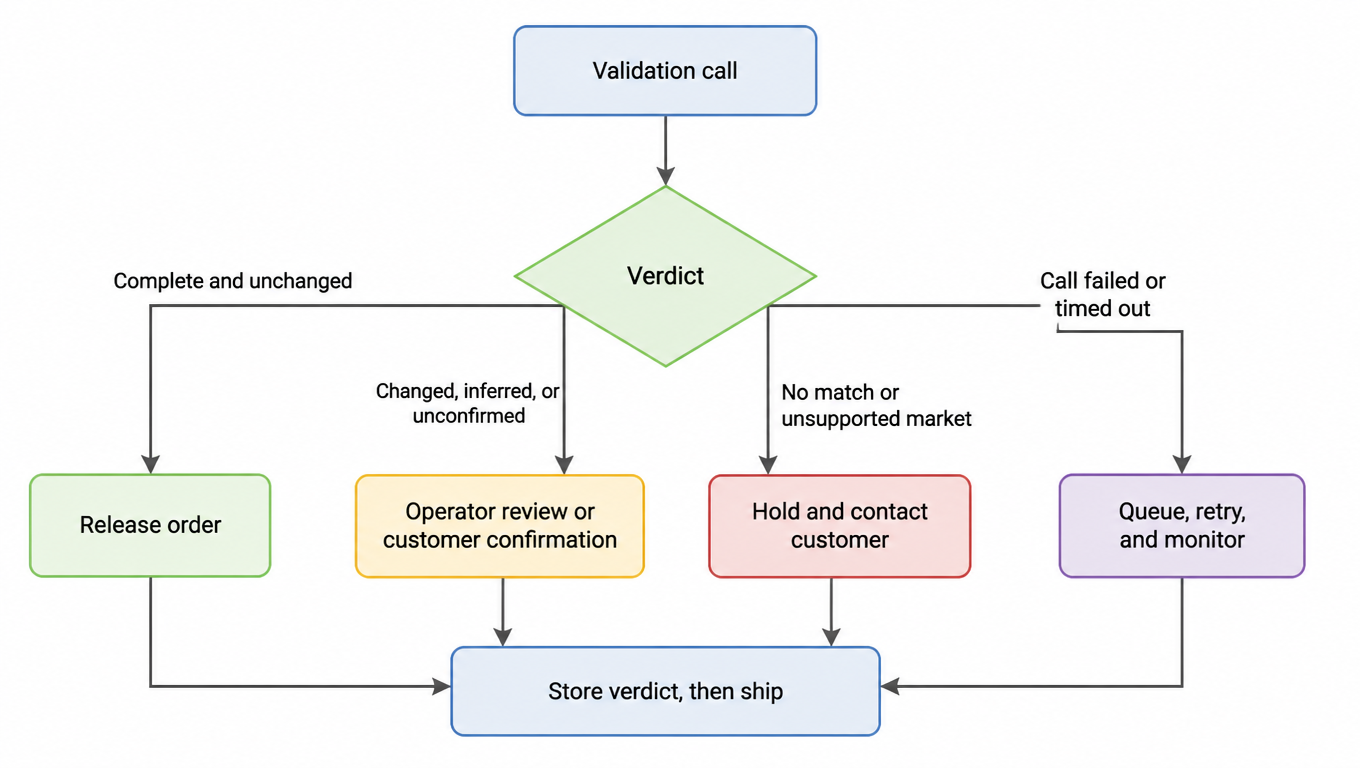
把地址验证API直接接进WMS、ERP或者订单管理系统后,这个流程变成自动化的:订单导入、API自动校验、给每个地址打出健康评分、高分地址直接放行打单、低分地址进入人工复核队列。操作员不再需要逐单筛查地址,只需要看系统已经标出来的那少量"红灯"订单,效率提升是数量级的。Once an address validation API is wired into the WMS, ERP, or order management system, the process becomes automated: orders import, the API validates automatically, every address gets a health score, high scores release straight to label printing, low scores enter a manual review queue. Operators no longer screen every address one by one; they only review the small set of flagged orders. The efficiency gain is an order of magnitude.

对于做多客户生意的3PL来说,API接入还有一层特别的价值。不同客户的不同市场,地址问题的类型完全不同。一个主要卖到美国的客户,问题集中在公寓号缺失;另一个做东南亚市场的客户,问题集中在收件人拉丁化姓名拼写混乱。靠人工去识别每个客户、每个市场的地址规律根本不现实。而一个好的地址验证API,会在校验的同时告诉你这个地址到底哪里出了问题,让3PL可以对不同客户建立不同的地址审核规则,这是靠堆人头永远做不到的。For 3PLs serving multiple clients, API integration has one more layer of value. Different clients in different markets fail on completely different address patterns. A client selling mostly to the US fails on missing apartment numbers. Another client selling into Southeast Asia fails on messy Latinized recipient names. Manually identifying each client's and each market's address patterns is not realistic. A good address validation API tells you exactly what is wrong with each address during validation, letting the 3PL build different review rules per client. Headcount alone can never do that.

从财务角度算一笔账:上面那个每天500票的仓库,一个月约15000票。4%地址错误率就是600票有问题。假设其中一半(300票)没被人工发现直接发出,产生了退货,每票退货的综合成本(来回运费+操作费+客户流失)按15美元算,一个月就是4500美元的纯损失。一套地址验证API的月费远低于这个数字,而且接入后错误率可以压到0.5%以下。ROI不需要复杂计算,看这两个数就够了。Now the finance side: the warehouse above handles about 15,000 parcels a month. At a 4% error rate, that is 600 problem addresses. Say half of them (300) slip past manual review and ship, then return. At USD 15 of combined cost per return (round-trip freight, handling, lost customer), that is USD 4,500 of pure loss per month. A good address validation API costs far less per month, and can push the error rate below 0.5% after integration. You do not need a complex ROI model; these two numbers are enough.

选择地址验证API的四个关键评估维度Four Criteria for Choosing an Address Validation API

市面上做地址验证API的厂商不少,从Google Address Validation到Lob的Address Verification,再到各家物流SaaS自带的功能,选项很多。对于跨境小包裹场景,我建议从四个维度来评估。There is no shortage of address validation vendors, from Google Address Validation to Lob's Address Verification, plus features built into various logistics SaaS platforms. For cross-border small parcels, evaluate on four dimensions.

① 国家覆盖数和深度Country Coverage Count and Depth

不要只看"覆盖多少个国家和地区"这个总数,要看你的核心市场覆盖得有多深。一个API号称覆盖全球250个国家和地区,但如果你的主力市场是巴西、韩国和沙特,而这几个国家的地址库它依赖的是第三方推测而非当地邮政直接数据,那覆盖率数字就没有意义。真正理想的覆盖是:在你的核心10到15个目的地国家,API能直接对接该国邮政当局的官方地址库,而不是靠机器学习模型猜测。Do not only look at the headline number of countries covered. Look at how deep coverage is in your core markets. An API claiming 250 countries means nothing if your main markets are Brazil, Korea, and Saudi Arabia and it relies on third-party inference there instead of direct local postal data. Ideal coverage: for your core 10 to 15 destination countries, the API plugs directly into the official address database of that country's postal authority, not a machine-learning guess.

② 响应速度和可用性Response Speed and Availability

地址验证是打单流程中的一个中间环节,它的延迟不能成为瓶颈。在批量处理几百上千票单子时,一次API调用如果耗时超过500毫秒,整个批处理的时间就会被显著拉长。一个好用的API应该做到单次调用平均在200毫秒以内,同时SLA达到99.9%以上的可用性。你不想在旺季最忙的那天因为地址验证API挂了而整个出货流程卡住。Address validation sits in the middle of the labeling flow, and its latency cannot become a bottleneck. When batch-processing hundreds or thousands of orders, a single call over 500 ms stretches the whole batch. A solid API averages under 200 ms per call with an SLA of 99.9% or better. You do not want the entire shipping flow blocked on the busiest day of peak season because the address validation API is down.

③ 数据源质量和更新频率Data Source Quality and Update Frequency

地址库不是一次性建好就永远有效的。各国邮政会持续更新:新建小区被分配新邮编、旧工业区改造后门牌号重新编号、行政区划调整导致城市名和邮编的对应关系改变。一个靠谱的地址验证API应该清楚地说明它的数据来自哪里(比如是否直接来自USPS的CASS认证数据、Royal Mail的PAF数据库),以及多久更新一次。按月更新是基本线,按周更新更好。Address databases are not built once and valid forever. Postal authorities keep updating them: new neighborhoods get new postal codes, redeveloped industrial zones get renumbered, administrative changes shift how cities and postal codes map to each other. A reliable API should state clearly where its data comes from (for example, whether it uses USPS CASS-certified data or Royal Mail's PAF database directly) and how often it refreshes. Monthly updates are the baseline; weekly is better.

④ 定价模型是否匹配你的业务形态Whether the Pricing Model Fits Your Operation

按调用次数计费对票量波动大的仓库可能很贵(旺季几万次调用,淡季几千次);按月订阅固定费用对票量稳定的仓库可能最划算;按包裹数计费最容易做成本预算,因为你本来就知道自己发多少包裹。没有绝对最好的模型,只有最匹配你票量曲线的模型。另外要留意:有些API对"无效地址"的调用也收费,你传了一个错的地址进去,它告诉你错了,这次调用也算钱。在评估总成本时要把这个因素算进去。Per-call pricing can get expensive for warehouses with volatile volume (tens of thousands of calls in peak season, a few thousand in slow months). Flat monthly subscriptions may suit stable volume best. Per-parcel pricing is the easiest to budget, because you already know how many parcels you ship. No model is objectively best; the right one matches your volume curve. Also watch out: some APIs charge for invalid-address calls too. You send a bad address, it tells you it is bad, and the call still counts. Factor that into total cost.

easyshippingx地址校验接口:为跨境小包裹场景深度优化的完整方案easyshippingx Address Validation: Built for Cross-Border Small Parcels

easyshippingx的地址验证API不是把第三方地址库简单封装一下,而是深度嵌入到整个跨境打单流程里去做校验。它覆盖了220多个国家和地区的地址规范,并且直接对接了USPS、UPS、FedEx、DHL等主流快递商的地址格式要求。这意味着地址验证不是孤立进行的,它是在你选定快递商和具体服务之后,按照这个快递商对这个目的地的地址规则来做校验。同一个地址在USPS的标准下可能是有效的,在DHL eCommerce的规则下可能需要补一个字段,easyshippingx会根据你实际要用的快递商来给出针对性的验证结果。easyshippingx's address validation API is not a thin wrapper around a third-party address database. It is built deep into the cross-border labeling flow. It covers address conventions in 220+ countries and regions, and directly maps to the address format requirements of major carriers like USPS, UPS, FedEx, and DHL. Validation does not happen in isolation: after you select a carrier and specific service, the check follows that carrier's address rules for the destination. The same address may be valid under USPS standards but need an extra field under DHL eCommerce rules. easyshippingx returns validation results specific to the carrier you will actually use.

在实操层面,easyshippingx给每个地址打出一个健康评分。操作员在打单界面里看到的不是一行地址文字,而是一个带颜色的评分标签:绿色代表验证通过直接打单,黄色代表有轻微问题但不影响配送(比如收件人姓名格式不规范),红色代表有严重问题需要人工介入(比如邮编与城市不匹配、关键字段缺失)。这个机制的价值在于:它让操作员从"逐一阅读每个地址"变成了"只看红色标签的地址",注意力投放效率完全不同。Operationally, easyshippingx scores every address. In the labeling interface, operators see a colored score tag instead of a line of address text: green means validated, print directly; yellow means a minor issue that does not block delivery (such as an oddly formatted recipient name); red means a serious problem requiring human intervention (such as postal code and city mismatch or missing key fields). The value: operators shift from reading every address to only reviewing red-tagged ones. Attention allocation efficiency is completely different.

对于需要批量处理的仓库,easyshippingx支持CSV或Excel导入订单后跑批量地址清洗。系统会输出一份报告,把所有异常地址按问题类型分类标记好,并且给出建议修正。比如一个英国地址邮编显示为"SW1A 1AA"但城市字段写的是"Manchester",系统会标记"邮编与城市不匹配",并给出建议的城市值"London"。操作员不用自己去Google Maps查,直接点确认修正即可。For warehouses that batch-process, easyshippingx supports CSV or Excel order import followed by a batch address-cleaning pass. The system outputs a report with every abnormal address tagged by problem type, plus suggested corrections. For example, a UK address with postal code "SW1A 1AA" but a city field reading "Manchester" gets flagged as "postal code and city mismatch", with "London" suggested as the city. The operator does not need to check Google Maps; one click confirms the fix.

真实的业务效果如何?我们有一个在洛杉矶做跨境代发的客户,在接入easyshippingx地址校验接口之前,地址相关的退货率在4.2%左右。接入后,因为系统在打单前就对每个地址做了自动校验和评分,加上操作员只需要重点关注红色标签的订单,三个月之后这个数字降到了0.3%。一年算下来,仅地址相关退货就省下了超过三万美元的直接运费成本,还不包括因为退单减少而留住的客户复购价值。What about real results? One of our clients, a cross-border dropshipping operation in Los Angeles, ran an address-related return rate around 4.2% before integrating easyshippingx's validation. After integration, because the system validated and scored every address before labeling and operators only focused on red-tagged orders, that figure dropped to 0.3% within three months. Over a year, they saved more than USD 30,000 in direct freight costs on address-related returns alone, not counting the repeat-purchase value of customers retained by fewer failed deliveries.

地址相关退货率变化:接入前4.2%,接入后三个月降至0.3%

地址相关退货率变化:洛杉矶某海外仓接入easyshippingx前后对比Address-related return rate before and after integrating easyshippingx (Los Angeles warehouse)

2026年地址验证技术的三个趋势Three Address Validation Trends to Watch in 2026

站在2026年年中来看,地址验证技术正在经历一轮明显的升级。过去几年这个赛道做的事情本质上是"用数据库比对地址",但接下来有三个方向正在把地址验证从"比对工具"变成"智能拦截系统"。Looking at mid-2026, address validation technology is going through a visible upgrade. For the past few years, this space was essentially "matching addresses against a database". Three directions are now turning address validation from a matching tool into an intelligent interception system.

趋势一:AI辅助地址推测Trend 1: AI-Assisted Address Inference

传统地址验证的逻辑是二元的:要么匹配到数据库里的地址(有效),要么匹配不到(无效)。但现实中大量地址落在灰色地带,比如客户写的是"123 Main St, Apt near the park",数据库里确实没有"near the park"这个字段,但后半部分不是地址信息,前面的"123 Main St"已经足够配送。新一代的AI模型可以识别出哪些部分是有效的地址信息,哪些是客户无意中混入的备注,并且根据历史投递成功记录推测出正确的地址。Google和Smarty(原SmartyStreets)在这方面的投入很大,物流SaaS厂商也在快速跟进。Traditional validation is binary: either the address matches the database (valid) or it does not (invalid). In reality, a large share of addresses fall into a gray zone. A customer writes "123 Main St, Apt near the park". The database has no "near the park" field, but that tail is not address information; "123 Main St" alone is enough to deliver. Newer AI models can tell which parts are real address information and which are stray notes the customer mixed in, then infer the correct address from historical delivery success data. Google and Smarty (formerly SmartyStreets) are investing heavily here, and logistics SaaS vendors are following fast.

趋势二:收件端实时反馈Trend 2: Real-Time Feedback at the Point of Entry

以前的地址验证主要发生在仓库端,包裹已经到了操作员手里,才发现地址有问题。现在越来越多的电商平台和独立站在结账页面前端集成了地址验证API,消费者在输入地址的时候就能看到实时提示:"您输入的邮编与城市不匹配,系统建议修正为以下地址……"。这个体验对消费者来说就是多花三秒钟确认一下,但对仓库来说,意味着从源头就拦住了80%以上的地址错误。Shopify在结账设置中内置的地址验证功能就是朝着这个方向走的,可以预见到2026年底这会成为独立站的标配。Address validation used to happen mainly at the warehouse, by the time the parcel reached the operator's hands. Now more e-commerce platforms and independent stores integrate validation into the checkout page front end, so shoppers see instant feedback while typing: "The postal code does not match the city; the system suggests this corrected address…". For the shopper it costs three extra seconds of confirmation. For the warehouse, it means more than 80% of address errors are stopped at the source. Shopify's built-in address validation in checkout settings points the same direction, and by the end of 2026 this should be standard for independent stores.

趋势三:地址验证与海关合规数据联动Trend 3: Connecting Address Validation with Customs Compliance

跨境场景下的"地址有效"不只是快递能不能送到的问题,还包括这个地址所在的国家需要哪些额外的收件人信息。比如发往欧盟的B2C包裹需要IOSS号,发往巴西需要CPF号,发往韩国需要个人通关码(PCCC)。未来的地址验证API不会只告诉你"这个地址存在",而是会告诉你"这个地址存在,但发往这个国家你还需要以下字段:……"。easyshippingx已经在往这个方向做,地址校验结果里不仅包含地址本身的健康评分,还会附带目的地国家的合规字段清单。In cross-border shipping, "valid address" is not only about whether the courier can deliver. It also includes what extra recipient information the destination country requires. B2C parcels to the EU need an IOSS number, parcels to Brazil need a CPF, parcels to Korea need a Personal Customs Clearance Code (PCCC). Future address validation APIs will not just tell you "this address exists". They will tell you "this address exists, but for this country you also need these fields…". easyshippingx is already moving in this direction: the validation result includes not only the address health score but also the destination country's required compliance fields.

总结:把地址校验从事后补救变成事前拦截Conclusion: From After-the-Fact Fixes to Upfront Interception

核心观点已经很清楚了:地址错误不是跨境物流必须承受的"正常损耗",它是一个可以系统性消灭的成本项。而且消灭它的手段已经非常成熟,用API把地址校验嵌入到打单流程之前,让系统替你拦截问题地址,而不是等包裹退回来了再计算损失。The core argument should be clear by now: bad addresses are not an inevitable "normal loss" of cross-border logistics. They are a cost item you can systematically eliminate. The tools are mature: embed address validation via API before the labeling flow, and let the system intercept problem addresses instead of counting losses after packages come back.

对于还在用"人肉模式"核对地址的仓库和3PL,建议分两步走:第一步,先做一个小范围统计,把过去三个月内因地址问题产生的退货数量和总成本算出来。这个数字本身通常就足够有说服力。第二步,基于自己的票量规模和核心市场,去评估几家主流的地址验证方案,重点关注它在你核心目的地国家的覆盖深度和与现有系统的集成难度。找一个方案先接进来跑一个月,看退货率的实际变化。For warehouses and 3PLs still verifying addresses manually, my advice is two steps. First, run a small analysis: count address-related returns and their total cost over the past three months. That number is usually persuasive on its own. Second, based on your shipment volume and core markets, evaluate a few mainstream validation solutions, focusing on coverage depth in your key destination countries and how hard they are to integrate with your current systems. Connect one, run it for a month, and watch the return rate move.

2026年,跨境物流的竞争正在从"谁的价格更低"转向"谁的运营效率更高"。地址验证这件事看起来很小,不过是在打单前多调用一个API,但它的效果直接反映在你的退货率、客户复购率和操作员人效上。还在靠人工凭感觉核对地址的仓库,和已经用API自动拦截错误的仓库,正在拉开一段短期对手很难追上的效率差距。In 2026, cross-border logistics competition is shifting from "who has the lowest rates" to "who runs the most efficient operation". Address validation looks small, just one more API call before labeling. But its effect shows up directly in your return rate, customer repurchase rate, and operator productivity. Warehouses still checking addresses by feel, and warehouses already intercepting errors with an API, are opening an efficiency gap that is hard to close quickly.

常见问题FAQ

取决于你原来的错误率和核心市场,但量级可以参考我们洛杉矶客户的案例:接入前地址相关退货率4.2%,接入后三个月降到0.3%。接入后把错误率压到0.5%以下是常见水平。It depends on your current error rate and core markets, but the order of magnitude shows in our Los Angeles client case: 4.2% before integration, 0.3% within three months after. Pushing the error rate below 0.5% after integration is common.
可以但不够。快递商的校验通常是打单流程的附属步骤,等生成标签才发现问题已经晚了;独立地址验证API在打单前完成校验,并且一次覆盖多家快递商的地址规范,换快递商也不影响结果。Yes, but not enough. Carrier verification is usually a byproduct of label creation, so you only discover problems at the last step. An independent API validates before labeling and covers multiple carriers' address rules at once, so results hold even if you switch carriers.
两种都支持。实时模式用于结账页面前端拦截,消费者输入地址时即时提示;批量模式用于仓库每天从Shopify或WooCommerce导入订单后统一清洗,把异常地址挑出来集中处理。Both. Real-time mode intercepts at the checkout front end with instant feedback while shoppers type. Batch mode runs one cleaning pass over the day's imported Shopify or WooCommerce orders and pulls out the abnormal addresses for focused handling.
easyshippingx针对跨境小包裹场景深度优化:按你实际选的快递商规则做校验(同一个地址在USPS和DHL eCommerce下的结果可能不同),覆盖220多个国家和地区的地址规范,输出健康评分和目的国合规字段清单,并且是中文界面。easyshippingx is optimized for cross-border small parcels: validation follows the carrier you actually use (the same address can differ between USPS and DHL eCommerce rules), covers address conventions in 220+ countries and regions, outputs a health score plus destination-country compliance fields, and ships with a Chinese interface.
Get Rate Comparison
Get Rate Comparison