1. Why Free Shipping Thresholds Exist
Free shipping is the most powerful single lever in ecommerce conversion. Buyers consistently rank unexpected shipping costs among the top reasons for abandoning a cart[^1], which is why removing that friction lifts conversion[^2] and cuts support tickets about "shipping is too expensive." But "free" is never actually free: someone pays the carrier, and when you offer free shipping, that someone is you.
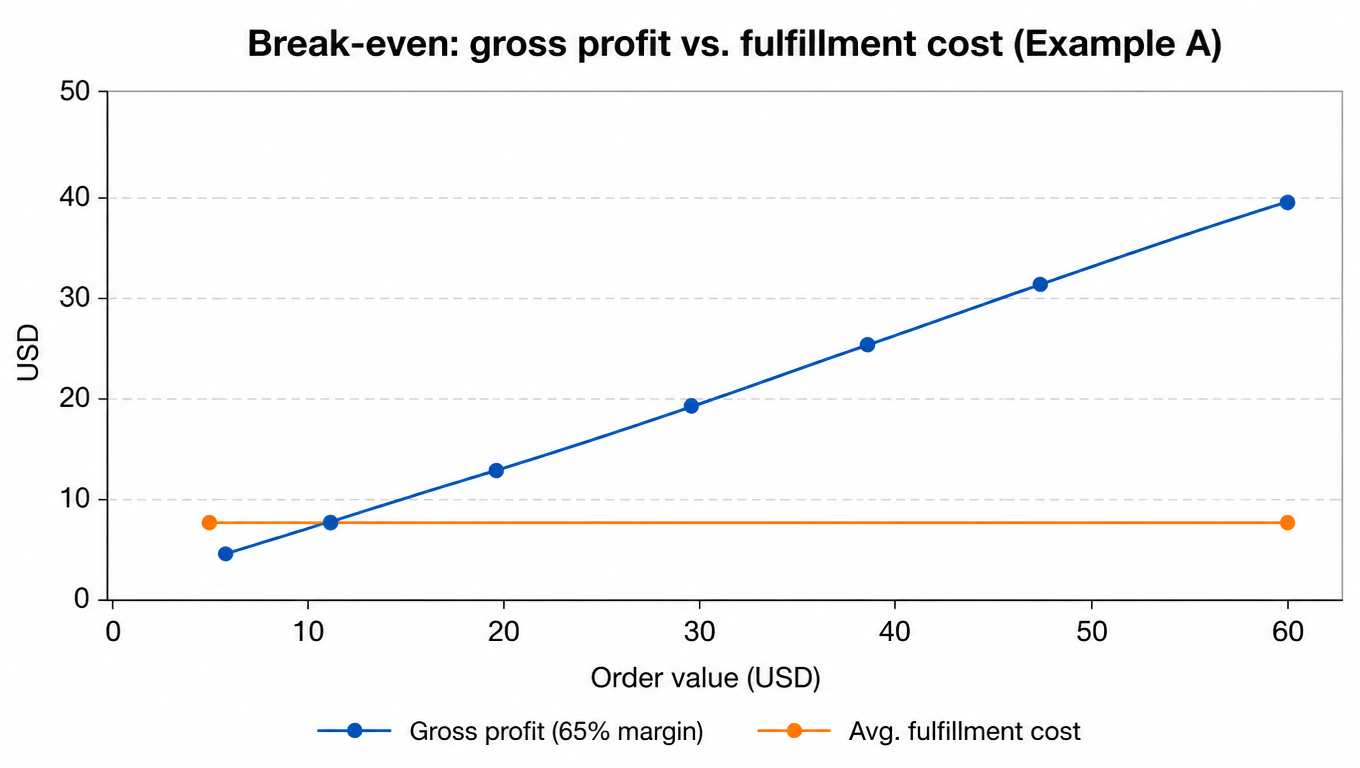
A threshold is the tool that keeps that cost under control. Think of it as a filter: orders below the line pay shipping themselves, orders above the line get it free. The free-shipping expense is then spread across higher-value orders, where your gross margin has room to absorb it. The threshold decides which orders are worth subsidizing and which are not.
Both common failure modes come from getting this filter wrong. Set the threshold too high and buyers stare at the gap between their cart and the goal, decide the add-on is not worth it, and leave. Set it too low and the threshold filters out almost nothing, so you are effectively paying shipping on your smallest, thinnest orders anyway. One kills conversion, the other quietly bleeds margin.
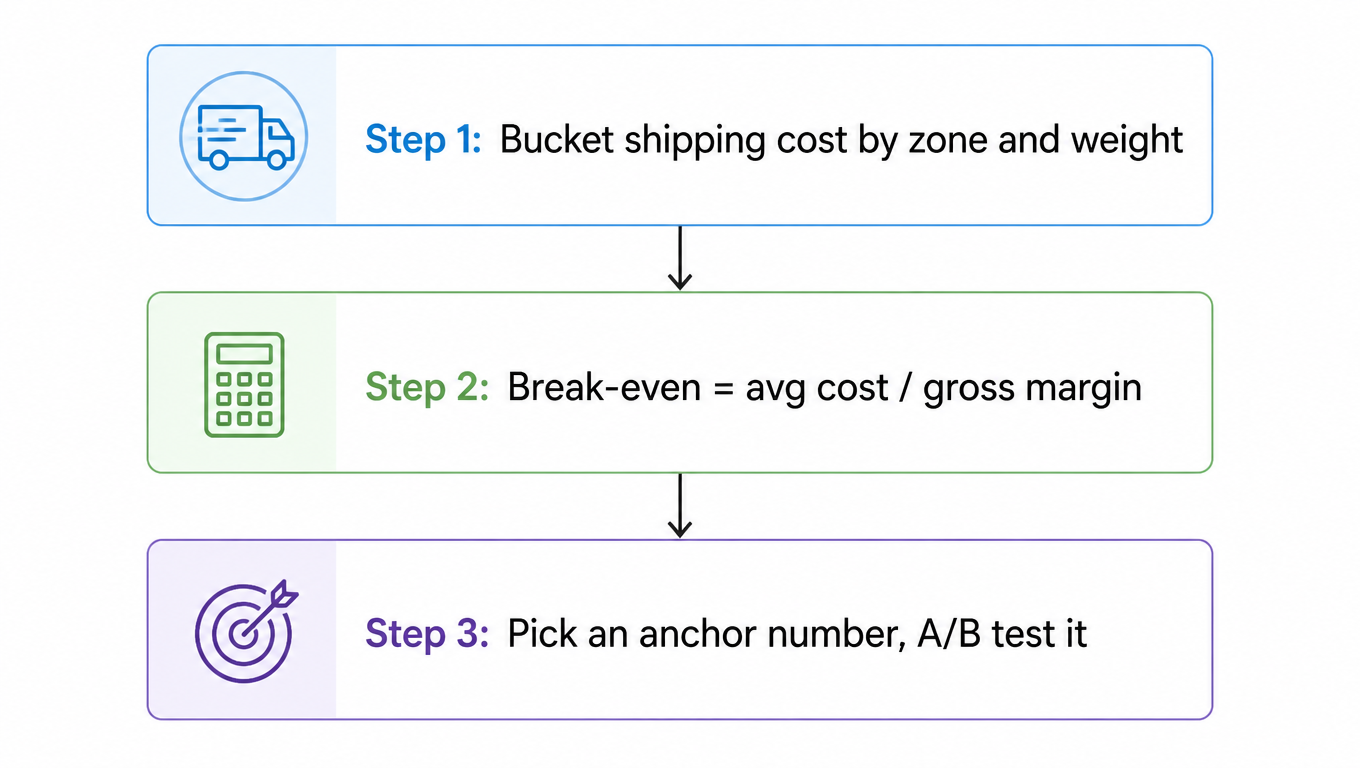
The good news is that a threshold is not a marketing guess. It is a pricing decision with a real cost structure behind it, and you can compute a safe range for your store in about ten minutes. This guide walks through the math, a three-step decision model, benchmarks by average order value (AOV), and the special constraints Amazon FBM sellers face, then ends with a checklist for actually shipping it.