Decide what has to survive: the shoes, or the shoes and the box
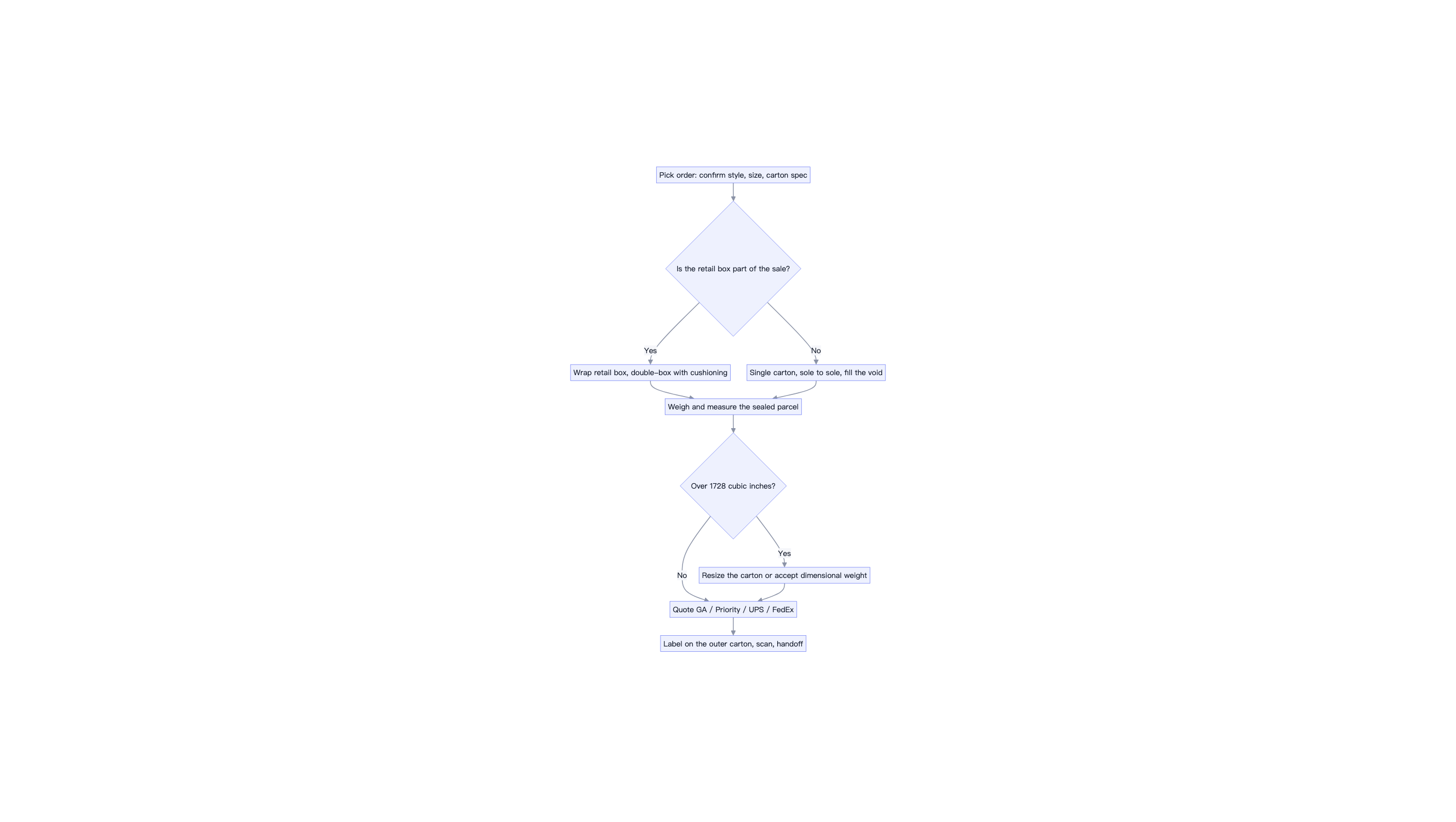
Every shoe order falls into one of three states, and each one changes the answer rather than the detail. Boots sit in a fourth case of their own, because weight and shape change both the carton and the bill.
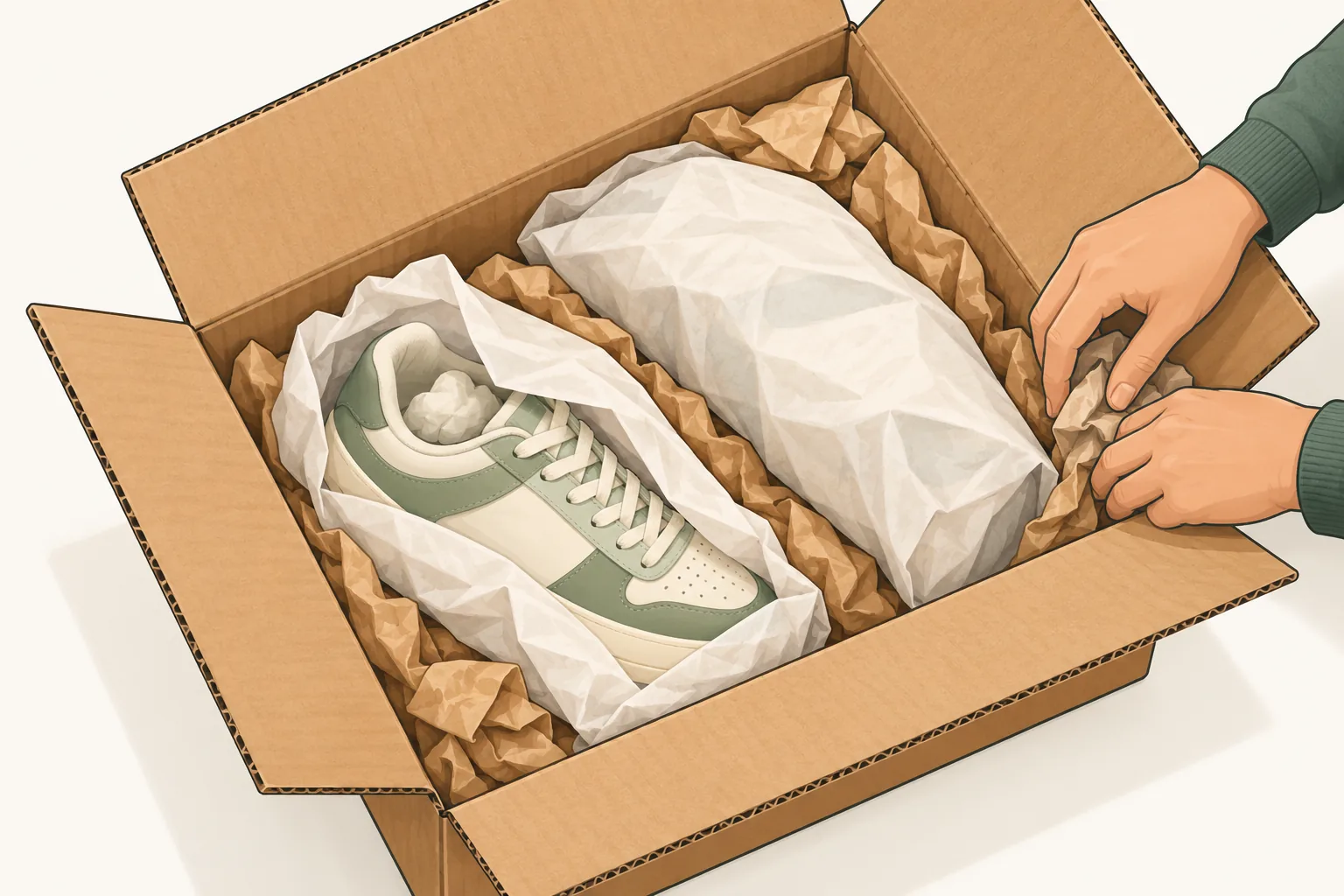
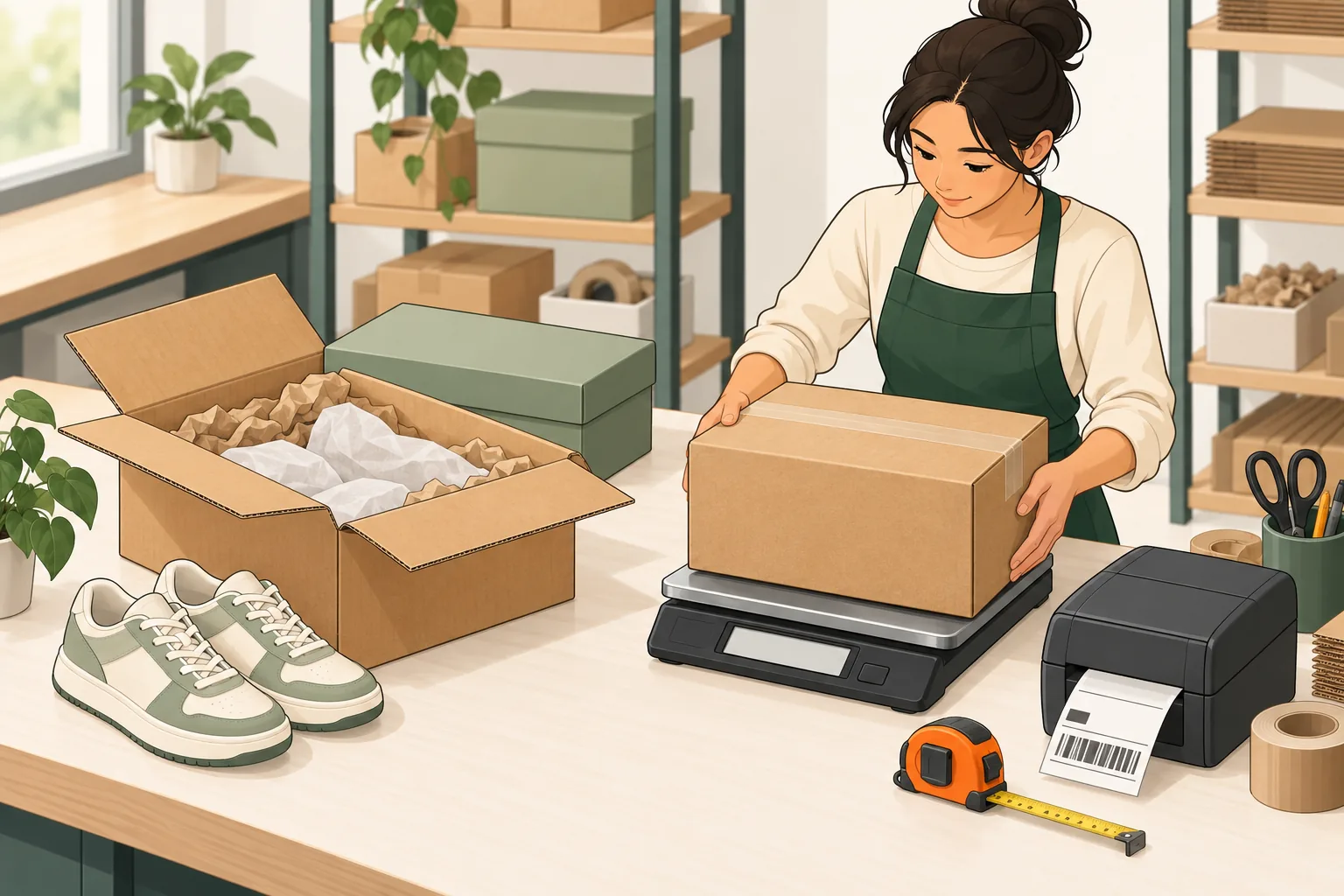
Worn or secondhand shoes, no box. The buyer wants a wearable pair. The retail box is already gone, so the job is protection only: a rigid carton, cushioning, shoes secured so they cannot move.
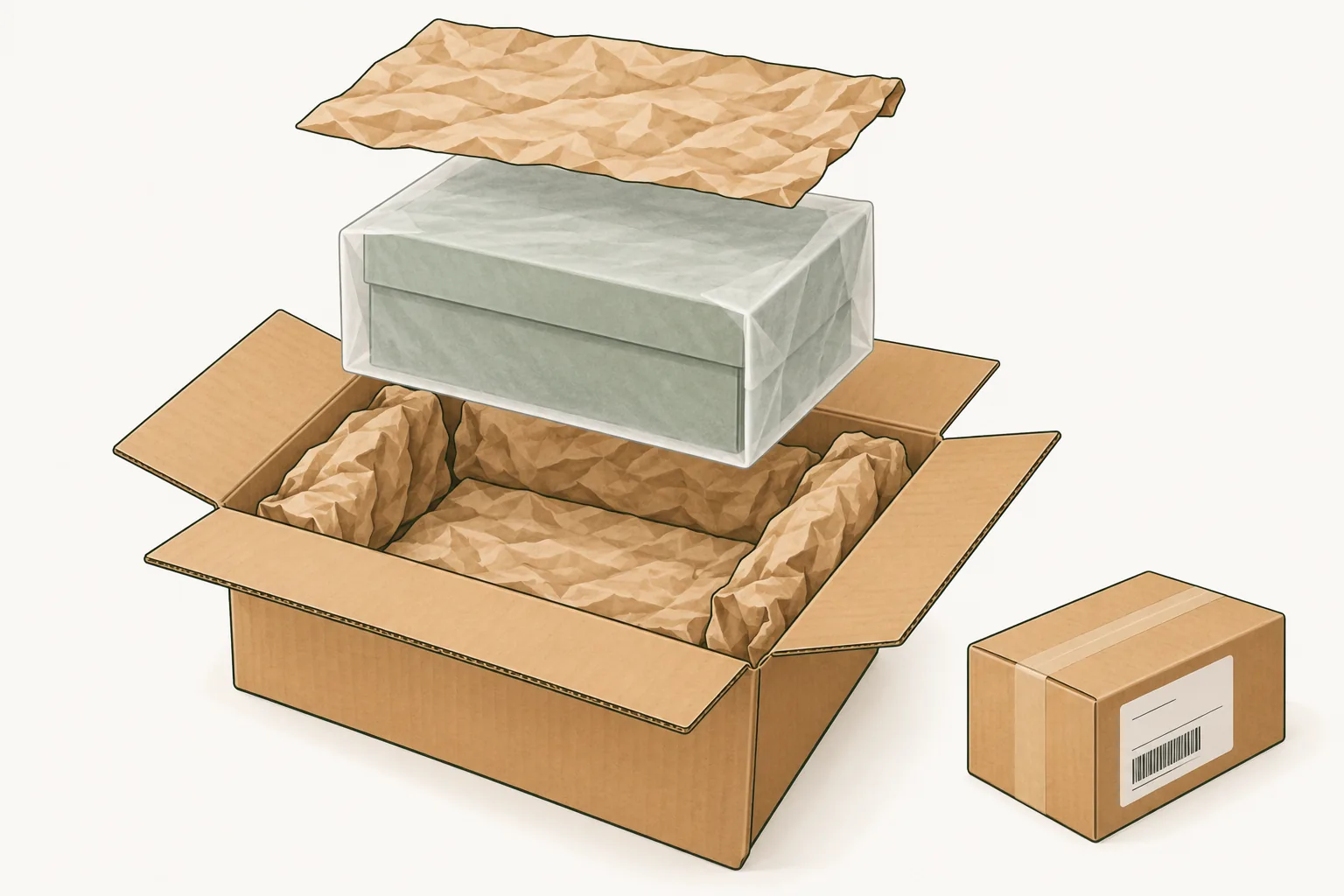
New shoes in a retail box that is part of the product. Sneaker resale, limited releases, and anything sold with the box photographed in the listing. Here the box is inventory, not packaging. A crushed lid or a shipping label stuck to the top is a partial refund or a return, even when the shoes are perfect.
New shoes in a retail box that nobody will keep. Basic inline styles and most kids' shoes. The box can be replaced by a shipping carton, or absorbed into one, as long as the shoes arrive clean and uncreased.
| Order type | What must arrive intact | Outer packaging | Common failure |
|---|---|---|---|
| Worn shoes, no box | Shoes, clean and uncreased | Single corrugated carton, shoes wrapped, void filled | Shoes sliding, scuffed uppers, crushed heel counter |
| New shoes, box is part of the sale | Shoes and the retail box, lid unmarked | Retail box inside an outer carton with cushioning on all six sides | Lid creased, tape and label on the retail box, corners rubbed through |
| New shoes, box not resold | Shoes only | Single carton sized to the pair | Oversized carton, shoes tumbling |
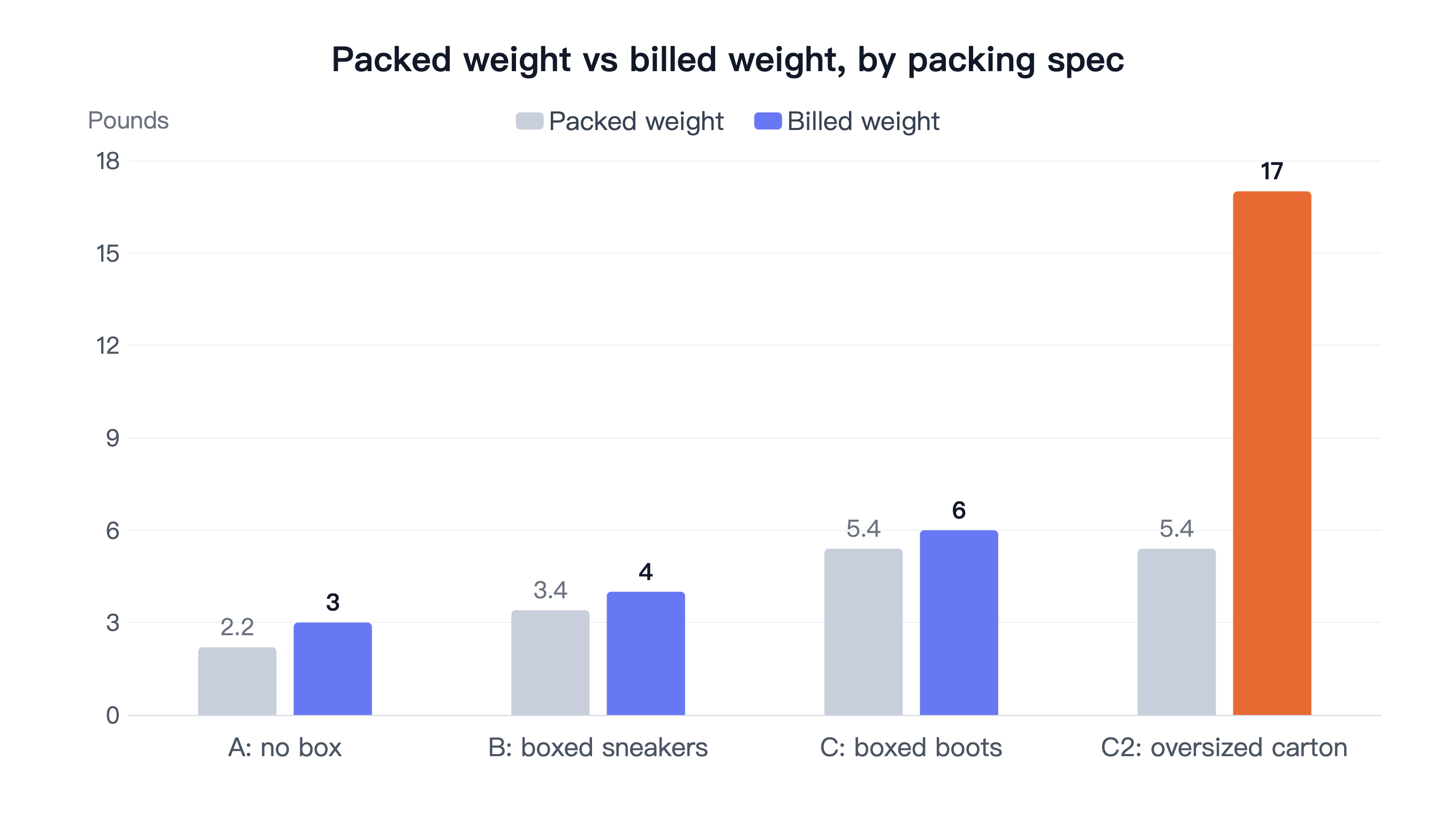
| Boots or heavy shoes | Shoes, shape held | Rigid carton plus heel and toe support | Carton bulge, tape failure, dimensional weight jump |
A retail shoebox is not a shipping container. It is thin board with a tuck lid, built to sit on a shelf, and it fails when the parcel is compressed, stacked or dropped. That is why the box is worth protecting when it is part of the product, and why it is usually the wrong container when it is not.