Packaging & Compliance Guide

Can You Ship Liquids via USPS? Packaging Rules for Online Sellers

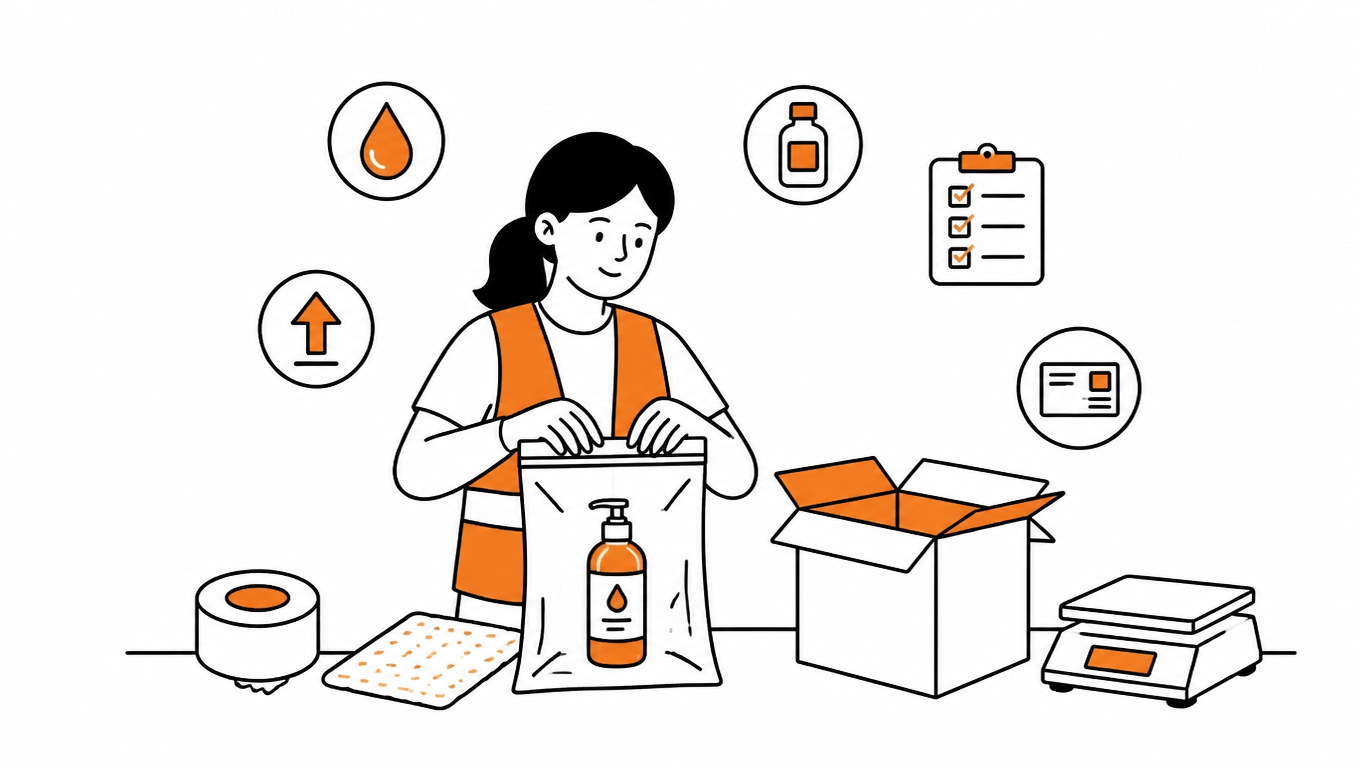
Editorial illustration of a packer sealing a shampoo bottle inside a leak-proof poly bag at a bench, with sealing tape, absorbent padding, an open carton, and a bench scale nearby, surrounded by small icons of a droplet, an upward arrow, a bottle, and a checklist.
Workflow illustration, not a customer case or an actual account record.

Liquids sit at the top of the damage and complaint list in ecommerce fulfillment. When a shampoo bottle bursts on a sorting line it does not just ruin its own order: the parcel can be held back or destroyed, and contamination of other mail can be charged back to the sender. That is a compliance problem, not a rate problem.

The answer is yes, on one condition: treat "may this bottle be mailed" and "how must this order be packed" as two separate gates. Qualification comes from documents, and acceptance comes from packing. This guide follows a single bottle along that path: the product file, the four-layer packing, two bench examples for one bottle and two, the service choice, and the final check before handoff.

Step 1: decide whether this liquid may be mailed at all

The first station is the product file, not the bench. USPS decides on what is inside the bottle, not on how the order is packed, so packing first and checking later means building a parcel that may never be acceptable. Non-hazardous liquids are mailable: water, ordinary juice, ordinary shampoo, and body lotion all fall under Publication 52 section 451, provided they are packed as the regulation requires.

Documents to request from the supplier

  • Section 9 of the safety data sheet: the flash point under physical and chemical properties, which decides whether the item can enter an air network.
  • Section 14 of the same sheet: the UN number and hazard class, which decide whether it has to move as a limited quantity.
  • A full ingredient list: check for alcohol, ethanol, isopropanol, strong acids, strong bases, and volatile solvents.
  • A limited quantity statement or exemption document: if the item qualifies for consumer commodity packaging, get the applicable standard confirmed in writing.
What you checkWhere it comes fromWhat it decides
Flash pointSDS section 9Whether it ships, and whether it can fly
UN number and hazard classSDS section 14Whether it moves as a limited quantity
Ingredient profileThe ingredient list from the brandWhether alcohol, acids, bases, or solvents are present
Packaging classThe supplier's limited quantity statementWhether limited quantity markings are required

The real dividing line is the flash point, and it is narrow. Flammable liquids with a flash point at or below 20°F cannot be mailed at all. Between 20°F and 73°F they may travel only as a limited quantity surface material under the packing instruction in Publication 52 section 343, and that same section removes international mail and every air channel from the table.

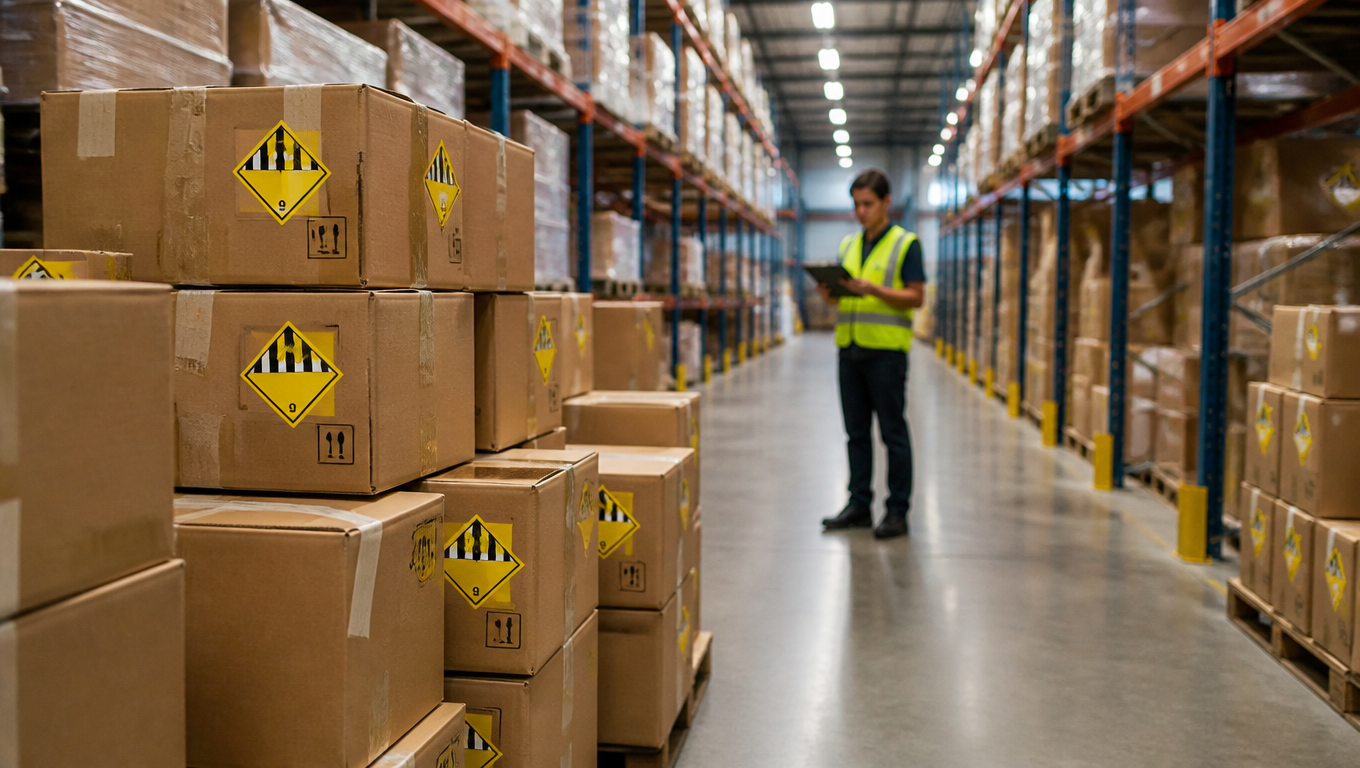
That gives the warehouse its first operating rule: mailability comes from a document, never from the product name. In one catalogue a body mist and a toner can sit on opposite sides of the line while looking identical on the shelf. Nail polish, alcohol-based perfume, and flammable solvents are surface limited quantities inside the US and prohibited items in international mail. The carrier-by-carrier picture, including UN packaging and lithium batteries, is covered in the warehouse guide to hazmat shipping with US carriers.
Step 2: a tightened cap is not a seal

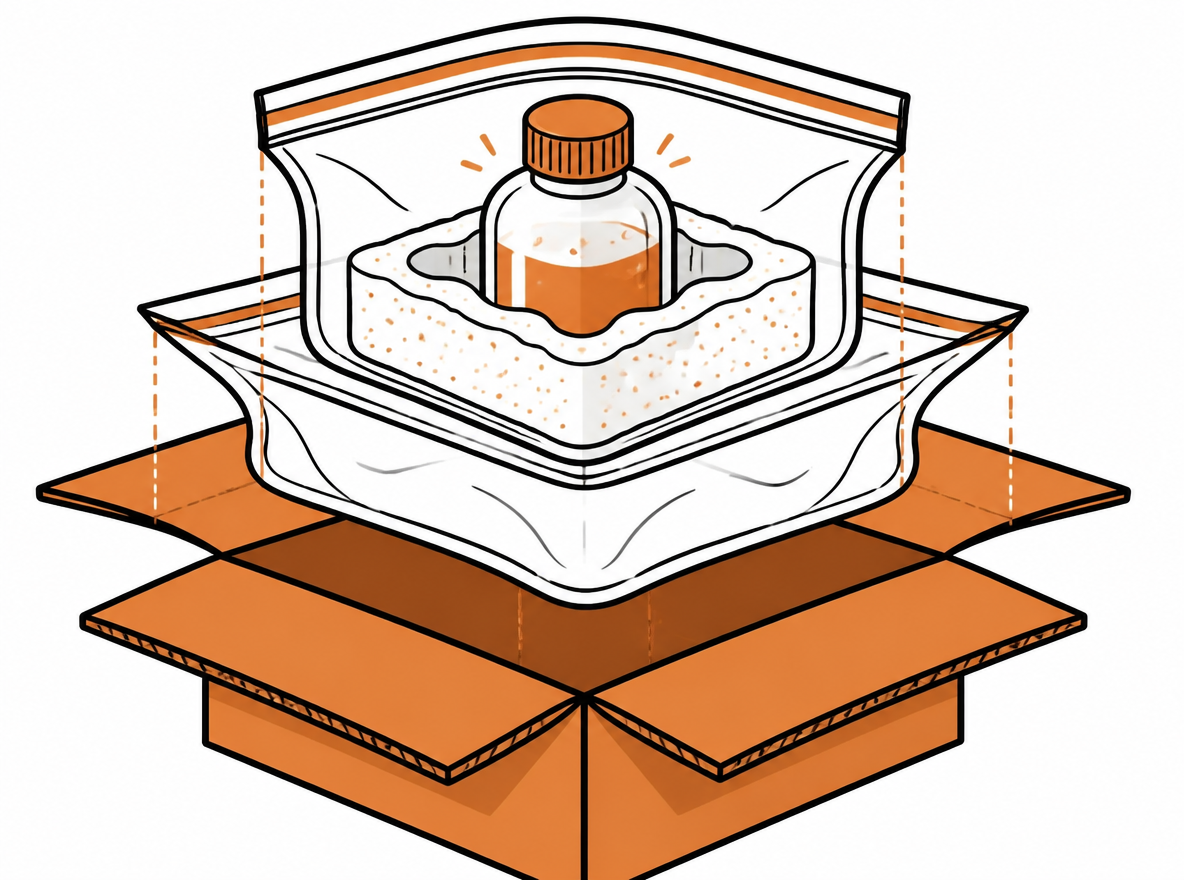
A factory cap survives a shelf. It does not survive a sorting line, where parcels are dropped, tumbled, and pressed under heavier freight. If the parcel enters an air network, cabin pressure changes create a pressure difference across the bottle wall that can push the factory seal open outright. The compliant answer is not a tighter cap but a container structure that hands the risk down through layers.

  1. Primary container closure: torque the screw cap to specification and prefer a container with an induction seal or a cap liner. A pump head needs a mechanical clip plus a shrink band.
  2. Absorbent material: placed between the primary and secondary container, in a quantity able to absorb the entire liquid content of the primary container.
  3. Secondary leak-proof container: the bottle and its absorbent go into a strong leak-proof bag or a watertight receptacle, then it is closed.
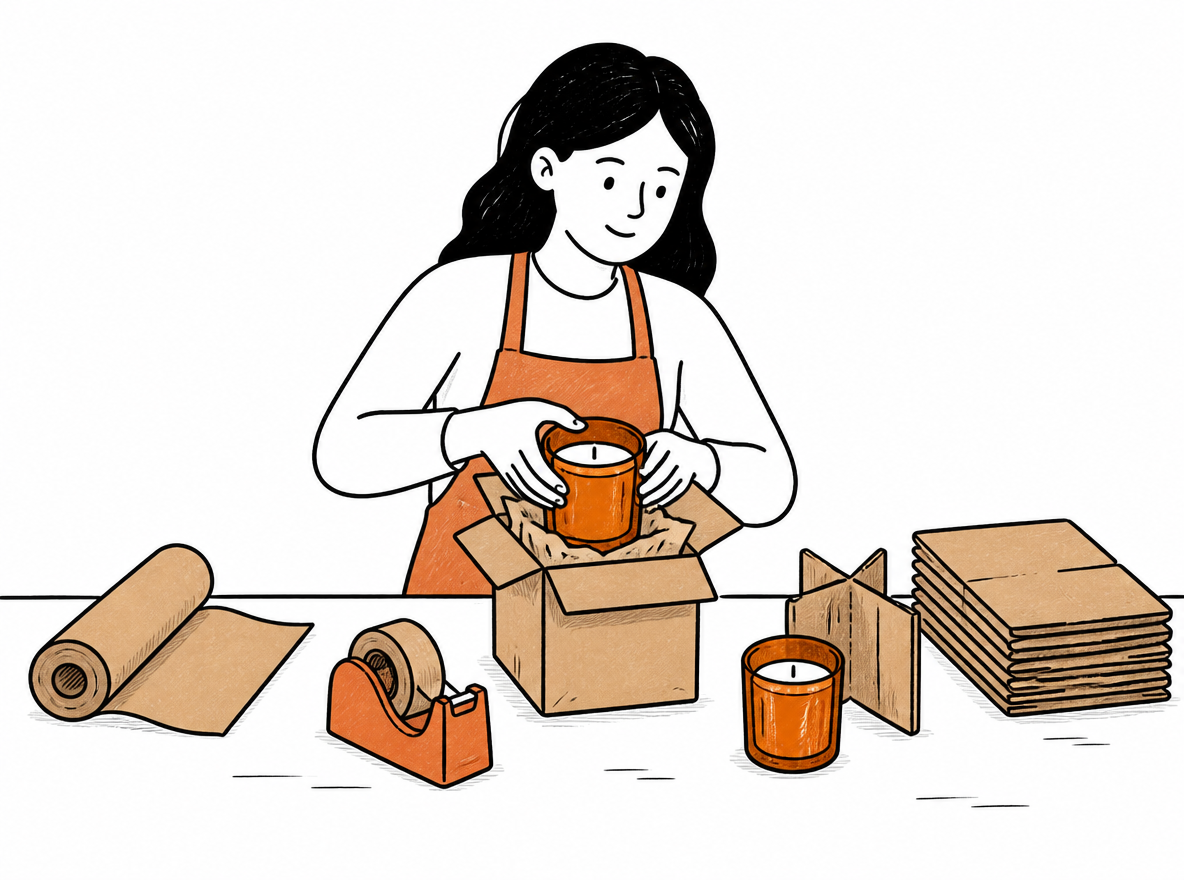
  4. Rigid outer packaging: a crush-resistant corrugated carton. A large liquid volume never ships bare in a bubble envelope.
Illustration of the four-layer protection structure of a liquid parcel, shown as a cross section: primary container closure, absorbent material, secondary leak-proof container, and a rigid corrugated carton.
Four layers, each responsible for one failure mode

The regulation is specific about this. Under DMM 601.3.4 and Publication 52 section 451, a fragile container holding more than four fluid ounces, about 118 millilitres, must use triple packaging: wrap the primary container completely in absorbent material, place it in a closed leak-proof secondary container, and pack that into a strong, sealed outer box. One detail gets missed more than any other: USPS classifies glass, plastic, ceramic, and earthenware containers together as fragile, so a plastic shampoo or lotion bottle above four ounces falls under exactly the same requirement.

Triple packaging is not the only route. A container certified to the ISTA 3A test procedure replaces it, provided the sender can produce written test results on request showing the sample passed every test with no leakage. An easily forgotten companion requirement is orientation: a liquid parcel above four ounces must show upward-pointing arrows on two opposite sides and be labelled as containing liquid under Publication 52 section 223, which is what tells sorting equipment to keep the parcel upright. The wider grading of packing methods is set out in how to ship packages safely.

Step 3: one bottle and two bottles at the bench

The two workflows below are warehouse operating examples that turn the rules above into a bill of materials and a fixed sequence, not records of any customer order. Stock the bench first, then run the steps as written rather than by feel.

Example A: a single shampoo bottle, 16 ounces, pump head

  • Bill of materials: one pump clip, pressure-sensitive sealing tape or shrink film, absorbent padding rated to hold at least 500 millilitres, one 4 mil leak-proof zip bag, a 200# or 32 ECT corrugated carton, and kraft void fill.
  1. Turn the pump clockwise until it locks, then seat the pump clip.
  2. Wrap sealing tape twice in the direction the cap tightens, so vibration cannot back the thread off.
  3. Wrap the bottle body completely in the absorbent pad, leaving no bare surface at the seams.
  4. Load the wrapped bottle into the leak-proof bag, press out surplus air, and seal the mouth.
  5. Lay two inches of packed kraft at the bottom of the carton and centre the bottle upright on it.
  6. Fill the sides and top with kraft, close the lid, and shake gently: nothing inside should move.

Two failure modes dominate this example: locking the pump without fitting the clip, so pressure from adjacent freight pops the head open and the liquid sprays; and leaving the carton underfilled, so the box collapses in a stack and the inner container takes the load.

Example B: a two-bottle lotion set, 2 x 8 ounces

  • Bill of materials: cap sealing tape, two 4 mil leak-proof bags, two absorbent pads, one corrugated divider, air pillows or an air column, and a double-wall carton.
  1. Secure both caps and tape both necks first.
  2. Never bag the two bottles together. Give each bottle its own absorbent pad and its own sealed leak-proof bag.
  3. Set the corrugated divider in the carton so the two bottles are physically separated and never touch.
  4. Add air columns or bubble wrap outside each bottle, then fill both sides of the divider.
  5. Close the carton with the H-taping method, sealing all three seams.

The classic multi-bottle failure is bagging both bottles together: one break contaminates the second, and the two bottles collide inside the carton, which raises the odds of a cracked body. Writing "one bottle, one bag, one absorbent layer" as a hard rule works better than investigating after the fact.

Step 4: choose the service once mailability is settled

Service choice comes last because the first two steps constrain it. A consumer product with a trace of flammable content has to move on the ground, and that is a transport rule rather than a cost trade-off. The split between the two USPS domestic services follows from it: USPS Ground Advantage runs the surface network, suits everyday liquid parcels, and is the only lawful route for a restricted liquid; Priority Mail is faster but moves largely by air and is limited to genuinely harmless liquids that no pressure change can disturb. The full comparison of the two service lines sits on the USPS carrier page.

Destination moves the answer again. On lanes to Alaska, Hawaii, Puerto Rico, and other noncontiguous states and territories, parcels often transit by sea or a specific routing: in its notice of 25 September 2026, USPS adjusted the Ground Advantage service expectation on those lanes to 10 days or longer and Priority Mail to two to four days. For a liquid order a longer transit means more time under load and across temperature swings, so packaging standards should not be relaxed to save money. Lane-specific detail is in shipping to Puerto Rico with USPS.

Only then comes billed weight. Liquid is dense, so actual weight usually dominates, but leak-proofing and cushioning inflate the outer carton, and once the outer volume passes 1,728 cubic inches USPS bills the greater of actual and dimensional weight. Every ounce saved earlier gets handed back as carton size. The full audit of packed weight against carton dimensions is in the parcel-first packaging cost audit, and outer volume can be estimated before packing with the package size checker.

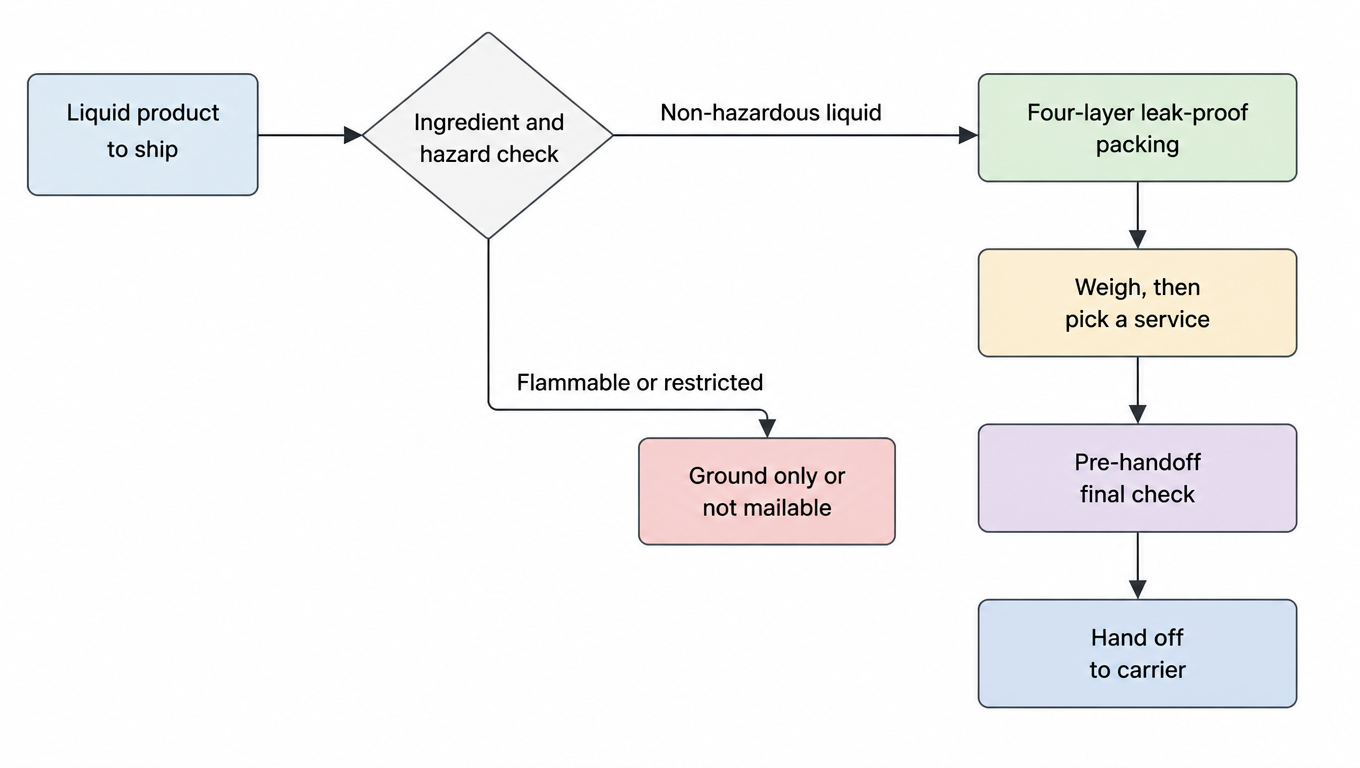
Decision flow: a liquid product first goes through an ingredient and hazard check; a non-hazardous liquid moves to four-layer leak-proof packing, while a flammable or restricted liquid is ground only or not mailable; then weighing and service selection, a pre-handoff final check, and handoff to the carrier
Five gates: mailability, packing, service, final check

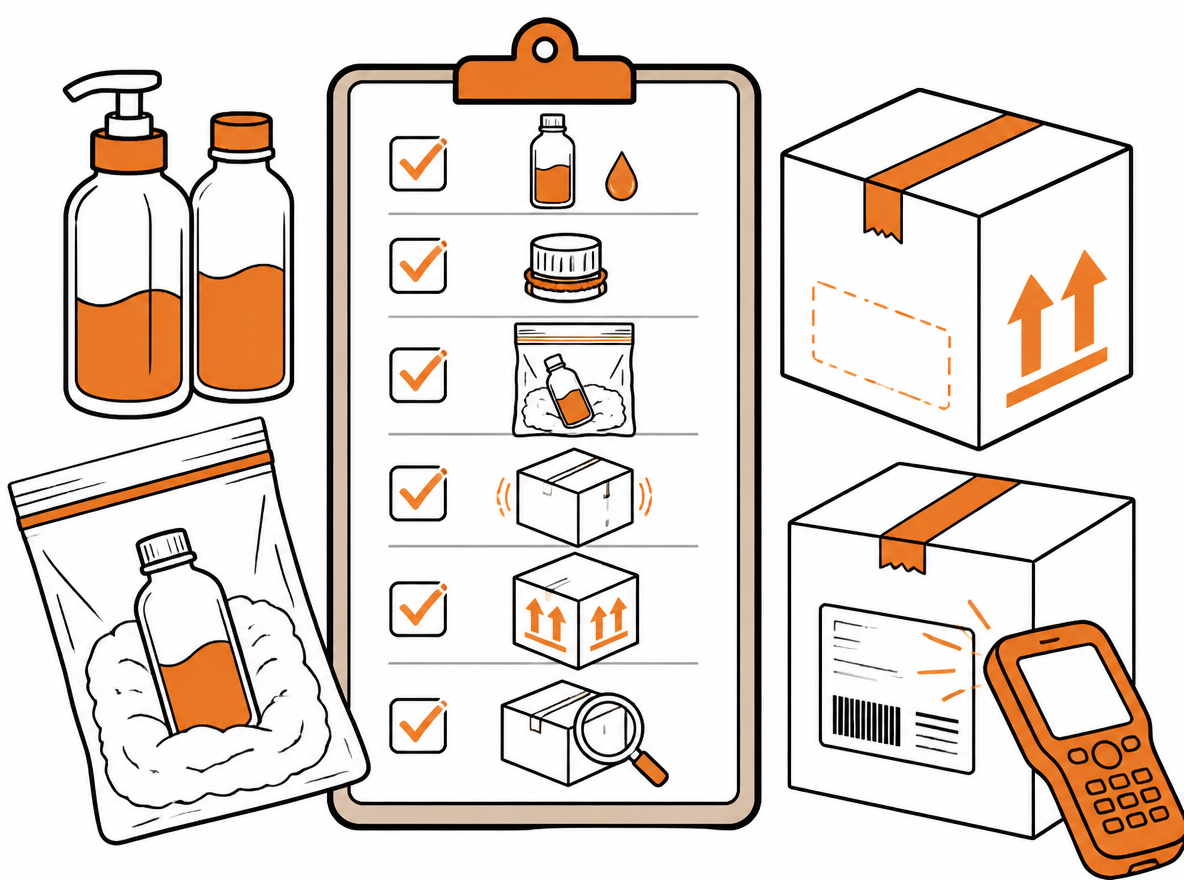
Step 5: the pre-handoff checklist

The list below is an internal quality check to run before handing the parcel over, and it costs far less than handling a claim later. It does not replace the rules, it confirms they were followed.

Illustration of a pre-handoff check station for liquid parcels, covering product classification, cap sealing, absorbent and secondary bag, carton shake test, orientation markings, and label verification.
Six checks; the first two fail back to the bench, not to the carrier
CheckPass condition
Product classificationThe item is not on the USPS prohibited list, and anything with alcohol or flammable content is routed to the surface channel rather than mixed into air freight
Cap sealThe mechanical clip is seated and the thread carries sealing tape or a shrink band
Absorbent and secondary bagThe absorbent can take the whole bottle volume, and the bag mouth is flat and sealed with no leak
Carton integrityA gentle shake produces no rattle or slide, and the box shows no bulge or deformation
Orientation and content markingsA liquid parcel above four ounces shows upward arrows on two opposite sides and states that it contains liquid; a ground limited quantity also carries its limited quantity marking and DOT surface label
Label accuracyThe label is wrinkle-free and legible, and the declared description and service match the actual item

The item most often skipped is the last one. Declaring the contents as household goods, or picking an air service by mistake, can send all the earlier packing work back at the handoff point. If a parcel does break in transit, the claim rules and the evidence to keep are set out in when shipping insurance is worth buying for ecommerce.

FAQ

Yes. Non-hazardous liquids are mailable, but they have to be packed to standard: above four fluid ounces a container is treated as fragile whether it is glass or plastic, which means absorbent material, a closed leak-proof secondary container, and a rigid outer box. The deciding evidence is the flash point and ingredients on the safety data sheet, not the product name.
A fragile container holding more than four fluid ounces needs triple packaging, and USPS counts plastic containers as fragile, so an everyday eight-ounce lotion or sixteen-ounce shampoo is inside the requirement. A container certified to the ISTA 3A procedure replaces it, provided the sender can produce written test results when asked.
No. These are hazardous materials: USPS prohibits them in international mail and bars them from every air network. Inside the US they may move only as a limited quantity on the surface, and anything with a flash point at or below 20°F cannot be mailed at all. Confirm the figure in writing from section 9 of the safety data sheet before shipping.
No. Each bottle gets its own absorbent layer and its own bag, separated inside the carton by a corrugated divider so the bottles never touch. Bagged together, one break contaminates the other, and the two bottles knocking against each other make a cracked body much more likely.

Make the compliance call a setting at handoff

EasyShippingX acts as a channel-neutral shipping layer, comparing carrier options inside the US in one place and executing them through the Portal, Excel, or the API. Which service a restricted liquid is pinned to, and what each label declares, no longer depends on memory at the bench.