The 12 oz label is a coffee weight, not a shipping weight
Three numbers matter and none of them are equal. Net weight is the coffee. Gross weight is the sealed parcel on a scale. Billed weight is what the carrier charges for: gross weight rounded up to the next pricing step, or dimensional weight when a large light box qualifies.
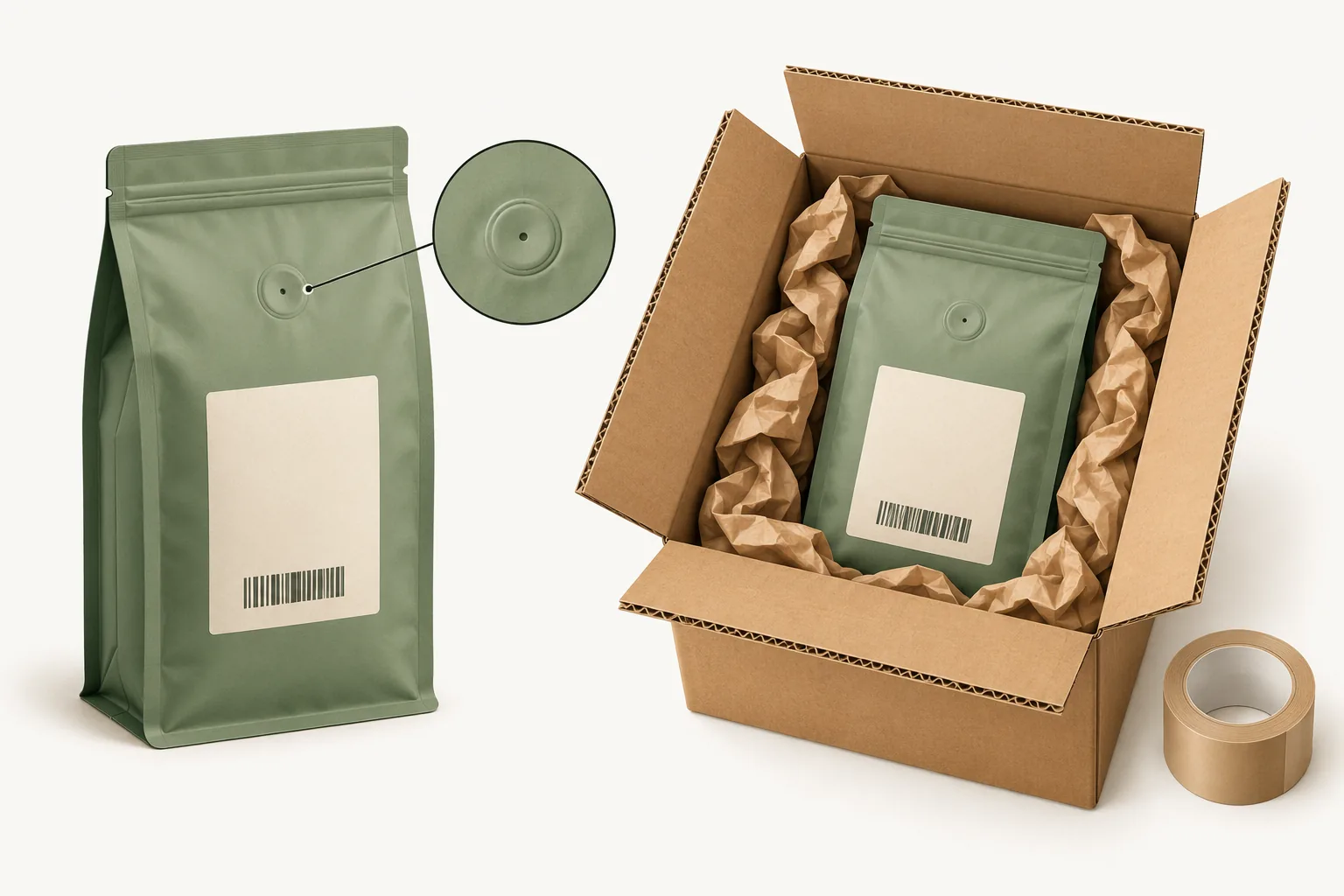
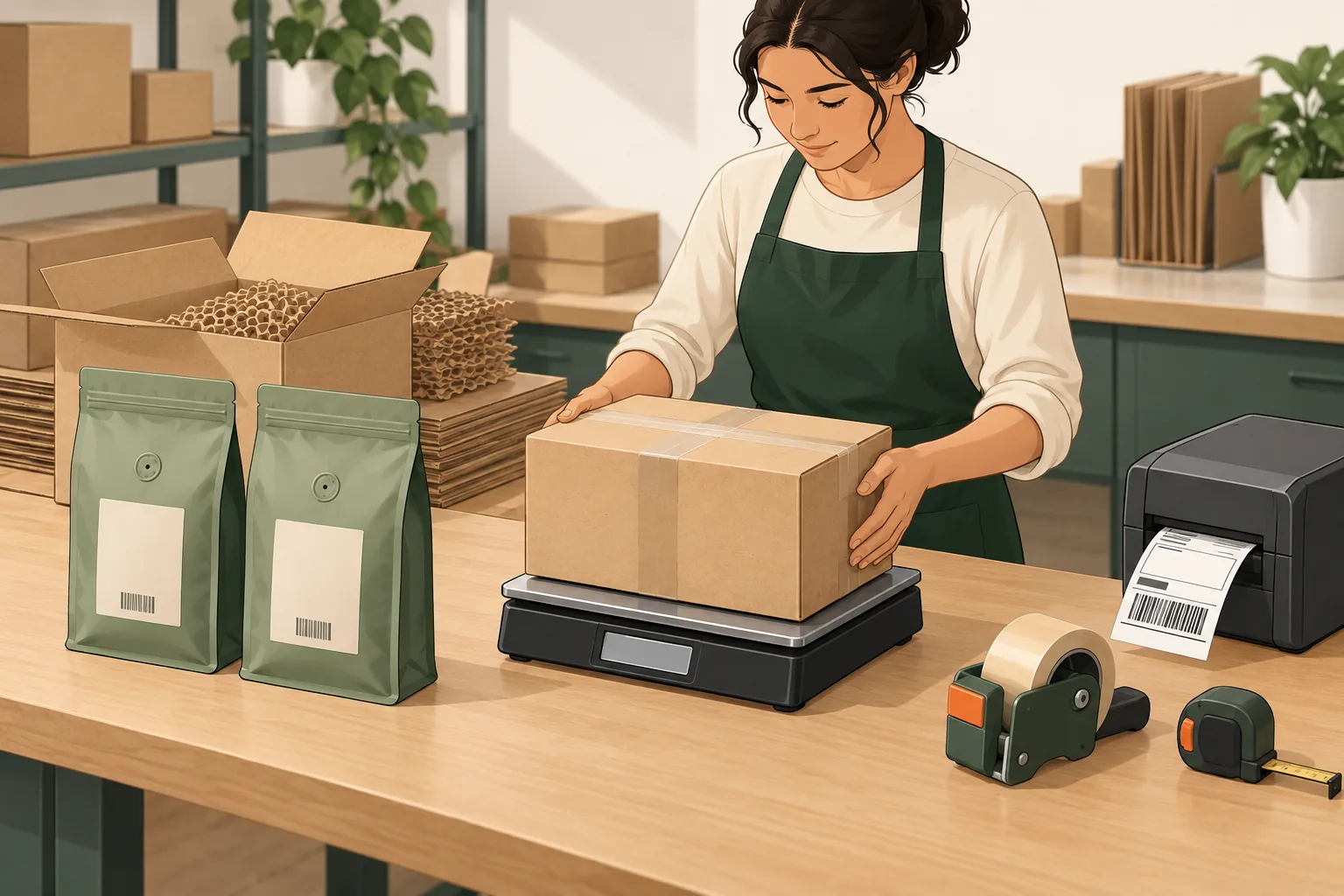
A worked example makes the gap visible. This is a single 12 oz bag packed for parcel handling:
| Component | Weight |
|---|---|
| Coffee, net | 12.0 oz |
| Empty valve bag | 1.0 oz |
| Kraft void fill | 0.5 oz |
| Corrugated box, 8 x 6 x 4 in | 4.0 oz |
| Sealed parcel (gross) | 17.5 oz |
Seventeen and a half ounces is 1 lb 1.5 oz. USPS prices above one pound in whole pounds, so that parcel is billed as 2 lb: not as a 12 oz bag, and not as a 1 lb package. Nothing about the extra 1.5 oz is unusual. It is the bag, the box and the fill doing their jobs.
Three pricing rules explain almost every surprising coffee invoice:
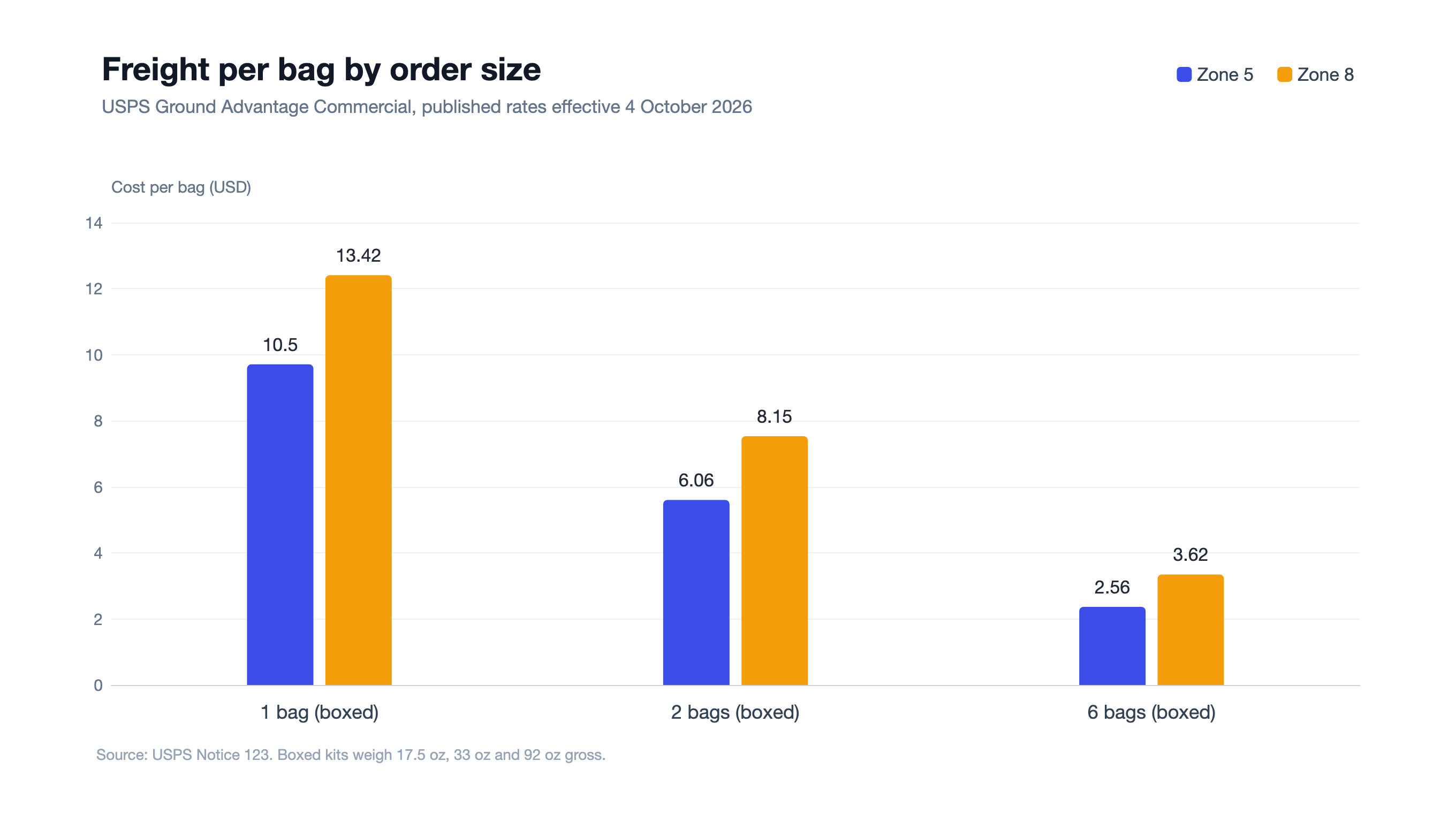
- Whole pound steps above one pound. A 17.5 oz parcel bills as 2 lb and a 33.1 oz parcel bills as 3 lb, so a few ounces over a line cost a full pound. That is why the box you choose moves the price more than the coffee you fill it with.
- Under one pound, the ounce tier no longer rewards dieting. Since July 12, 2026, USPS Ground Advantage Commercial charges a single price per zone for any package under one pound, so a 4 oz, a 12 oz and a 15.999 oz parcel cost the same; USPS lists those rows at identical prices in its current price list (Notice 123). Shaving grams off a bag is no longer worth the effort, but crossing into the 1 lb tier still is.
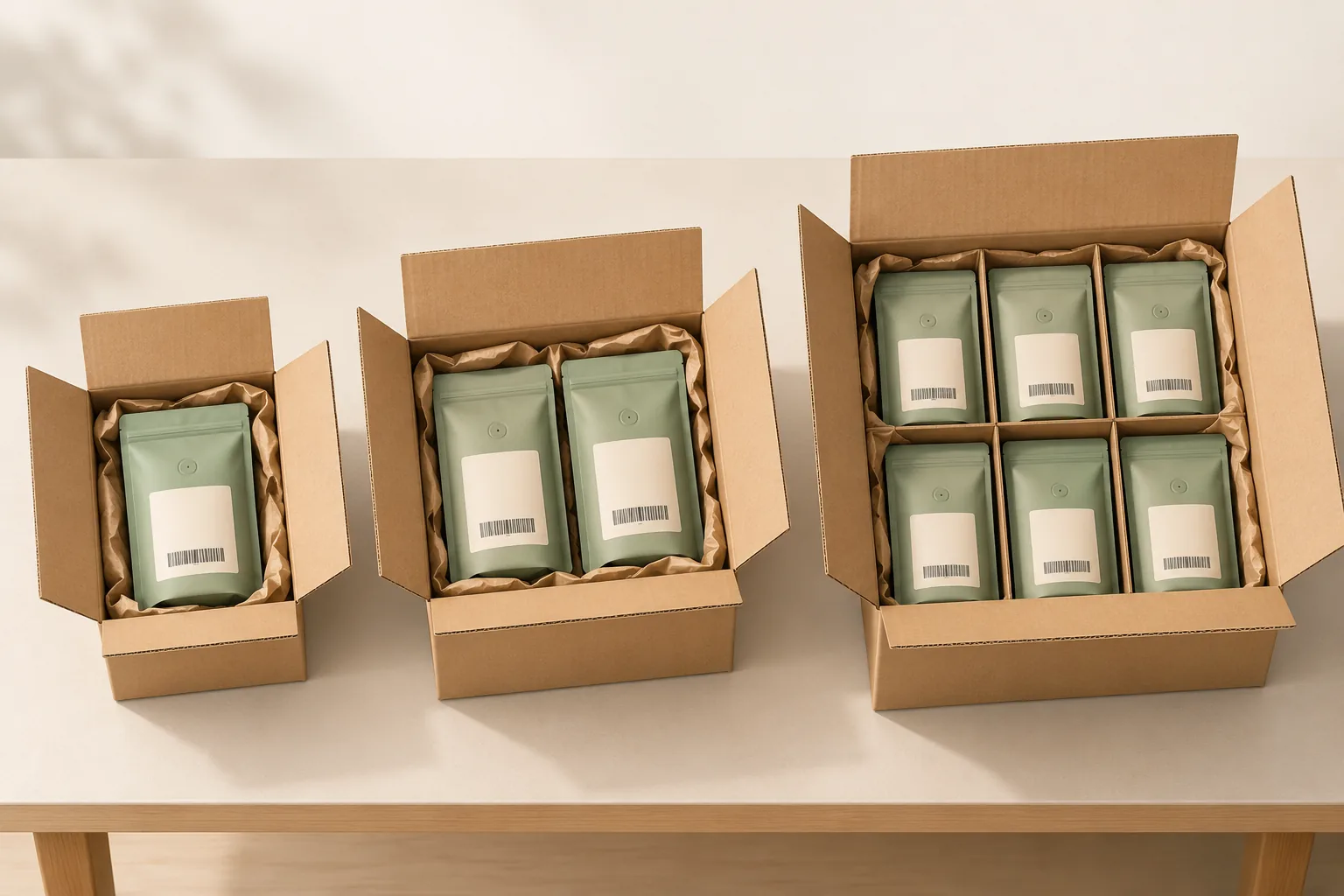
- Dimensional weight only enters above one cubic foot. For Ground Advantage, if the parcel exceeds 1,728 cubic inches, multiply length by width by height, divide by 139, and compare that with the actual weight; the heavier of the two is what you pay for (Domestic Mail Manual 283). Most coffee parcels stay under that line. Gift sets do not.