The Three Layers of Cost Behind a Same-Day Promise: Why the Question Shifts from "Can We" to "Should We"
Same-day is often marketed as a differentiator, but the industry baseline is sobering: same-day still captures only a low single-digit share of overall ecommerce orders, and demand is heavily concentrated in a handful of major metros. It is not a sitewide default; it is a local capability for a few markets and a few windows. Asking "should our brand offer same-day?" already presumes it is table stakes, and that presumption is where most brands start doing the math wrong.
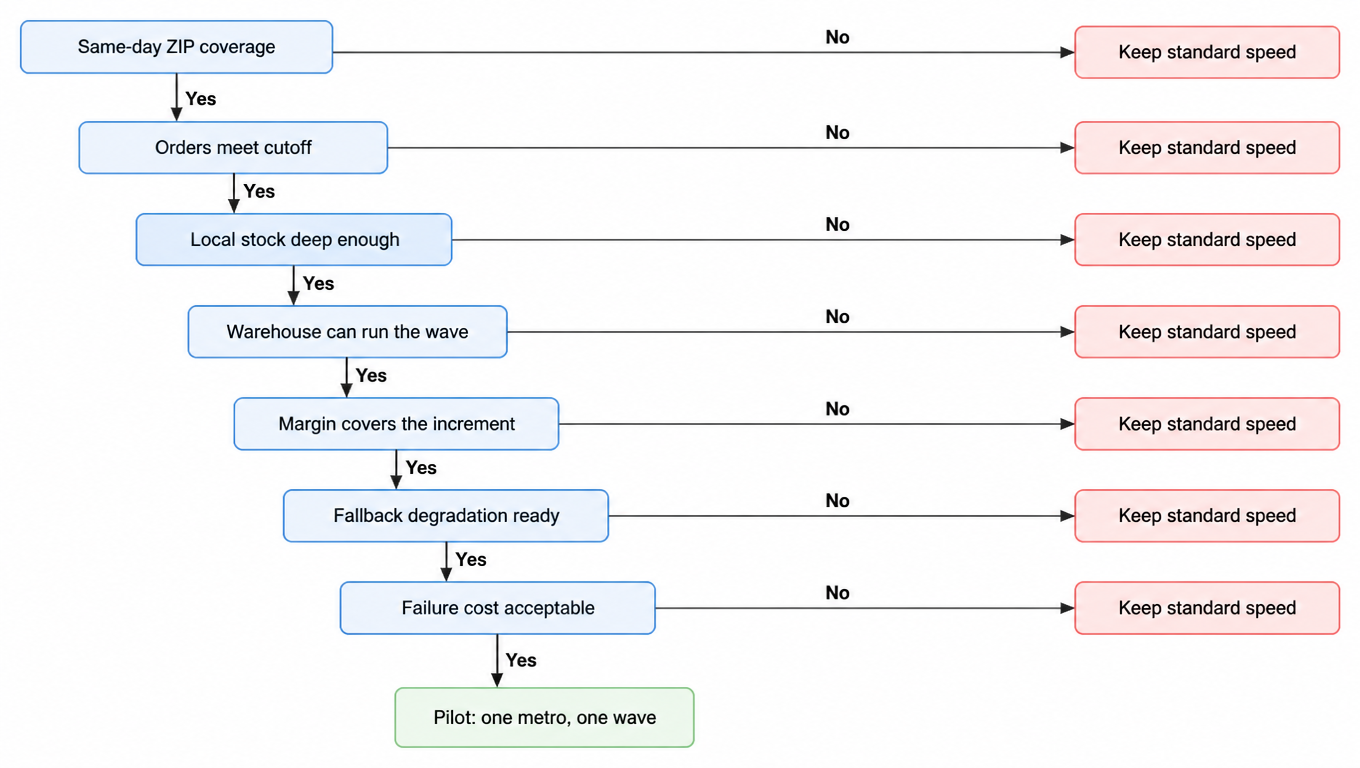
Putting "same-day" on your site promises shoppers a complete SLA backed by three layers of cost: freight and handling, warehouse capacity locked to the window, and the reputation cost when the promise fails. ZIP coverage, cutoff, local inventory, warehouse readiness, margin, courier fallback, and failed-promise cost. All seven matter; none can be skipped.
This guide turns those seven items into a decision gate with an industry baseline and a pass/fail standard for each. The gates are ordered by cost of change, small to large: checking ZIPs is free, reworking warehouse lanes costs money, reworking the promise system is fatal. If you want the bigger question of how many delivery speed options a brand should offer at all, see our delivery speed framework; for the broader carrier play, see the multi-carrier shipping strategy.